CM Himanta Chairs GST Stakeholder Meet in Guwahati
Synopsis
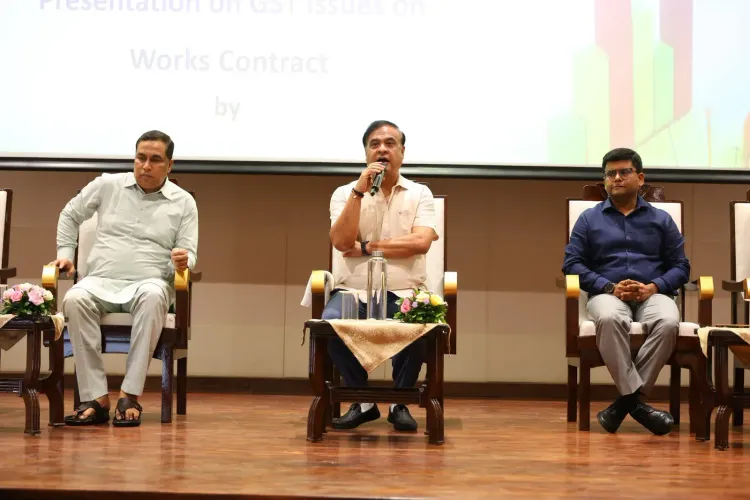
Assam Chief Minister Dr. Himanta Biswa Sarma on 4 July 2026 chaired a stakeholder meeting at Jyoti Bishnu Antarjatik Kala Mandir in Guwahati, directing officials to streamline GST administration and improve state revenue collection under the national indirect tax framework active since 2017.
Key Takeaways
Himanta Biswa Sarma chaired a GST stakeholder meeting on 4 July 2026 .
The meeting was held at Jyoti Bishnu Antarjatik Kala Mandir , Guwahati.
The CM issued directions to streamline GST administration and improve revenue collection in Assam.
Assam has been part of the national GST regime since 1 July 2017 .
The move reflects a broader state-level push to raise own-tax revenue and reduce dependence on central transfers.
Follow-up measures are expected from the Assam Finance Department and state GST authority.
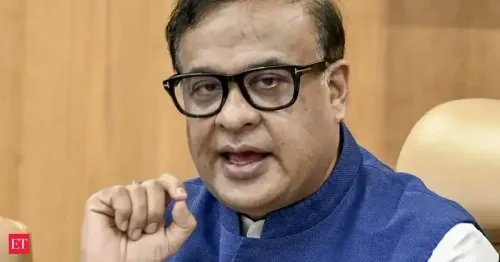
The Chief Minister's Office of Assam announced on Saturday, 4 July 2026, that Chief Minister Dr. Himanta Biswa Sarma chaired a stakeholder meeting at Jyoti Bishnu Antarjatik Kala Mandir to strengthen the state's Goods and Services Tax collection system and issued directions to streamline GST administration.
Context
The meeting, convened at Jyoti Bishnu Antarjatik Kala Mandir in Guwahati, brought together stakeholders involved in Assam's GST ecosystem. According to the official post, Dr. Sarma 'issued necessary directions to further streamline GST administration and improve revenue collection,' signalling a focused push by the state government to tighten its indirect tax framework.
Policy Backdrop
Assam was integrated into the national Goods and Services Tax regime on 1 July 2017, when the landmark unified indirect tax replaced a patchwork of central and state levies across India. The state GST department was established at that point to manage compliance, enforcement, and collection within the state's jurisdiction.
Across Indian states, the years since the GST rollout have seen incremental improvements driven by better data analytics, anti-evasion drives, and closer coordination with the GST Network (GSTN). Assam's efforts mirror a broader national pattern of states working to raise own-tax revenue and reduce dependence on central devolution funds.
Stakeholders and Impact
The meeting convened representatives from the trade and tax administration community — the groups most directly affected by how efficiently Assam collects and enforces GST. For traders and businesses operating in the state, clearer administrative processes can mean reduced compliance burdens and greater predictability in tax obligations.
For the state exchequer, improved GST collection directly strengthens Assam's fiscal position, enabling greater spending on infrastructure, welfare, and public services without proportionally increasing reliance on grants from the Government of India.
What's Next
The directions issued by Chief Minister Sarma are expected to translate into operational circulars and administrative measures from the Assam Finance Department and the state GST authority. Observers will watch the state's budget documents for revised GST revenue targets that could reflect the impact of these reforms.
A sustained focus on GST compliance and collection efficiency could position Assam as a model among northeastern states for own-revenue mobilisation — a metric that carries increasing weight as the state pursues its broader economic development agenda.
Point of View
Strengthening own-tax revenue is strategically significant — the northeast has historically relied heavily on central transfers, and a robust GST collection apparatus reduces that fiscal vulnerability. The choice of a public-facing venue and the involvement of trade stakeholders also suggests an outreach dimension, aimed at building voluntary compliance alongside enforcement. This meeting fits a pattern of state governments using high-level political attention to signal seriousness on revenue mobilisation ahead of budget cycles.
NationPress
3 Oct 2026
Frequently Asked Questions
Why did Assam CM Himanta Biswa Sarma hold a GST meeting?
Chief Minister Dr. Himanta Biswa Sarma held the meeting to strengthen Assam's GST collection system , issuing directions to streamline administration and improve revenue collection in the state.
Where was the Assam GST stakeholder meeting held?
The meeting was held at Jyoti Bishnu Antarjatik Kala Mandir in Guwahati, Assam, on 4 July 2026 .
When did Assam adopt the GST regime?
Assam was integrated into the national Goods and Services Tax framework on 1 July 2017 , when GST replaced multiple central and state indirect taxes across India.
What is the significance of improving GST collection for Assam?
Stronger GST collection improves Assam's own-tax revenue, reducing its dependence on central government transfers and giving the state more fiscal flexibility for development spending.
What happens after the GST stakeholder meeting in Assam?
The directions issued by Chief Minister Sarma are expected to be translated into operational circulars by the Assam Finance Department and state GST authority, with revised revenue targets likely to appear in state budget documents.