CM Yogi warns of threats to Ayodhya Dham's sanctity
Synopsis
Uttar Pradesh Chief Minister Yogi Adityanath on 14 July 2026 accused those who allegedly sought to conduct namaz at Hanumangarhi of now speaking about Ayodhya Dham's sanctity, warning citizens to stay vigilant against what he called a continuous attack on the city's religious identity.
Key Takeaways
Yogi Adityanath posted on X on 14 July 2026 warning of a 'continuous attack' on Ayodhya Dham 's religious sanctity.
He accused unnamed political actors of previously arranging namaz at Hanumangarhi , one of Ayodhya 's most revered temples.
The post invokes the contested religious history of Hanumangarhi to frame a present-day political argument.
The remarks come roughly two and a half years after the January 2024 consecration of the Ram Temple at Ram Janmabhoomi .
The Chief Minister called on citizens to 'remain alert,' signalling that temple protection will stay central to BJP 's political messaging in Uttar Pradesh .
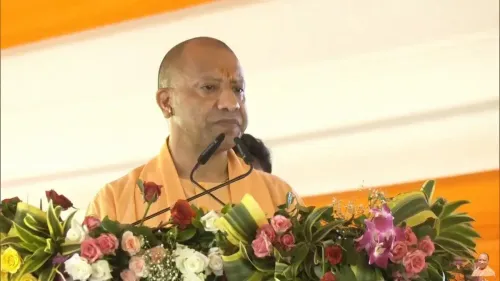
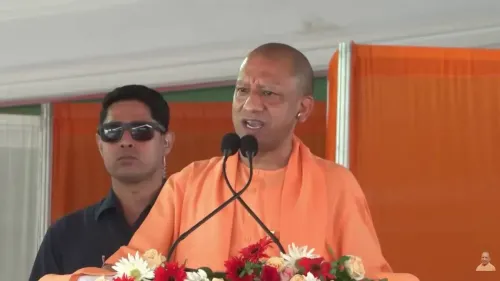
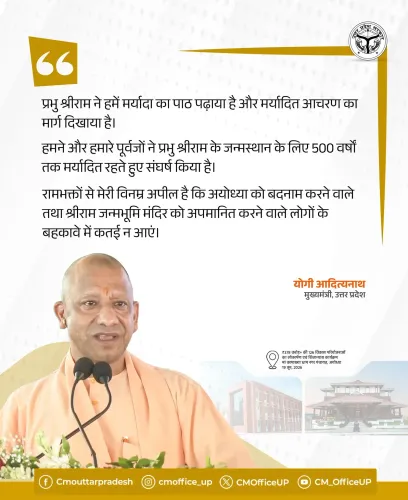
Uttar Pradesh Chief Minister Yogi Adityanath issued a sharp political warning on Tuesday, 14 July 2026, accusing those who once allegedly sought to conduct namaz at the sacred Hanumangarhi temple in Ayodhya of now raising questions about the faith associated with Ayodhya Dham. Posting on X, he called on citizens to remain vigilant against what he described as a continuing assault on the city's religious identity.
Context
In his post, Yogi Adityanath wrote: 'श्री अयोध्या धाम की आस्था की बात वे लोग कर रहे हैं, जो श्री हनुमानगढ़ी जैसे पवित्र स्थल पर नमाज पढ़वाने का काम करते थे' — translated: 'Those who once arranged for namaz to be offered at a sacred site like Shri Hanumangarhi are now speaking about the faith of Shri Ayodhya Dham.' He added: 'This attack is continuous; we will have to remain alert.'
Hanumangarhi is a centuries-old Hanuman temple in the heart of Ayodhya and has historically been at the centre of local disputes over religious access and practices. The Chief Minister's remarks directly invoke that contested history to frame a present-day political argument.
Policy Backdrop
The post comes nearly two and a half years after the January 2024 consecration of the Ram Temple at Ram Janmabhoomi in Ayodhya — a ceremony attended by Prime Minister Narendra Modi and Yogi Adityanath himself. The temple's construction followed the landmark 2019 Supreme Court judgment that resolved the decades-long title dispute over the site and awarded it to a Hindu trust.
Since the consecration, Ayodhya has been positioned by the Bharatiya Janata Party (BJP) as a model of cultural and religious restoration. The state government has invested heavily in the city's redevelopment, including road widening, airport expansion, and riverfront beautification along the Saryu.
Stakeholders and Impact
The Chief Minister's statement is directed at a broad audience: Hindu devotees who regard Ayodhya as the birthplace of Lord Rama, temple trusts managing the city's religious infrastructure, and political opponents whom the post implicitly accuses of historical transgressions. By naming Hanumangarhi specifically, Yogi Adityanath anchors an abstract political charge to a concrete, emotionally resonant local landmark.
The remarks are likely to intensify scrutiny on opposition parties active in Uttar Pradesh, who may now face pressure to respond to the allegation. Religious organisations and Ayodhya temple trusts are key stakeholders who could amplify or moderate the debate in the days ahead.
What's Next
Responses from opposition parties and religious bodies in Uttar Pradesh are anticipated following the Chief Minister's pointed remarks. With Ayodhya remaining a charged political and religious symbol, any escalation in the discourse around temple access or communal harmony in the city could draw national attention. Yogi Adityanath's call for vigilance signals that his administration intends to keep the protection of Ayodhya Dham's sanctity at the centre of its political messaging going forward.
Point of View
The Chief Minister grounds the charge in a specific, emotionally potent symbol that resonates deeply with the BJP's core voter base. The call for 'vigilance' is a recurring rhetorical device in UP politics that keeps the electorate in a state of heightened religious alertness, useful well beyond any single news cycle. This pattern suggests the BJP intends to sustain Ayodhya as a live political issue rather than a settled achievement.
NationPress
14 Jul 2026
Frequently Asked Questions
What did CM Yogi Adityanath say about Ayodhya Dham?
On 14 July 2026, CM Yogi Adityanath posted on X accusing those who once allegedly arranged namaz at Hanumangarhi of now speaking about the faith of Ayodhya Dham, and called on people to remain vigilant against what he described as a continuous attack.
What is Hanumangarhi in Ayodhya?
Hanumangarhi is a centuries-old Hanuman temple located in the heart of Ayodhya, Uttar Pradesh. It is one of the most visited religious sites in the city and has historically been a focal point of local disputes over religious access.
Why is Ayodhya politically significant in Uttar Pradesh?
Ayodhya is regarded by Hindus as the birthplace of Lord Rama. The 2019 Supreme Court verdict resolved a decades-long title dispute over the Ram Janmabhoomi site, leading to the construction and consecration of the Ram Temple in January 2024, making it a central symbol in BJP's political narrative.
Who is Yogi Adityanath?
Yogi Adityanath is the Chief Minister of Uttar Pradesh and a senior BJP leader. He is also the head of the Gorakhnath Math in Gorakhpur and has been a prominent voice on Hindu religious and cultural issues in the state.
What is the BJP's stance on Hindu temple protection in Uttar Pradesh?
The BJP, which governs Uttar Pradesh, has consistently emphasised the protection of Hindu religious sites as a core part of its political platform, with the Ram Temple consecration in Ayodhya being its most prominent achievement in this regard.