Uttarakhand CMO highlights tech-driven disaster preparedness
Synopsis
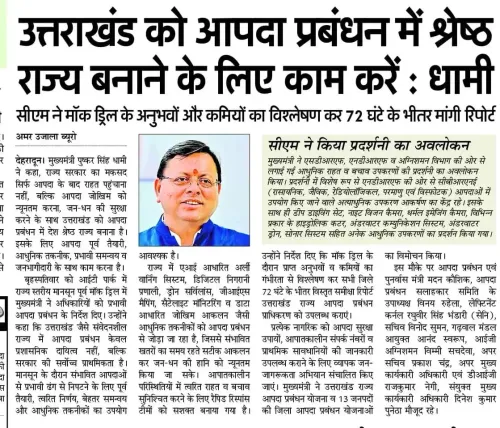
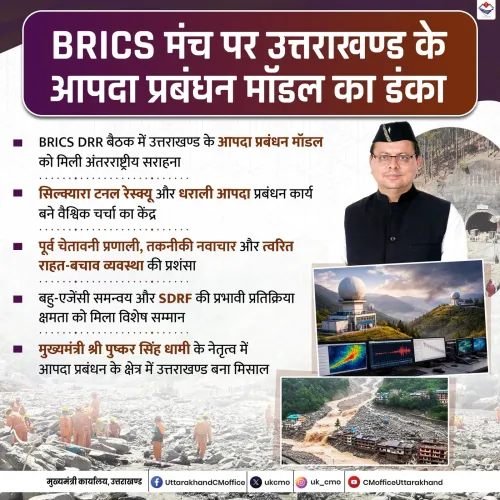
The Uttarakhand Chief Minister's Office on 14 July 2026 highlighted technology, surveillance and advance preparedness as defining features of the state's disaster management framework, framing them as evidence of the government's commitment to public safety in a Himalayan state highly prone to floods and landslides.
Key Takeaways
The Uttarakhand CMO posted on 14 July 2026 emphasising technology and early preparedness in disaster management.
The statement frames 'technology, surveillance and advance preparedness' as evidence of the government's sensitivity toward public safety.
Uttarakhand is one of India's most disaster-prone states, exposed to cloudbursts, flash floods, landslides and earthquakes each monsoon season.
The 2013 Kedarnath floods prompted a major overhaul of the state's disaster management plan, with technology integration at its core.
India's Disaster Management Act, 2005 and National Policy on Disaster Management, 2009 provide the statutory and policy backbone for these state-level efforts.
Hill communities, pilgrims and tourists are the primary beneficiaries of an effective early-warning and rapid-response system in the state.
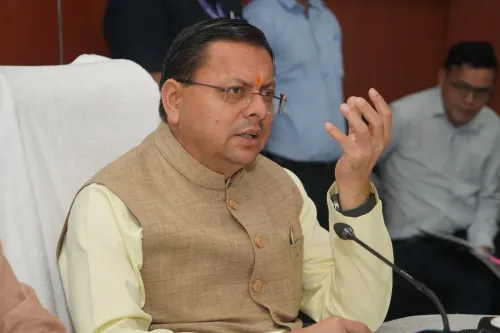
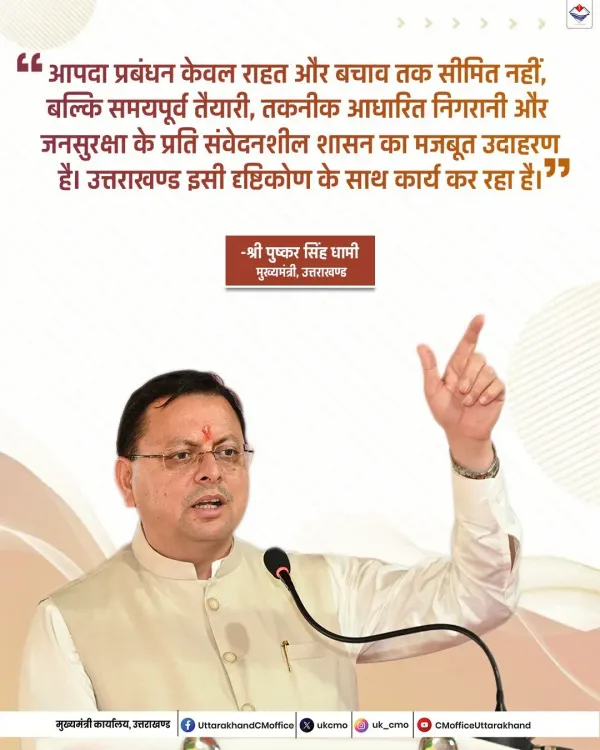
The Chief Minister's Office of Uttarakhand on Tuesday, 14 July 2026, underscored the state government's commitment to technology-driven disaster management, citing surveillance systems and early preparedness as hallmarks of its public-safety approach. The post, shared on the official CMO account, framed these efforts as a reflection of the government's sensitivity toward citizen security in a state chronically exposed to natural hazards.
The Hindi-language post stated: 'Aapda prabandhan tantra ko lekar takneek, nigrani aur samay poorv taiyari sarkar ke jansurakhsha ko lekar samvedansheel karya ka udaharan hai' — translating to: 'Technology, surveillance and advance preparedness with respect to the disaster management system are an example of the government's sensitive work toward public safety.'
Context
Uttarakhand is among India's most disaster-prone states, its Himalayan terrain making it acutely vulnerable to cloudbursts, flash floods, landslides and earthquakes — particularly during the monsoon season. The state's exposure was brought into sharp national focus by the 2013 Kedarnath floods, one of India's worst peacetime disasters, which killed thousands and devastated infrastructure across the Garhwal Himalayas.
That catastrophe became a turning point: Uttarakhand revised its State Disaster Management Plan with an explicit emphasis on technology integration, community preparedness and faster response protocols. The CMO's latest statement signals that this institutional shift remains a governing priority more than a decade later.
Policy Backdrop
India's Disaster Management Act, 2005 established the statutory framework for the National Disaster Management Authority (NDMA) and mandated state-level disaster management authorities and plans. The National Policy on Disaster Management, 2009 further prioritised the use of information and communication technology, GIS-based mapping and early-warning systems — especially in vulnerable Himalayan regions.
Successive national missions on climate-resilient infrastructure have pushed Himalayan states toward satellite-based monitoring, automated weather stations and community alert networks. The CMO's emphasis on 'technology and surveillance' aligns directly with this multi-decade policy arc, reflecting the broader national shift from reactive relief to proactive, data-led disaster governance.
Stakeholders and Impact
The populations most directly affected by Uttarakhand's disaster management capacity include hill communities settled in fragile river valleys, seasonal agricultural workers, and the millions of pilgrims and tourists who travel to the state's religious and trekking destinations each year. An effective early-warning and response system has direct life-safety implications for all three groups.
The National Disaster Response Force (NDRF), operating under the Ministry of Home Affairs, regularly deploys teams in Uttarakhand ahead of and during the monsoon. Coordination between state-level surveillance infrastructure and NDRF's search-and-rescue capacity is a key variable in how quickly the administration can respond to localised events such as cloudbursts or bridge collapses.
What's Next
With the monsoon season active across Uttarakhand, attention will focus on whether the state's sensor networks, automated weather stations and community alert systems are fully integrated and operationally tested. Announcements on real-time data-sharing arrangements with the NDMA or NDRF would be a concrete indicator of the preparedness posture the CMO has described.
The CMO's public framing of disaster management as a marker of governmental 'sensitivity' also signals a political intent to keep the issue visible ahead of the peak monsoon weeks — a period when the state's administrative response is most publicly scrutinised.
Point of View
Positioning the state government as proactive rather than reactive on disaster governance — a framing that has direct political value in a state where administrative response to natural calamities is closely watched. The emphasis on 'technology and surveillance' echoes a decade-long national policy push toward ICT-enabled, early-warning-led disaster management, suggesting the state is aligning its public narrative with that broader institutional arc. By invoking 'sensitivity toward public safety,' the CMO's office is also making an implicit contrast with past failures, particularly the shadow of the 2013 Kedarnath disaster that still shapes political accountability in Uttarakhand. The real test of these claims will come in operational outcomes — response times, early-warning accuracy and casualty data — over the weeks ahead.
NationPress
14 Jul 2026
Frequently Asked Questions
What did the Uttarakhand CMO say about disaster management?
The Uttarakhand Chief Minister's Office stated on 14 July 2026 that technology, surveillance and advance preparedness in the disaster management system are an example of the government's sensitive work toward public safety.
Why is Uttarakhand so vulnerable to disasters?
Uttarakhand's Himalayan terrain makes it highly prone to cloudbursts, flash floods, landslides and earthquakes, particularly during the monsoon season. The 2013 Kedarnath floods, which killed thousands, remain the most prominent example of this vulnerability.
What is the National Disaster Management Authority (NDMA)?
The NDMA is India's apex statutory body established under the Disaster Management Act 2005 to formulate national policies, guidelines and plans for disaster prevention and response, including in Himalayan states like Uttarakhand.
How has Uttarakhand improved its disaster management after 2013?
After the 2013 Kedarnath floods, Uttarakhand revised its State Disaster Management Plan with a stronger focus on technology integration, early-warning systems, automated weather stations and community preparedness protocols.
What role does the NDRF play in Uttarakhand during monsoon?
The National Disaster Response Force deploys specialised teams in Uttarakhand ahead of and during the monsoon season to assist with search, rescue and relief operations in areas affected by floods, landslides and cloudbursts.