Vaishno Devi Shrine Board reviews offerings, donations management under J&K LG
Synopsis
J&K Lieutenant Governor Manoj Sinha chaired a high-level Vaishno Devi Shrine Board review on 16 July, scrutinising how millions of rupees in devotee offerings — including precious metals — are collected, stored, and processed. The Board confirmed that precious metal donations are routed through the RBI and India Government Mint, Hyderabad, signalling a rigorous institutional framework at one of India's busiest pilgrimage sites.
Key Takeaways
J&K LG Manoj Sinha chaired the SMVDSB meeting on 16 July at Spiritual Growth Centre, Katra .
The review covered collection, counting, accounting, safeguarding, and utilisation of devotees' offerings across donation boxes, counters, online platforms, and precious metals.
Precious metal offerings are processed through Reserve Bank of India (RBI) and India Government Mint, Hyderabad .
All financial transactions conform to prescribed banking norms, statutory provisions, and Government of India guidelines.
The Board expressed satisfaction over the transparency, accountability, and efficiency of existing arrangements.
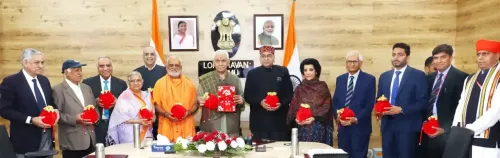
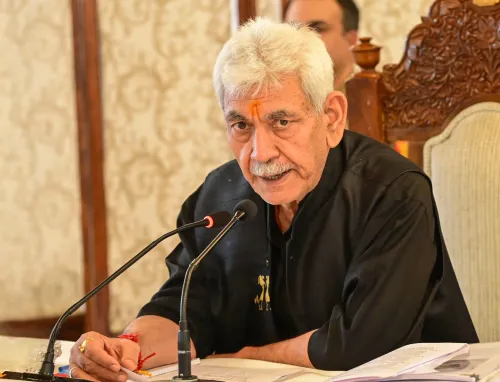
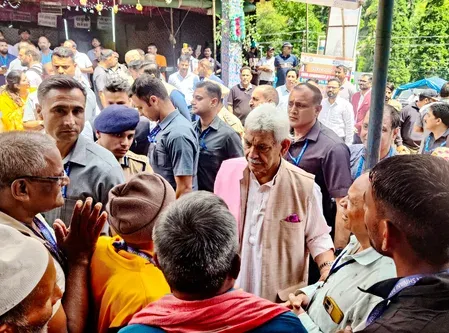
Jammu and Kashmir Lieutenant Governor Manoj Sinha on Thursday, 16 July chaired a meeting of the Shri Mata Vaishno Devi Shrine Board (SMVDSB) at the Spiritual Growth Centre, Katra, to conduct a comprehensive review of the collection, accounting, and utilisation of offerings and donations received at the sacred shrine.
Who Attended the Meeting
The meeting was attended by SMVDSB members including Mahamandleshwar Swami Vishveshvaranand Giriji Maharaj, Baleshwar Rai, Dr. Ashok Bhan, Sudha Murty, Gunjan Rana, Dr. K.K. Talwar, Kulbhushan Ahuja, Lalit Bhasin, and Suresh Kumar Sharma. Senior officials present included Dr. Mandeep K. Bhandari, Principal Secretary to the Lieutenant Governor; Sachin Kumar Vaishya, Chief Executive Officer of SMVDSB; and Alok Kumar Maurya, Additional CEO, SMVDSB. Several members participated through virtual mode.
Key Agenda: Transparency and Accountability
The central focus of the meeting was ensuring complete transparency, accountability, and strict adherence to Standard Operating Procedures (SOPs) in managing devotees' offerings. A detailed presentation outlined the institutional mechanisms in place for the secure handling of donations received through donation boxes, donation counters, online platforms, and offerings in the form of precious metals.
Board members were briefed on verification processes, surveillance mechanisms, banking safeguards, and periodic audits that govern each stage of the donation management cycle. The Board was also informed that all financial transactions are carried out in strict conformity with prescribed banking norms, statutory provisions, and guidelines issued by the Government of India.
Precious Metal Offerings: Security Protocols
The meeting gave particular attention to the handling and storage of offerings received in the form of precious metals. The Board noted that stringent security protocols are in place for their secure transportation, processing, and refinery — conducted through reputed government-approved institutions including the Reserve Bank of India (RBI) and the India Government Mint, Hyderabad. This institutional channel ensures that precious offerings are processed with full accountability and state oversight.
Board's Assessment
After the detailed review, the Board expressed satisfaction over the transparency, accountability, and efficiency of the existing arrangements. It also appreciated the comprehensive safeguards and monitoring mechanisms adopted to ensure that sacred offerings are managed with the highest standards of integrity, financial discipline, and public trust. Notably, the review reflects a growing institutional emphasis on auditable governance at major religious shrines — a pattern seen across several state-administered temple boards in recent years.
The SMVDSB oversees one of India's most visited pilgrimage sites, receiving millions of devotees annually, making the integrity of its financial management a matter of significant public interest.
Point of View
But the specificity of the audit trail — RBI processing, government mint refinery, surveillance mechanisms — points to a deliberate effort to pre-empt scrutiny at a shrine that handles offerings worth hundreds of crores annually. What the meeting does not address publicly is the quantum of offerings received or independent third-party audit outcomes, which would be the true measure of the transparency being claimed. As state-administered religious boards across India face growing demands for financial disclosure, the SMVDSB's institutional framework appears more robust than most — but public accountability requires published numbers, not just process assurances.
NationPress
15 Oct 2026
Frequently Asked Questions
What was reviewed at the Vaishno Devi Shrine Board meeting on 16 July?
The SMVDSB meeting chaired by J&K LG Manoj Sinha reviewed the collection, counting, accounting, safeguarding, and utilisation of offerings and donations received at the Vaishno Devi shrine. The review covered donations via boxes, counters, online platforms, and precious metal offerings.
Who attended the SMVDSB meeting on 16 July 2025?
The meeting was attended by SMVDSB members including Sudha Murty, Dr. Ashok Bhan, Mahamandleshwar Swami Vishveshvaranand Giriji Maharaj, and others, along with senior officials such as CEO Sachin Kumar Vaishya and Additional CEO Alok Kumar Maurya, in person and virtually.
How are precious metal offerings at Vaishno Devi handled?
Precious metal offerings are processed through reputed government-approved institutions, specifically the Reserve Bank of India and the India Government Mint, Hyderabad. Stringent security protocols govern their storage, transportation, and refinery.
What financial norms govern Vaishno Devi's donations?
All financial transactions related to offerings and donations at the Vaishno Devi shrine are conducted in strict conformity with prescribed banking norms, statutory provisions, and guidelines issued by the Government of India from time to time.
What was the outcome of the SMVDSB board review?
After a detailed review, the Board expressed satisfaction over the transparency, accountability, and efficiency of existing arrangements, and appreciated the comprehensive safeguards ensuring offerings are managed with integrity and financial discipline.