What Steps is the Vaishno Devi Shrine Board Taking for the Rehabilitation of Pony Operators?
Synopsis
The Shri Mata Vaishno Devi Shrine Board is taking significant steps to rehabilitate traditional service providers, ensuring their livelihoods while adhering to environmental guidelines. This meeting highlights the Board's commitment to balance economic and ecological needs.
Key Takeaways
The SMVDSB is actively working on a rehabilitation framework for service providers.
Concerns regarding registration and fees were raised by service providers.
There is a strong emphasis on balancing environmental sustainability with economic needs.
Younger athletes provided valuable insights into sports development challenges.
Stakeholders proposed solutions for easing congestion during peak seasons.
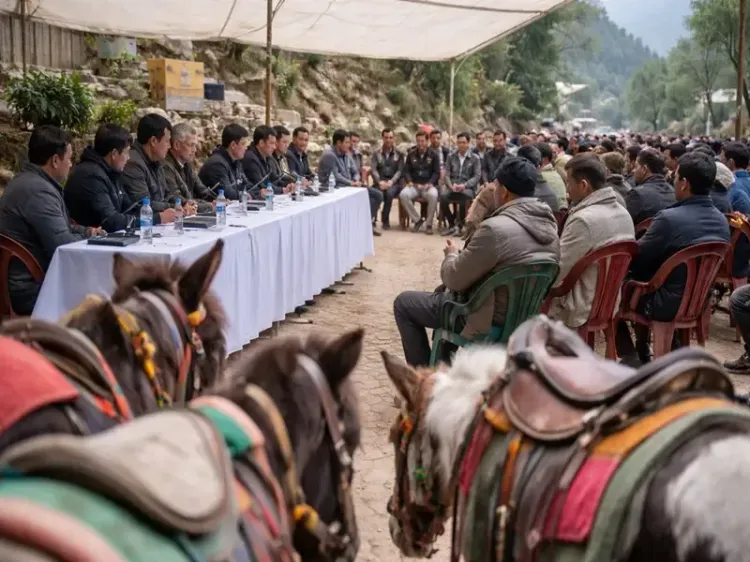
Jammu, Feb 12 (NationPress) The Shri Mata Vaishno Devi Shrine Board (SMVDSB) convened a meeting on Thursday focused on the organized rehabilitation of pony operators and other service providers, adhering to the guidelines set forth by the National Green Tribunal (NGT).
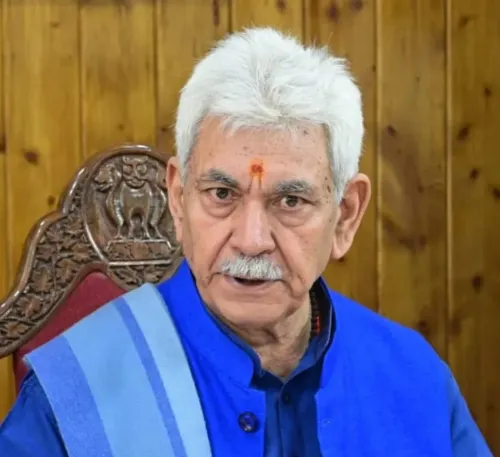
As per official sources, this gathering was organized following decisions made during the 76th meeting of the SMVDSB, which was chaired by Lt Governor Manoj Sinha.
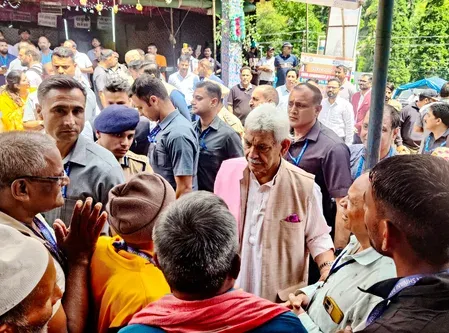
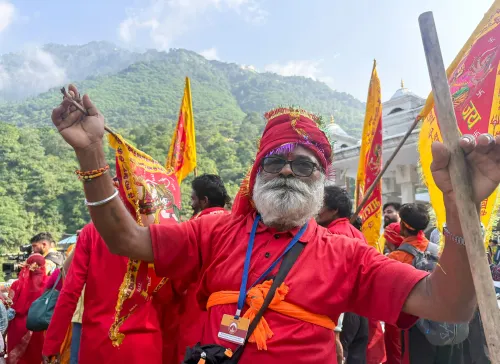
The session was led by Sachin Kumar Vaishya, the Chief Executive Officer of the SMVDSB, and included senior Board officials as well as a delegation headed by Bhupinder Singh. Representatives from various stakeholder groups, such as ponywalas, pithus, and palkiwallas involved in the Yatra along the Shri Mata Vaishno Devi route, were also present.
During the discussions, the focus was on creating a structured and sustainable rehabilitation framework that supports the livelihoods of traditional service providers while promoting environmentally friendly and pilgrim-friendly management of the Yatra.
The Shrine Board reiterated its commitment to harmonizing environmental sustainability with the socio-economic well-being of families reliant on Yatra-related services. Officials assured that the proposed rehabilitation plan aims to establish alternative and sustainable livelihood opportunities as per NGT's directives.
Service provider representatives voiced concerns regarding the current registration system and the associated fees. They requested that these issues be addressed with the relevant authorities for a review.
Stakeholders also suggested creating an alternative parking facility to alleviate congestion in the Banganga region, which experiences heavy traffic during peak Yatra seasons.
The delegation further advocated for appropriate compensation as part of the rehabilitation effort, stressing that the transition should be rolled out gradually to minimize disruptions and provide affected families with adequate time to adjust to new income opportunities.
The Shrine Board assured attendees that all concerns and recommendations would be considered in collaboration with the relevant authorities during the finalization of the comprehensive rehabilitation framework.
Following this, in continuation of a previous consultative session with members of the sports community, the Shrine Board engaged in an interaction with young athletes to gather grassroots feedback.
Athletes across various sports, including cricket, football, shooting, badminton, basketball, archery, judo, and tennis, shared their experiences regarding challenges in training, coaching, infrastructure, and exposure. Officials indicated that this feedback would contribute to devising a robust strategy for talent identification, enhancing sports development, and fostering a sustainable sporting environment in the region.
Point of View
The initiatives taken by the Shri Mata Vaishno Devi Shrine Board reflect a commendable effort to address both environmental concerns and the economic stability of traditional service providers, showcasing a balanced approach that could serve as a model for similar initiatives across the country.
NationPress
23 Sept 2026
Frequently Asked Questions
What is the purpose of the meeting held by SMVDSB?
The meeting aimed to discuss the structured rehabilitation of pony operators and other service providers in compliance with NGT directives.
Who attended the consultative meeting?
The meeting was attended by SMVDSB officials, a delegation led by Bhupinder Singh, and representatives of various service provider groups.
What were the key concerns raised by service providers?
Concerns included the existing registration mechanism, fee structure, and the need for appropriate compensation as part of the rehabilitation package.
What is the Shrine Board's commitment regarding environmental sustainability?
The Shrine Board is committed to balancing environmental sustainability with the socio-economic security of families dependent on Yatra-related services.
What feedback was gathered from young athletes?
Feedback from young athletes highlighted challenges in training, coaching, and infrastructure, which will inform future sports development strategies.