CM Shivakumar: Children Are Kannada's True Ambassadors
Synopsis
On Karnataka Rajyotsava, the Chief Minister's Office posted a message urging children to become proud ambassadors of Kannada — a classical language with over 2,000 years of history, eight Jnanpith Awards, and a literary lineage from Pampa to Kambara.
Key Takeaways
The Chief Minister's Office of Karnataka posted a Kannada Rajyotsava message on 1 November 2026 attributed to CM DK Shivakumar .
The message declares today's children the 'heirs of Kannada' and calls them ambassadors of the language.
Kannada holds classical language status granted by the Government of India in 2008 .
The language has produced eight Jnanpith Award winners — India's highest literary honour.
The post invokes over a dozen literary giants spanning the 9th century to the modern era , including Pampa, Kuvempu, and Chandrashekhara Kambara.
Children are urged to 'love, nurture, protect' Kannada and hand it to future generations with pride.
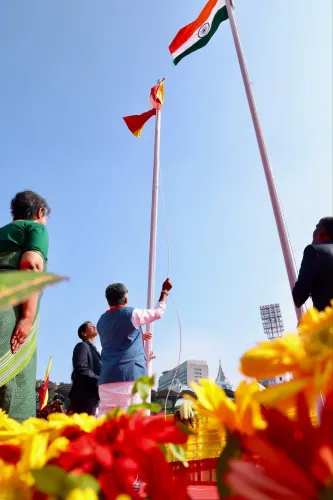
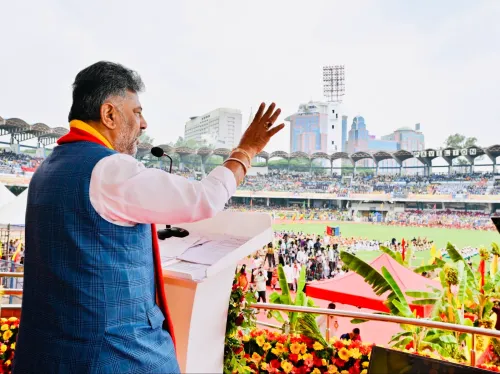
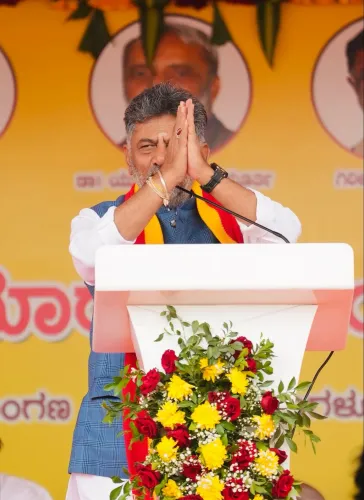
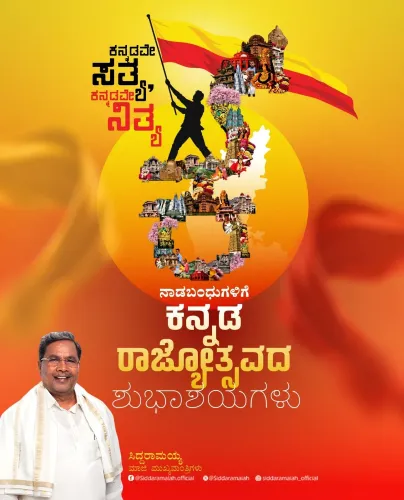
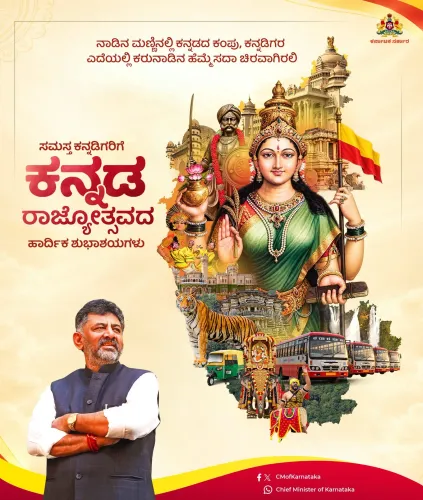
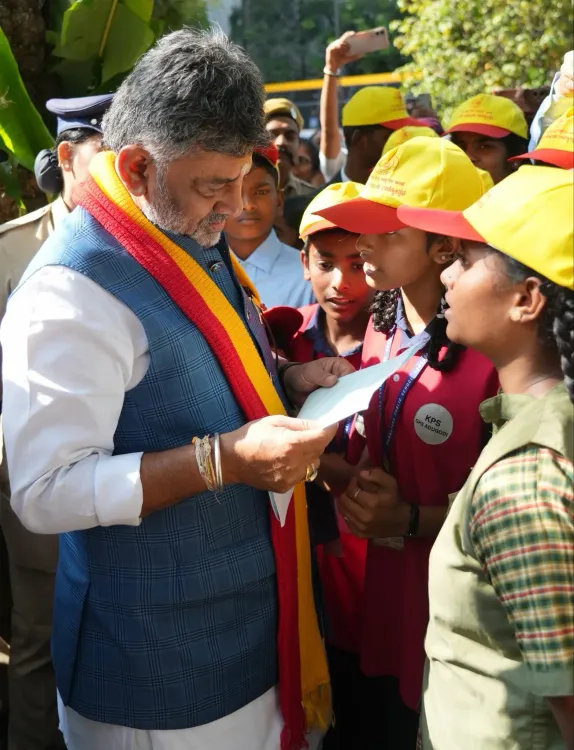
A language with more than 2,000 years of recorded history, eight Jnanpith Award laureates to its name, and a literary canon that stretches from medieval poets to modern novelists — and Karnataka Chief Minister DK Shivakumar wants every child in the state to feel the full weight of that inheritance. On Sunday, 1 November 2026 — Karnataka Rajyotsava Day — the Chief Minister's Office of Karnataka posted a message in Kannada urging the state's children to become proud ambassadors of their language.
The message, attributed to Chief Minister Shivakumar, opens with a striking declaration: 'ಇಂದಿನ ಮಕ್ಕಳೇ ಕನ್ನಡದ ವಾರಸುದಾರರು' — 'Today's children are the heirs of Kannada.' It is less a policy statement than a call to cultural stewardship, addressed directly to young Kannadigas.
2,000 Years of Kannada — and Eight Jnanpith Honours
The post grounds its appeal in concrete achievement. Kannada was granted classical language status by the Government of India in 2008, a recognition that formalized what scholars had long argued: this is one of the oldest living literary traditions on the subcontinent. The language has produced eight Jnanpith Award winners — India's highest literary honour — more than almost any other Indian language.
The message invokes a roll-call of the language's giants: medieval poet-scholars Pampa, Ranna, Janna, and Kumaravyasa; the Bhakti-movement luminaries Kanakadasa, Purandaradasa, Sarvajnya, and Basavanna; and modern literary titans DVG, Kuvempu, Bendre, Shivarama Karanth, Gokak, UR Ananthamurthy, Tejaswi, Siddalingaiah, Nisar Ahmed, and Chandrashekhara Kambara. It is a deliberate sweep from the 9th century to the 21st — a reminder that Kannada's creative pulse has never stopped.
Kannada as a Jewel Placed in Young Hands
The metaphor at the heart of the message is vivid and personal: 'ಕನ್ನಡ ಎನ್ನುವುದು ಅಮೂಲ್ಯ ಆಭರಣವಿದ್ದಂತೆ' — 'Kannada is like a priceless jewel.' The Chief Minister's message tells children that this jewel has been placed in their hands, and the responsibility to preserve its lustre now belongs to them. 'Love Kannada, nurture it, protect it; hand it over to the next generation with pride,' the message urges.
The appeal lands on Karnataka Rajyotsava, the state's formation day, when the emotional resonance of Kannada identity is at its annual peak. Karnataka has maintained a consistent policy emphasis on Kannada through school education and official communications — and messages like this one form part of that broader effort to keep the language vibrant in an era of rapid linguistic change.
Eight Jnanpith Awards. A classical-language stamp. Twelve centuries of named poets. The inheritance is vast. The question this Rajyotsava puts to the next generation is simple: will you carry it forward?
Point of View
From medieval Vachana poets to modern Jnanpith laureates, serves a dual function: it builds emotional ownership among young Kannadigas and implicitly defends Kannada's standing in national debates over language policy. The framing of children as 'ambassadors' rather than merely 'speakers' subtly raises the stakes, suggesting the language's future depends on active advocacy, not passive inheritance. Expect this messaging to be paired with concrete policy moves — Kannada-medium school incentives or curriculum updates — as the state approaches the next legislative calendar.
NationPress
1 Nov 2026
Frequently Asked Questions
What is Karnataka Rajyotsava and why is it celebrated on 1 November?
Karnataka Rajyotsava (Karnataka Formation Day) is celebrated on 1 November every year to mark the unification of Kannada-speaking regions into the state of Karnataka in 1956. It is the most significant state cultural celebration.
When did Kannada get classical language status?
Kannada was granted classical language status by the Government of India in 2008 , recognising its ancient literary heritage spanning more than 2,000 years.
How many Jnanpith Awards has Kannada won?
Kannada has produced eight Jnanpith Award winners, making it one of the most decorated languages under India's highest literary honour. Notable winners include Kuvempu, Bendre, Shivarama Karanth, UR Ananthamurthy, and Chandrashekhara Kambara.
Who are the medieval poets mentioned in CM Shivakumar's Rajyotsava message?
The message names Pampa, Ranna, Janna, and Kumaravyasa as foundational medieval Kannada poet-scholars, alongside Bhakti-movement saints Kanakadasa, Purandaradasa, Sarvajnya, and Basavanna .
What does DK Shivakumar's Rajyotsava 2026 message say about children?
Chief Minister DK Shivakumar called children the 'heirs and ambassadors' of the Kannada language, urging them to love, nurture, and protect Kannada — comparing it to a priceless jewel — and pass it on to future generations with pride.