Nadda fires at Congress rally: '1 November ka kala itihas'
Synopsis
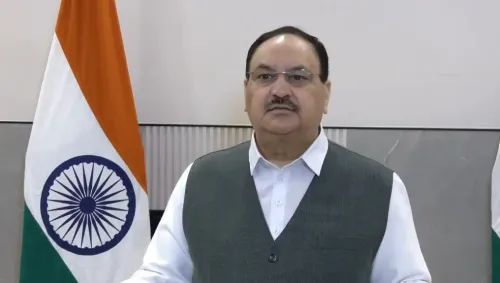
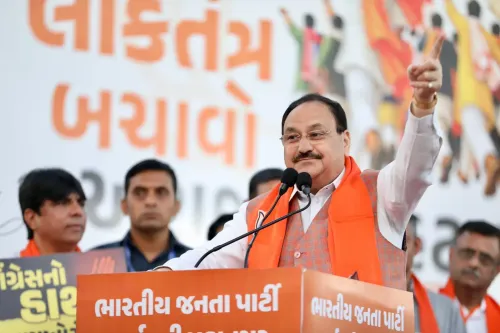
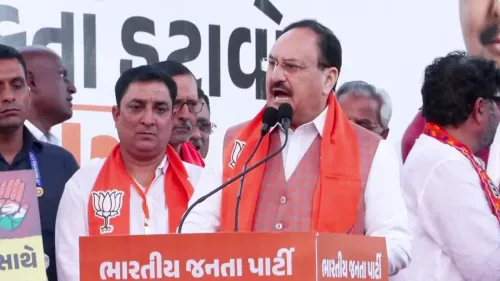
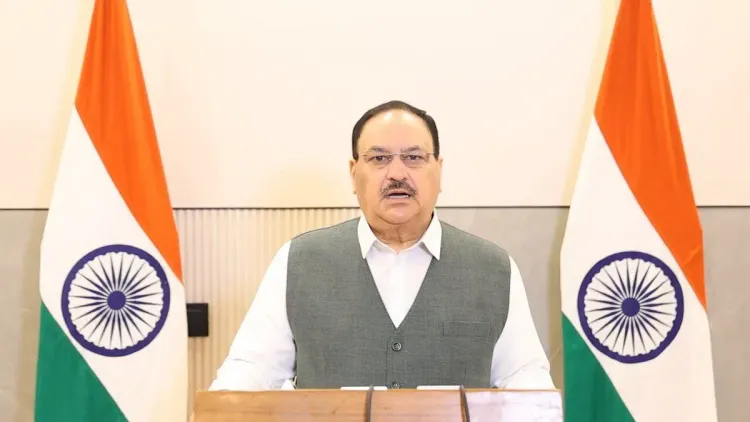
Union Health Minister and BJP president J. P. Nadda launched a fierce attack on a Congress rally at Ramleela Maidan on 1 November 2026, invoking the dark history of the 1984 anti-Sikh riots, targeting Rahul Gandhi directly, and calling the event the 'last nail' in Congress's political coffin.
Key Takeaways
Nadda called the 1 November 2026 Congress rally at Ramleela Maidan a 'premeditated conspiracy to hand the country over to anarchy.' Nadda invoked 1 November 1984 — the deadliest day of the anti-Sikh riots in Delhi — as political ammunition against Rahul Gandhi and the Congress.
He accused the Congress of practicing danga aadharit rajneeti (riot-based politics) and called the rally a 'foolish, orchestrated drama.' Nadda also raised the issue of Delhi traders' grievances , demanding Congress account for their suffering.
He predicted the rally would be 'the last nail in the coffin of Congress's political decline.' Ramleela Maidan has historically served as India's premier stage for political mobilisation by both ruling and opposition forces.
A Congress rally at Ramleela Maidan on Sunday, 1 November 2026, drew a sharp, high-voltage counter-attack from Union Health Minister and BJP national president J. P. Nadda, who called the gathering a 'premeditated conspiracy to hand the country over to anarchy in the name of democracy' — and directed his sharpest lines straight at Rahul Gandhi.
Posting in Hindi on X, Nadda did not mince words: 'What is happening today at Ramleela Maidan is not respect for democracy, but a well-planned conspiracy to hand the country over to chaos.' He described the rally as a 'foolish and orchestrated drama by those who have lost and been repeatedly rejected by the people' — language designed to frame the Congress event not as legitimate protest, but as political desperation.
The '1 November' charge — and what it invokes
The most pointed barb in Nadda's post targeted the date itself. 'Rahul Gandhi, listen carefully — you cannot hide the dark history of 1 November,' he wrote. The reference lands with historical weight: 1 November 1984 marks the single most violent day of the anti-Sikh riots in Delhi, which erupted following the assassination of Prime Minister Indira Gandhi on 31 October 1984. Thousands of Sikhs were killed in the violence that followed, and Congress governments of that era have faced sustained political and judicial scrutiny over the riots ever since. By invoking that date on the very day of the rally, Nadda was clearly signalling that the BJP intends to keep the 1984 riots alive as a political liability for the Congress.
He also raised the question of Delhi traders — 'you cannot escape accountability for the tears of Delhi's traders' — tying the Congress rally to what the BJP has framed as economic grievances in the capital. The specific context of those grievances was not elaborated in the post, but the invocation of traders in Delhi points to a constituency the BJP has long courted.
Ramleela Maidan: the ground opposition movements are made of
Ramleela Maidan in central Delhi has historically functioned as the country's most symbolic stage for political mobilisation — from Anna Hazare's anti-corruption movement to Aam Aadmi Party's early mass gatherings. For the Congress to hold a major rally there signals an attempt to reclaim the capital's political street. Nadda's broadside was, in part, a pre-emptive effort to set the narrative before television cameras could give Congress the afternoon's images.
The coffin-nail metaphor — and what the BJP is signalling
Nadda closed with a stark political prediction: 'This rally will prove to be the last nail in the coffin of Congress's political decline.' The metaphor is deliberate. The BJP's standing political argument is that the Congress — once India's dominant national party — has been in irreversible organisational and electoral freefall, unable to recover its mass base outside a handful of states. By framing even a large public rally as evidence of decay rather than revival, Nadda is attempting to invert the optics: the bigger the crowd, the more desperate the act.
He ended with a constitutional frame: 'India is a strong democracy that runs not on your riot-based politics, but on the Constitution and the people's mandate.' The phrase 'danga aadharit rajneeti' (riot-based politics) is the BJP's most consistent attack line against the Gandhi family legacy — a direct callback to 1984 and, more broadly, to the BJP's charge that the Congress has historically instrumentalised communal tension for electoral gain.
Congress has not yet issued a formal response. The rally continues — and so does the argument about who owns the meaning of democracy at Ramleela Maidan.
Point of View
And simultaneously anchor it to the party's most enduring liability — the 1984 anti-Sikh riots. By choosing to respond to the rally in real time on 1 November itself, the BJP is clearly wary of the image value a large Ramleela Maidan crowd generates. The invocation of 'riot-based politics' is not spontaneous; it is part of a long-running attempt to make the 1984 violence the permanent centrepiece of the BJP-Congress electoral argument. Whether this counter-narrative lands with Delhi's traders — a swing constituency — or merely energises the BJP's base will be the key test of its political effectiveness.
NationPress
1 Nov 2026
Frequently Asked Questions
Why did J. P. Nadda attack the Congress rally on 1 November 2026?
Nadda attacked the Congress rally at Ramleela Maidan to counter its political messaging, calling it a 'premeditated conspiracy' against democracy and invoking the 1984 anti-Sikh riots — whose most violent day fell on 1 November — as a charge against the Congress and Rahul Gandhi.
What is the significance of 1 November 1984 in Indian politics?
1 November 1984 was the single deadliest day of the anti-Sikh riots in Delhi, which erupted after the assassination of Prime Minister Indira Gandhi on 31 October 1984. The Congress has faced political and legal scrutiny over those events for decades.
What is Ramleela Maidan and why is it politically significant?
Ramleela Maidan is a large historic ground in central Delhi that has served as the venue for many landmark political rallies and protests, making it one of the most symbolically loaded public spaces for political mobilisation in India.
What did Nadda mean by 'danga aadharit rajneeti'?
The phrase means 'riot-based politics' in Hindi. Nadda used it to accuse the Congress of historically exploiting communal violence — a reference primarily to the 1984 anti-Sikh riots — for electoral purposes.
What was Rahul Gandhi's response to Nadda's post?
As of the time of this report, the Congress party and Rahul Gandhi had not issued a formal public response to Nadda's post.