JP Nadda: 'Chalo Dilli' march final nail in Congress's political coffin
Synopsis
As the INDIA bloc's 'Chalo Dilli' march drew thousands to Ramlila Maidan, BJP's JP Nadda went on the offensive — invoking the 1984 anti-Sikh riots, citing estimated trader losses of ₹10,000 crore, and declaring the rally the 'final nail in the coffin' of Congress. It's a multi-front counter-attack designed to make the opposition march a political liability rather than a show of strength.
Key Takeaways
Nadda called the INDIA bloc's 'Chalo Dilli' march a 'calculated conspiracy to sow chaos' at a press conference on 1 November 2026 .
The INDIA bloc marched to Ramlila Maidan, New Delhi , protesting alleged voter irregularities by the Election Commission of India and CEC Gyanesh Kumar .
Nadda invoked the 1984 anti-Sikh riots , saying the Gandhi family has never offered a 'sincere apology' to the Sikh community.
The Chamber of Trade and Industry (CTI) had written to opposition leaders urging no large rallies during the festive season; Nadda cited estimated trader losses exceeding ₹10,000 crore .
Previous protests reportedly cost Delhi traders approximately ₹3,000 crore , according to Nadda's statement.
Nadda predicted the rally would be the 'final nail in the coffin' of Congress's political decline .
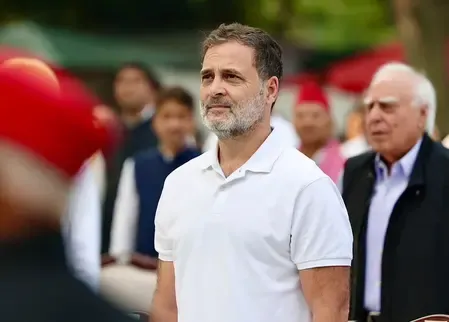
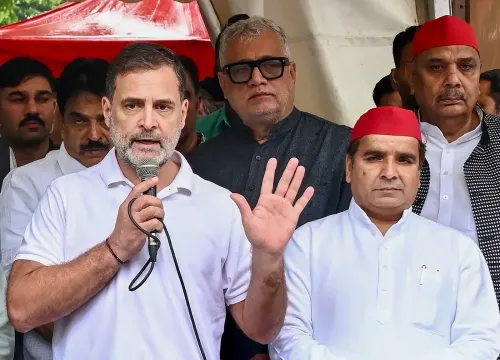
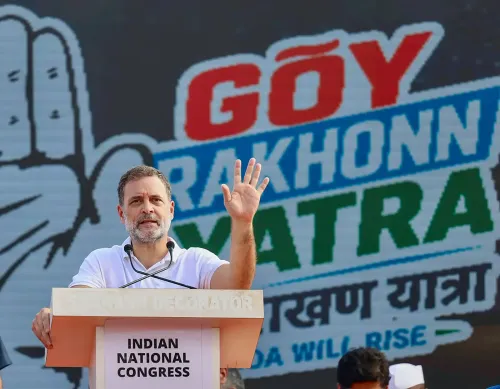
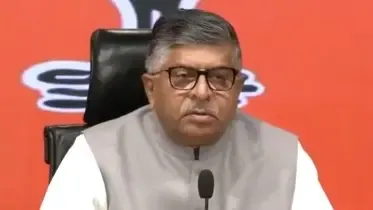
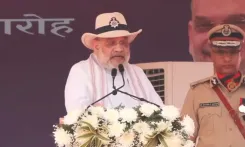
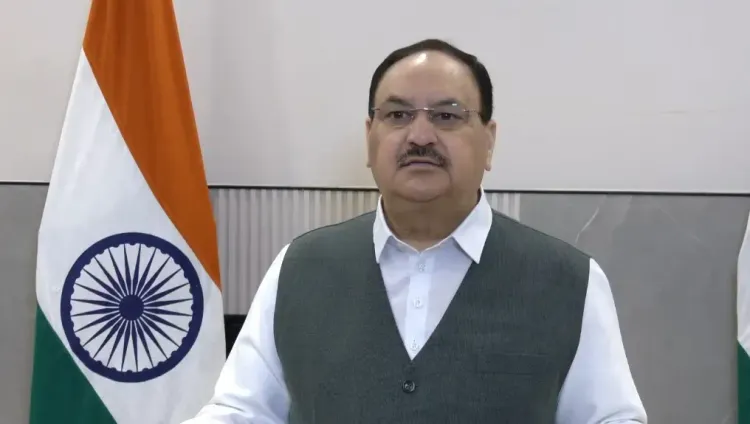
Union Minister J.P. Nadda on Sunday, 1 November 2026, launched a sharp attack on Leader of Opposition Rahul Gandhi over the INDIA bloc's 'Chalo Dilli' march, branding it a 'calculated conspiracy to sow chaos' and declaring that the rally would prove to be the 'final nail in the coffin of the Congress party's political decline.' Nadda made the remarks at a press conference in New Delhi, as thousands gathered at Ramlila Maidan for the opposition rally.
What Nadda Said at the Press Conference
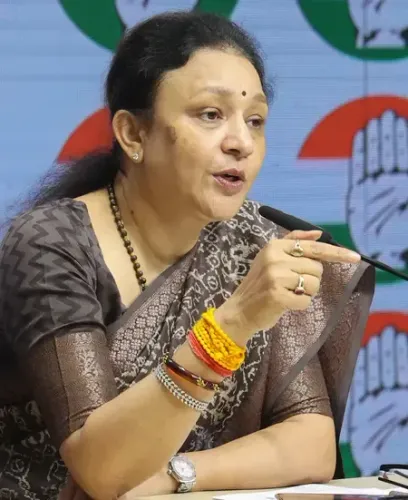
Addressing reporters, Nadda described the gathering as a 'foolish, well-orchestrated political drama' staged by those 'repeatedly rejected by the people.' He alleged that Gandhi's model of politics follows a four-phase pattern: 'spreading lies and creating an uproar' in the first phase; 'inciting chaos and disorder on the streets' in the second; 'damaging the nation's economy' in the third; and 'destabilising an elected government at the behest of foreign powers' in the fourth, according to his statement.
Nadda also outlined what he claimed were four objectives behind the march — 'rubbing salt into the wounds of the Sikh community, orchestrating riots in Delhi, harming small traders during the festive season, and bringing disrepute to the nation.'
The November 1 Context and the Sikh Community
Nadda invoked the date itself as politically charged, calling 1 November the 'most infamous and darkest chapter' in India's democratic history — a reference to the 1984 anti-Sikh riots, which erupted on this date following the assassination of Prime Minister Indira Gandhi. He alleged that the Gandhi family has 'not offered a sincere apology' to the Sikh community to this day, and accused Rahul Gandhi of deliberately choosing the anniversary to hold a political rally.
'The nation has not forgotten. Even today, the Widow Colony in Delhi stands as a testament to that horrific history of the Congress,' Nadda said.
Economic Fallout for Delhi Traders
Nadda highlighted concerns raised by the Chamber of Trade and Industry (CTI), which had reportedly written separate letters to Rahul Gandhi, Sonia Gandhi, Akhilesh Yadav, and Mamata Banerjee, urging them not to hold large-scale political events in Delhi during the festive period. He cited CTI estimates that previous protests had already cost Delhi traders a loss of approximately ₹3,000 crore, and claimed the current rally could result in losses exceeding ₹10,000 crore.
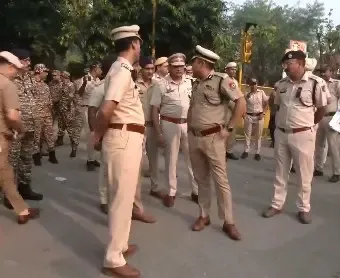
Key markets including Chandni Chowk, Sadar Bazaar, Khari Baoli, and Karol Bagh in Central Delhi were specifically mentioned as areas that stand to be disrupted, particularly with Dhanteras, Diwali, and Chhath Puja approaching.
Why the INDIA Bloc Marched
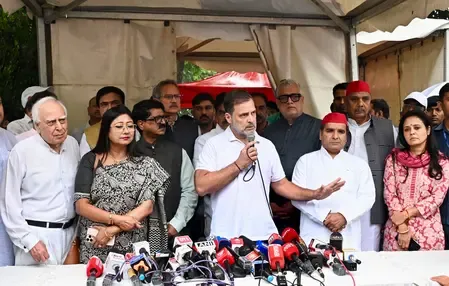
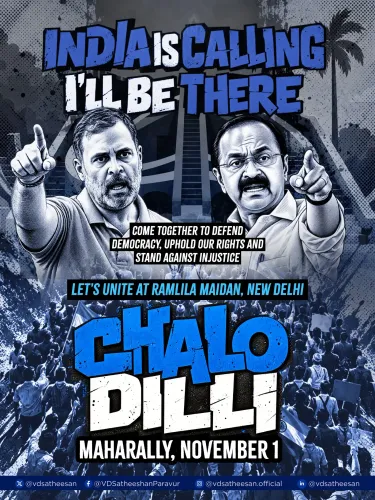
The INDIA bloc launched the 'Chalo Dilli' march on Sunday to protest against the Election Commission of India (ECI) and Chief Election Commissioner (CEC) Gyanesh Kumar over alleged voter irregularities. The rally at Ramlila Maidan brought together constituent parties of the opposition alliance, marking one of the bloc's largest joint mobilisations in the capital.
BJP's Broader Counter-Narrative
Nadda's attack is consistent with the Bharatiya Janata Party (BJP)'s ongoing effort to frame opposition street protests as anti-democratic rather than legitimate political expression. His warning to Gandhi — 'This is India, not some banana republic where you can incite arson, trigger riots, or push an agenda for regime change whenever you please' — signals that the ruling party intends to keep the 1984 riots and the question of festive-season economic disruption at the centre of its counter-messaging. How the INDIA bloc responds, and whether the rally translates into sustained political momentum, will shape the next phase of opposition strategy heading into upcoming state elections.
Point of View
Attach an economic cost figure (₹10,000 crore), and reframe the opposition's democratic assertion as an act of sabotage. What mainstream coverage risks missing is that the CTI trader-loss estimates are self-reported industry figures, not independently verified data, and their amplification by a Union Minister effectively deputises trade bodies into a partisan message. The 1984 invocation is also calibrated: it is designed to fracture the INDIA bloc internally by putting non-Congress allies on record about a crime they did not commit. Whether it succeeds depends on whether the bloc holds together or whether the BJP's framing finds traction in the run-up to state elections.
NationPress
1 Nov 2026
Frequently Asked Questions
What is the INDIA bloc's 'Chalo Dilli' march about?
The 'Chalo Dilli' march is a protest organised by the INDIA bloc opposition alliance at Ramlila Maidan in New Delhi on 1 November 2026, targeting the Election Commission of India and Chief Election Commissioner Gyanesh Kumar over alleged voter irregularities. It is one of the bloc's largest joint mobilisations in the capital.
Why did JP Nadda criticise the 'Chalo Dilli' march?
Nadda called the march a 'calculated conspiracy to sow chaos' and a 'foolish, well-orchestrated political drama' by those repeatedly rejected by voters. He alleged it was timed to hurt Delhi traders during the festive season and to exploit the anniversary of the 1984 anti-Sikh riots, which fell on the same date.
What economic impact does the rally have on Delhi traders?
According to Nadda, citing Chamber of Trade and Industry (CTI) estimates, previous large protests cost Delhi traders around ₹3,000 crore, and the current 'Chalo Dilli' rally could cause losses exceeding ₹10,000 crore. Major markets like Chandni Chowk, Sadar Bazaar, and Karol Bagh are said to be directly affected.
Why did Nadda bring up the 1984 anti-Sikh riots?
Nadda pointed out that 1 November is the anniversary of the 1984 anti-Sikh riots, which he attributed to the Congress. He alleged the Gandhi family has never sincerely apologised to the Sikh community and accused Rahul Gandhi of deliberately choosing this date to hold a political rally, calling it deeply insensitive.
What is the BJP's broader argument against the INDIA bloc protest?
The BJP, through Nadda, argues the 'Chalo Dilli' march is not a legitimate democratic exercise but a destabilisation attempt driven by a four-phase political playbook — spreading misinformation, inciting street disorder, damaging the economy, and seeking foreign-backed regime change. The party says the public has seen through these tactics.