INDIA bloc 'Chalo Dilli' march at Ramlila Maidan: Key demands and security drill
Synopsis
The INDIA bloc's 'Chalo Dilli' march at Ramlila Maidan on 1 November is more than a rally — it is a direct assault on the Election Commission's credibility, with the opposition alleging 13 crore voter names were deleted and demanding a sitting Chief Election Commissioner's resignation, a move with few precedents in Indian democratic history.
Key Takeaways
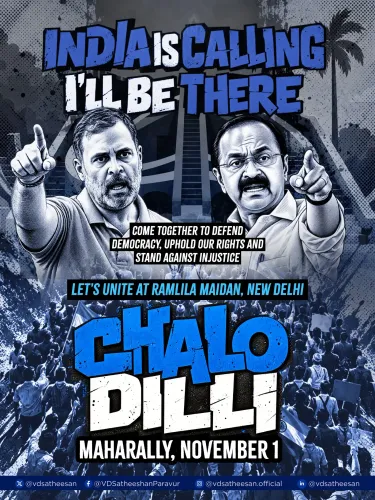
The INDIA bloc held its 'Chalo Dilli' march at Ramlila Maidan, New Delhi on 1 November 2026 .
The rally demanded the resignation of Chief Election Commissioner Gyanesh Kumar over alleged voter roll manipulation.
Venugopal alleged 13 crore names were deleted from electoral rolls under the Special Intensive Revision (SIR) process.
Rahul Gandhi posted on X urging rally attendees to also support Delhi traders during the festive season.
Section 163 was enforced across Delhi districts; gatherings banned near Jantar Mantar and the Election Commission office.
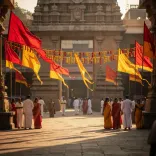
Police and paramilitary personnel were deployed at Ramlila Maidan ahead of the opposition gathering.
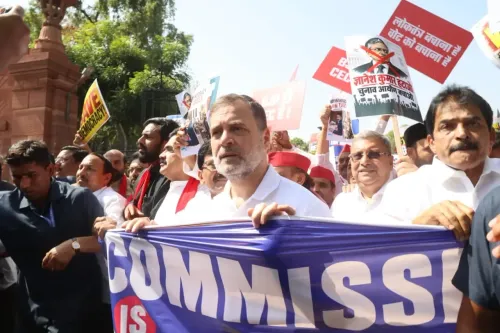
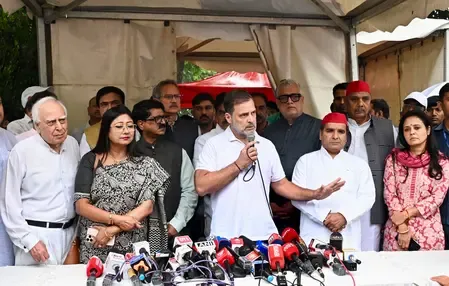
The INDIA bloc held a large-scale 'Chalo Dilli' march at Ramlila Maidan in New Delhi on Sunday, 1 November 2026, bringing together opposition leaders, party workers, and student groups to protest alleged electoral irregularities, oppose the Special Intensive Revision (SIR) of voter rolls, and demand the resignation of Chief Election Commissioner (CEC) Gyanesh Kumar. The rally marked one of the opposition alliance's largest mobilisations since its formation, with participants drawn from across the country.
Key Demands of the Rally
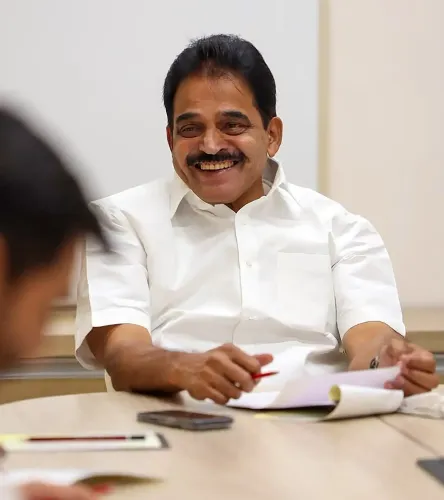
The opposition alliance centred its protest on three core grievances: alleged manipulation of the voter list revision process being conducted by the Election Commission of India (ECI), concerns about the SIR's impact on voter rolls, and the demand for CEC Gyanesh Kumar's resignation. Congress MP and party General Secretary (Organisation) K.C. Venugopal framed the mobilisation as 'Chalo Dilli, Vote Bachao, Desh Bachao' — Save the Vote, Save the Nation. He alleged that 13 crore names had been deleted from electoral rolls, calling it a 'massive fraud' unfolding 'state after state.'
Rahul Gandhi's Appeal and the X Posts
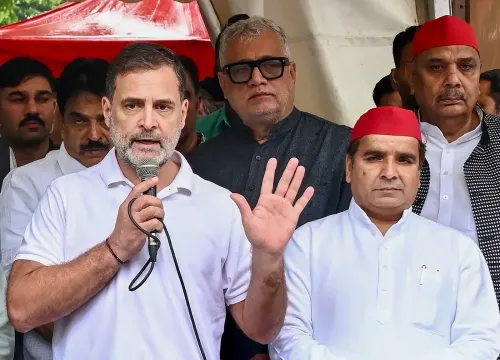
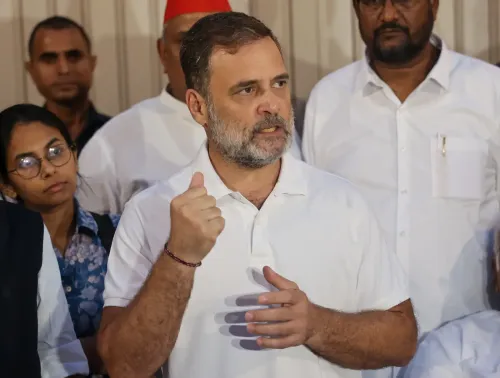
Lok Sabha Leader of the Opposition Rahul Gandhi addressed the rally and, ahead of it, took to X (formerly Twitter) to encourage participants arriving from outside Delhi to also support local traders during the festive season of Diwali, Chhath, and Bhai Dooj. 'Tomorrow, lakhs of people are coming to Delhi for the Ramlila March... I want those lakhs of people coming to Delhi from outside to support the traders here. Protest, march, hold rallies, and along with that, do a little shopping too — it will benefit the traders,' Gandhi said in his post. He dismissed suggestions that the rally would harm traders, alleging the Bharatiya Janata Party (BJP) was 'spreading rumors' out of fear. Venugopal separately posted a video message on X on Thursday, alleging democracy was under 'attack' and calling on citizens nationwide to converge on the capital.
Security Arrangements in Delhi
Delhi Police stepped up security across the national capital ahead of the march. Section 163 was enforced across Delhi districts, prohibiting gatherings at sensitive locations including Jantar Mantar and the Election Commission office. Police and paramilitary personnel were deployed at Ramlila Maidan, while opposition leaders were permitted to reach designated venues in their personal vehicles. The layered security deployment reflected the scale of the expected turnout and the political sensitivity of the protest venue choices.
Context: The SIR Controversy
The Special Intensive Revision of electoral rolls has been a flashpoint between the ruling coalition and opposition parties for weeks. Opposition leaders have repeatedly alleged that the ECI's revision exercise has been used to disenfranchise voters, particularly in states where assembly elections are approaching. The Election Commission has not publicly responded to the allegation of 13 crore deletions as attributed to Venugopal. This is not the first time the INDIA bloc has targeted the ECI — earlier protests over electronic voting machine (EVM) reliability set a pattern of challenging the election body's credibility. Notably, the demand for a sitting CEC's resignation is rare in Indian political history and signals a sharp escalation in the opposition's posture toward electoral institutions.
What Comes Next
The rally's success — measured by turnout and media impact — will shape the INDIA bloc's strategy heading into upcoming state elections. The opposition will likely use the Ramlila Maidan gathering as a launchpad for further agitation on electoral roll concerns, while the government and the BJP are expected to counter with their own mobilisation. All eyes will now be on the Election Commission's official response to the SIR allegations and whether the opposition's unified front holds as election season intensifies.
Point of View
It hands the government a ready rebuttal. The deeper question is whether rallies translate into sustained electoral pressure or dissipate once the news cycle moves on — a pattern the INDIA bloc has struggled to break since 2024.
NationPress
1 Nov 2026
Frequently Asked Questions
What is the INDIA bloc's 'Chalo Dilli' march about?
The 'Chalo Dilli' march is a large opposition rally held at Ramlila Maidan in New Delhi on 1 November 2026, organised by the INDIA bloc to protest alleged irregularities in the Special Intensive Revision (SIR) of electoral rolls and demand the resignation of Chief Election Commissioner Gyanesh Kumar.
What is the Special Intensive Revision (SIR) of electoral rolls?
The SIR is an exercise conducted by the Election Commission of India to update and revise voter rolls. The INDIA bloc has alleged that the revision has been used to delete names of legitimate voters, with Congress leader K.C. Venugopal claiming 13 crore names have been removed, a charge the Election Commission has not publicly addressed.
Why is the demand for CEC Gyanesh Kumar's resignation significant?
Demanding the resignation of a sitting Chief Election Commissioner is rare in Indian political history and represents a sharp escalation in the opposition's challenge to electoral institutions. It signals that the INDIA bloc has moved beyond policy disagreements to directly questioning the neutrality of the election body.
What security measures were in place for the Ramlila Maidan rally?
Delhi Police enforced Section 163 across all Delhi districts, banning gatherings at sensitive locations including Jantar Mantar and near the Election Commission office. Police and paramilitary personnel were deployed at Ramlila Maidan, while opposition leaders were permitted to travel to designated venues in personal vehicles.
What did Rahul Gandhi say ahead of the rally?
In a post on X on Saturday, Rahul Gandhi encouraged the lakhs of people travelling to Delhi for the march to also support local traders during the festive season of Diwali, Chhath, and Bhai Dooj. He dismissed BJP claims that the rally would harm traders, calling them 'rumors' spread out of fear.