Rijiju challenges Congress on elections, SIR ahead of INDIA bloc rally

Synopsis
Hours before the INDIA bloc's Ramlila Maidan rally demanding CEC Gyanesh Kumar's ouster, Union Minister Kiren Rijiju turned the tables — asking Congress how it lost 44 seats in 2014 and suffered a 'hat-trick defeat' in 2024 when its own appointees ran the poll machinery. The BJP is now framing the protest as an assault on democratic institutions, not a defence of voter rights.
Key Takeaways
Kiren Rijiju challenged the Congress on X with questions on its 2014 (44-seat loss) and 2024 poll performances ahead of the INDIA bloc rally.
Rijiju asked whether SIRs conducted between 1952 and 2004 — mostly under Congress rule — were also illegal.
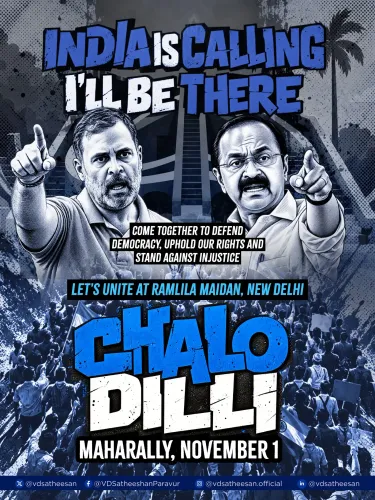
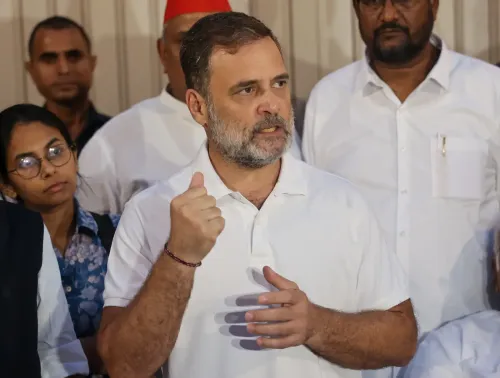
Rahul Gandhi announced the 'Chalo Dilli' march from Connaught Place–Minto Road Junction to Ramlila Maidan on 1 November at 12 pm .
The rally demands the resignation of Chief Election Commissioner Gyanesh Kumar over alleged irregularities in the voter roll revision process.
Delhi Police said no permission had been sought for the Connaught Place march; prohibitory orders under Section 163 BNSS are in force across New Delhi .
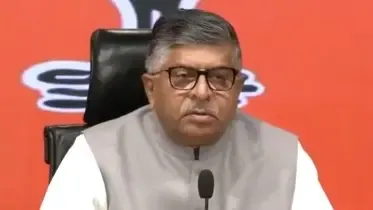
Union Parliamentary Affairs Minister Kiren Rijiju on Saturday, 1 November 2026, mounted a sharp pre-emptive challenge to the Congress ahead of the INDIA bloc's rally at Ramlila Maidan, posting a series of pointed questions on X about past election results, the appointment of Election Commissioners, and the legality of Special Intensive Revisions (SIRs) of voter rolls. The salvo came as Leader of the Opposition Rahul Gandhi announced a 'Chalo Dilli' march culminating at the same venue on 1 November to demand the resignation of Chief Election Commissioner (CEC) Gyanesh Kumar.
Rijiju's Key Questions
Rijiju zeroed in on the Congress's own electoral record, asking how the party had won only 44 seats in the 2014 Lok Sabha elections when Election Commissioners had been appointed during its own tenure in government. He extended the argument to 2024, pointedly noting that Gyanesh Kumar was not CEC during that election cycle, yet the Congress suffered what he termed a 'hat-trick defeat'.
'When Gyanesh Kumar was not CEC in 2024, how did Congress face a hat-trick defeat? Will present Congress CMs resign and also apologise for forming the Govts during 2014 to 2026?' Rijiju asked in his post.
The minister also raised a substantive question about electoral roll hygiene, asking whether names of illegal immigrants, deceased persons, people who had shifted residence, and duplicate entries should be removed from voter lists — framing the INDIA bloc's opposition to the current SIR exercise as, in effect, a defence of inflated rolls.
Historical SIR Record Under Scrutiny
Rijiju further put the Congress on the back foot by listing Special Intensive Revisions conducted between 1952 and 2004 — a period largely dominated by Congress governments — asking whether those exercises, held in years including 1952–56, 1958–61, 1965–66, 1983–84, 1987–88, 1993, 1995, and 2002–2004, were also illegal. The implicit argument is that the opposition's current objections apply retroactively to its own governance record.
Rijiju also alleged that a 'one-family party', together with what he described as outside forces, was attempting to undermine the Constitution and Indian democracy — a phrase that signals the BJP intends to frame the rally as an attack on democratic institutions rather than a legitimate protest.
INDIA Bloc's Rally Plans and Police Concerns
The INDIA bloc rally at Ramlila Maidan is directed against CEC Gyanesh Kumar, with participating parties alleging irregularities in the electoral roll revision process and demanding his removal. Rahul Gandhi announced the 'Chalo Dilli' march on X, inviting supporters to join at the Connaught Place–Minto Road Junction and walk to Ramlila Maidan on 1 November at 12 pm. 'See you tomorrow, let's walk together! Connaught Place Minto Road Junction–Ajmeri Gate–Ramlila Maidan. 1 November, 12 p.m.,' he posted.
However, Delhi Police sources said no permission had been sought for a march from Connaught Place. Sources added that MPs and political leaders could travel by private vehicle to Constitution Club, Congress President Mallikarjun Kharge's residence, or other locations at their convenience. Prohibitory orders under Section 163 of the Bharatiya Nagarik Suraksha Sanhita (BNSS) are in force across the New Delhi area, including near the Election Commission of India office. Jantar Mantar has also been de-notified as a protest site.
Broader Context
The confrontation reflects a widening battle over the credibility of India's electoral machinery. The INDIA bloc has been raising alarms about the ongoing SIR process, arguing it could disenfranchise genuine voters, particularly marginalised communities. The BJP and the government counter that cleaning up voter rolls is a routine, legally mandated exercise with a six-decade precedent. With several state assembly elections on the horizon, the stakes of this institutional dispute go well beyond the Ramlila Maidan rally.
Point of View
He shifts the burden of proof onto the opposition before it can build momentum at Ramlila Maidan. But the substantive question — whether the current SIR process is being conducted with adequate safeguards against voter deletions — remains unanswered by the government. A rally this large, with a specific institutional target in CEC Gyanesh Kumar, is unusual in Indian politics; it signals the opposition calculates that electoral credibility, not just economic grievance, can be a mobilising issue. Whether the 'Chalo Dilli' march proceeds without incident, and how Delhi Police handles the prohibitory-orders tension, will shape the post-rally narrative as much as what is said from the stage.
NationPress
31 Oct 2026
Frequently Asked Questions
Why is the INDIA bloc holding a rally at Ramlila Maidan?
The INDIA bloc is rallying at Ramlila Maidan on 1 November to demand the resignation of Chief Election Commissioner Gyanesh Kumar, alleging irregularities in the ongoing Special Intensive Revision of electoral rolls. Opposition parties argue the process could lead to large-scale deletion of genuine voter names.
What questions did Kiren Rijiju raise against Congress?
Rijiju asked how Congress won only 44 seats in the 2014 Lok Sabha elections when Election Commissioners were appointed during its own tenure, and how it suffered repeated defeats in 2024 when Gyanesh Kumar was not yet CEC. He also asked whether SIRs conducted under Congress-era governments between 1952 and 2004 were similarly illegal.
What is a Special Intensive Revision (SIR) of voter lists?
A Special Intensive Revision is a periodic exercise to clean up electoral rolls by removing entries for deceased persons, those who have shifted residence, duplicate entries, and names of ineligible individuals including illegal immigrants. Rijiju cited SIRs conducted as far back as 1952 to argue the process has longstanding legal and procedural precedent.
Can the 'Chalo Dilli' march from Connaught Place proceed legally?
Delhi Police sources said no permission has been sought for a march from Connaught Place, and prohibitory orders under Section 163 of the Bharatiya Nagarik Suraksha Sanhita (BNSS) are in force across New Delhi, including near the Election Commission office. Police said MPs and leaders could travel by private vehicles to permitted venues instead.
Who is Chief Election Commissioner Gyanesh Kumar?
Gyanesh Kumar is the current Chief Election Commissioner of India, against whom the INDIA bloc has directed its protest over the electoral roll revision process. Rijiju noted that Kumar was not CEC during the 2024 general elections, using this to challenge the opposition's narrative that his tenure has harmed Congress's electoral prospects.