CM Karnataka pays tribute to 8 Kannada Jnanpith laureates
Synopsis
The Chief Minister's Office of Karnataka saluted the eight Kannada writers who have won the Jnanpith Award since 1967, calling them immortal upholders of literature, equality and democracy — a tribute that lands in the cultural afterglow of Kannada Rajyotsava.
Key Takeaways
The Chief Minister's Office of Karnataka posted a tribute on 7 November 2026 honouring all eight Kannada Jnanpith Award laureates.
The Jnanpith Award , instituted in 1961 , is India's highest literary honour; Kannada holds the record for the most wins by a single language.
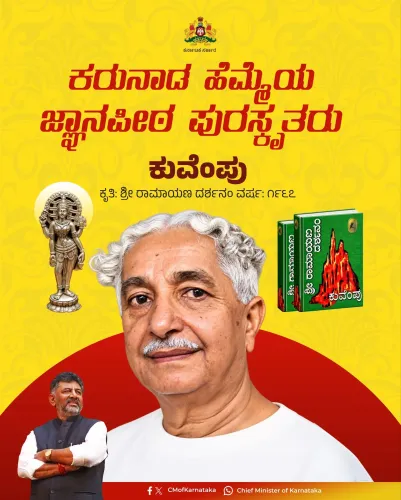
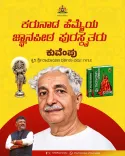
Karnataka's first Jnanpith win came in 1967 with Kuvempu for Sri Ramayana Darshanam ; the most recent was Chandrashekhara Kambara in 2010 .
The tribute explicitly frames the laureates as upholders of 'literature, social concern, equality and democracy.' The post arrives in the first week of November , the cultural season anchored by Kannada Rajyotsava on 1 November .
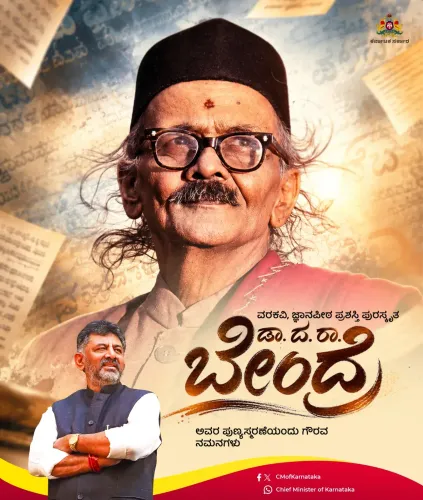
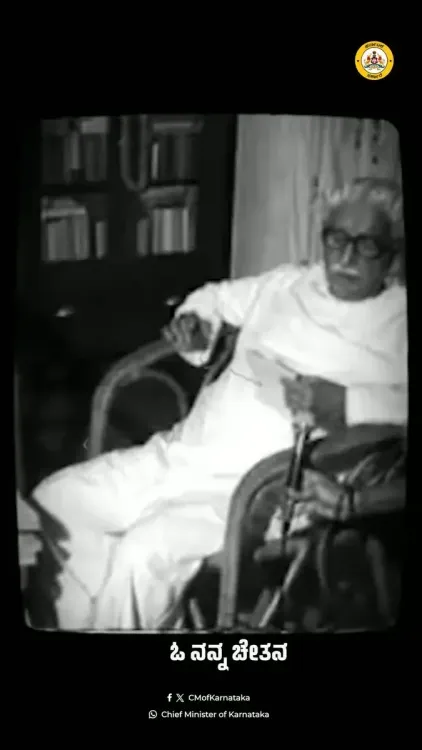
Eight literary giants. One language's unbroken claim to the pinnacle of Indian letters. On Saturday, 7 November 2026, the Chief Minister's Office of Karnataka paid solemn tribute to the eight Kannada writers who have carried the Jnanpith Award — India's highest literary honour — a tally no other single-language tradition has surpassed.
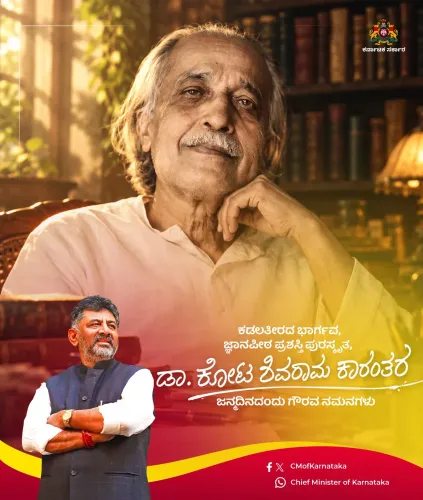
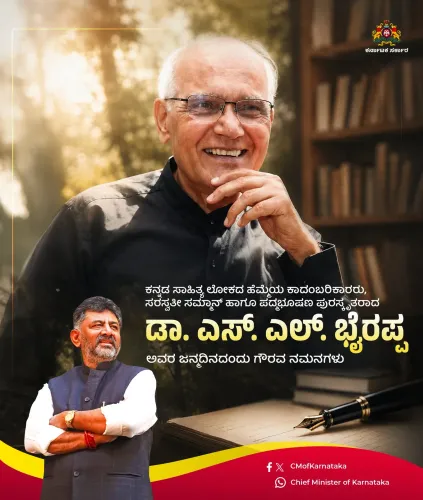
The post, shared in Kannada, reads: 'ಕನ್ನಡದ ಕಾವ್ಯ, ನಾಟಕ, ಕಾದಂಬರಿ ಮತ್ತು ಚಿಂತನೆಗಳನ್ನು ಹೊಸ ಎತ್ತರಕ್ಕೆ ಕೊಂಡೊಯ್ದು...' — 'Infinite salutations to the eight literary jewels of Karnataka who elevated Kannada poetry, drama, fiction and thought to new heights and adorned the crown of the Jnanpith Award, the highest honour in Indian literature. These great souls who upheld the values of literature, social concern, equality and democracy shall always be remembered.'
Eight wins, six decades, one language
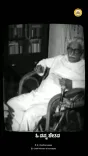
The Jnanpith Award was instituted in 1961, and Karnataka's first claim on it came in 1967 when Kuvempu was recognised for his epic Sri Ramayana Darshanam — a moment that announced Kannada literature's arrival on the national stage. What followed was not a fluke but a sustained tradition. U. R. Ananthamurthy won in 1994 for a body of work, anchored by his landmark novel Samskara, that forced Indian literary fiction to confront caste, ritual and moral ambiguity head-on.
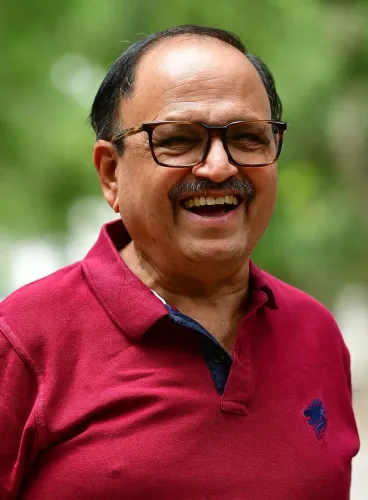
Girish Karnad, playwright and actor, took the award in 1998, bringing Kannada theatre into conversation with myth, history and modernity in ways that reverberated well beyond the state. Chandrashekhara Kambara, honoured in 2010, drew the folk music and oral storytelling traditions of north Karnataka into the formal literary canon — completing a lineage that stretches across poetry, drama, the novel and social criticism.
Kannada Rajyotsava and the politics of literary memory
November 1 marks Kannada Rajyotsava — Karnataka's statehood day — making the first week of November a natural season for public affirmations of Kannada identity. The CMO's tribute arrives within that cultural window, linking literary achievement to the broader assertion of a regional language's place in India's multilingual democracy. The post explicitly invokes 'equality and democracy' as values upheld by these writers, a framing that ties literary legacy to civic purpose rather than treating it as mere cultural heritage.
State governments have long used such moments to reinforce what linguists and cultural historians call 'language prestige' — the social weight a language carries when its speakers can point to measurable, nationally recognised achievement. Eight Jnanpith wins is that number made concrete.
The literary community and Kannada academies are likely watching for any formal announcements — new fellowships, commemoration events, or book-festival programming — that may follow in the weeks ahead.
Point of View
' the CMO frames Karnataka's Jnanpith legacy not as mere cultural pride but as a political and civic inheritance — a move that dovetails with the Congress-led state government's emphasis on constitutional values. The tribute arrives just days after Kannada Rajyotsava, suggesting a deliberate extension of the statehood-day narrative into the domain of soft power and language prestige. With eight wins, Kannada's Jnanpith tally is itself a form of leverage in India's ongoing conversations about the status of regional languages versus Hindi in federal cultural policy. How the state follows up — through academy budgets, translation initiatives, or commemorative events — will signal whether this tribute is ceremonial or the opening of a broader cultural programme.
NationPress
7 Nov 2026
Frequently Asked Questions
How many Kannada writers have won the Jnanpith Award?
Eight Kannada writers have won the Jnanpith Award, beginning with Kuvempu in 1967 and most recently Chandrashekhara Kambara in 2010 — the highest count for any single Indian language.
Who was the first Kannada writer to win the Jnanpith Award?
Kuvempu was the first Kannada writer to receive the Jnanpith Award, in 1967, recognised for his epic poem Sri Ramayana Darshanam.
What is the Jnanpith Award?
The Jnanpith Award is India's highest literary honour, instituted in 1961 and given annually for outstanding contribution to Indian literature in any scheduled language.
Why did Karnataka's CMO pay tribute to Jnanpith laureates in November?
The tribute was posted on 7 November 2026, within days of Kannada Rajyotsava on 1 November — Karnataka's statehood day — making it a natural moment for public affirmations of Kannada cultural identity.
Which Kannada writers have won the Jnanpith Award?
Among the eight Kannada Jnanpith laureates are Kuvempu (1967), U. R. Ananthamurthy (1994), Girish Karnad (1998), and Chandrashekhara Kambara (2010), spanning poetry, fiction, drama and social thought.