CM Siddaramaiah mourns passing of Kannada scholar K.V. Narayan
Synopsis
The Karnataka Chief Minister's Office mourned the passing of K.V. Narayan, a celebrated Kannada critic, linguist and former Kuvempu Bhasha Bharati president, calling his death an irreparable loss to Kannada literature. CM D.K. Shivakumar offered condolences to Narayan's family and admirers.
Key Takeaways
Narayan , a celebrated Kannada literary critic, linguist and writer, has passed away.
Shivakumar issued an official condolence through the Chief Minister's Office of Karnataka on 6 November 2026 .
Narayan was a recipient of both the Karnataka Sahitya Akademi Award and the Rajyotsava Award , Karnataka's highest civilian honour.
He served as President of the Kuvempu Bhasha Bharati , the state institution promoting Kannada language and literature.
The state government described his passing as an 'irreparable loss to the world of Kannada literature.' Commemorative events or memorial publications by the Karnataka Sahitya Akademi or state government may be announced in the coming days.
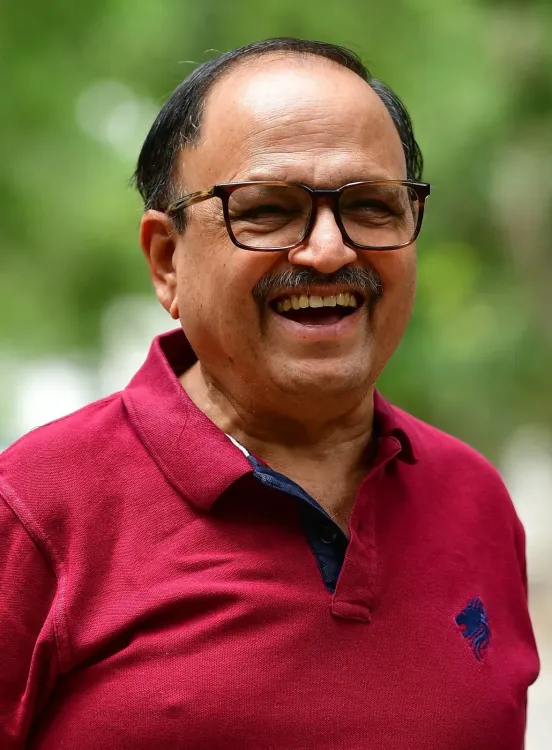
A voice that shaped Kannada literary thought for decades has fallen silent. The Chief Minister's Office of Karnataka conveyed the state government's deep grief on Friday, 6 November 2026, over the passing of renowned critic, linguist and senior writer K.V. Narayan — a figure whose contributions to Kannada language and culture were described as irreplaceable.
The condolence message, issued in the name of Chief Minister D.K. Shivakumar, captured the weight of the loss in plain terms: 'ಕನ್ನಡ ಸಾಹಿತ್ಯ ಲೋಕಕ್ಕೆ ತುಂಬಲಾರದ ನಷ್ಟವಾಗಿದೆ' — 'an irreparable loss to the world of Kannada literature.' He prayed for peace for the departed soul and asked for strength for Narayan's family and admirers to bear the grief.
A career built on Kannada's growth
K.V. Narayan earned distinction across three intertwined roles: as a literary critic who brought rigour to Kannada scholarship, as a linguist who deepened the academic understanding of the language, and as a writer whose creative output reflected those dual commitments. His service was recognised with two of Karnataka's most prestigious cultural honours — the Karnataka Sahitya Akademi Award and the Rajyotsava Award, the state's highest civilian recognition for distinguished contribution to literature, arts and public life.
He also served as President of the Kuvempu Bhasha Bharati, the state institution established to promote Kannada language and literature, lending his authority and expertise to that mission at an institutional level. It is a rare combination — creative practice, critical scholarship, and institutional leadership — that few in the Kannada literary world have brought together so fully.
Karnataka's tradition of honouring its literary voices
Karnataka governments have long maintained a formal practice of issuing official condolences on the passing of prominent Kannada litterateurs and cultural figures. These statements are not merely ceremonial — they signal the state's sustained engagement with its literary institutions, the Karnataka Sahitya Akademi foremost among them, as pillars of regional identity and heritage.
Narayan's death leaves a noticeable absence across those very institutions he helped shape. The Kannada literary community, his family, and his admirers now mourn together. Official commemorative events or memorial publications by the Akademi or the state government may follow in the days ahead.
Karnataka has lost one of its most thoughtful custodians of the Kannada word. The question now is how those institutions he served choose to carry his work forward.
Point of View
Not peripheral to it. That the condolence is issued personally in CM Shivakumar's name, rather than delegated to a cultural ministry, signals the political weight Karnataka attaches to its literary heritage. The loss of a figure who bridged critical scholarship, linguistic study and institutional leadership will be difficult to absorb in a single successor. How the Sahitya Akademi and Bhasha Bharati choose to memorialise Narayan's work will test whether these institutions honour their most rigorous voices or settle for ceremonial remembrance.
NationPress
6 Nov 2026
Frequently Asked Questions
Who was K.V. Narayan?
K.V. Narayan was a renowned Kannada literary critic, linguist and senior writer who made significant contributions to Kannada language, literature and culture. He served as President of the Kuvempu Bhasha Bharati and received both the Karnataka Sahitya Akademi Award and the Rajyotsava Award.
What is the Rajyotsava Award?
The Rajyotsava Award is Karnataka's highest civilian honour, awarded annually to individuals who have made distinguished contributions in fields such as literature, arts and public life.
What is Kuvempu Bhasha Bharati?
Kuvempu Bhasha Bharati is a state institution in Karnataka dedicated to the promotion and development of the Kannada language and literature. K.V. Narayan served as its President.
What did CM D.K. Shivakumar say about K.V. Narayan's death?
CM D.K. Shivakumar, through the Chief Minister's Office, described Narayan's passing as an irreparable loss to Kannada literature and prayed for peace for his soul, while offering strength to his family and admirers.
What is the Karnataka Sahitya Akademi?
The Karnataka Sahitya Akademi is the state's premier literary institution that confers awards and promotes Kannada writing and scholarship. K.V. Narayan was one of its award recipients.