Karnataka CM's Office: Gruhalakshmi Reaches 1.24 Crore Women
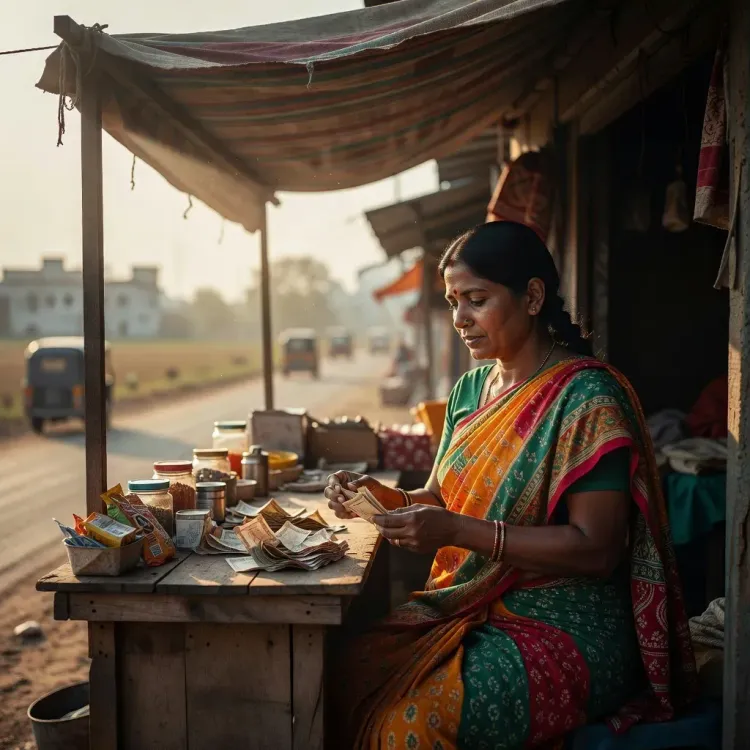
Synopsis
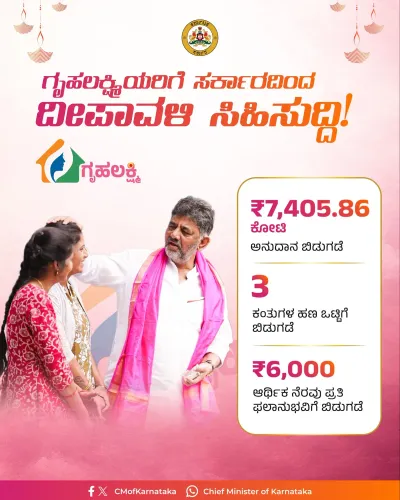
The Chief Minister's Office of Karnataka says Gruhalakshmi, its ₹2,000 monthly direct-benefit transfer scheme, now reaches 1.24 crore women, supporting household education, healthcare and small-business livelihoods under the government's #KarnatakaModel banner.
Key Takeaways
1.24 crore women across Karnataka are currently covered under the Gruhalakshmi scheme, according to the CMO's official post dated 7 November 2026 .
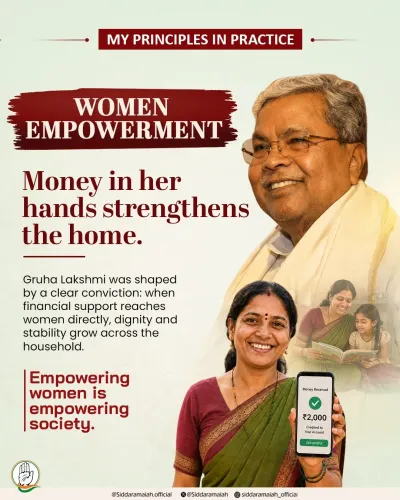
Each eligible woman head of household receives ₹2,000 per month via Direct Benefit Transfer.
The scheme was first announced as one of the five Congress election guarantees ahead of the 2023 Karnataka assembly elections .
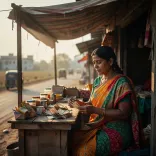
The government says the assistance is enabling spending on children's education, healthcare and small-business investment .
The official post uses the hashtag #KarnatakaModel , framing the state's welfare approach as a national template.
The Karnataka state budget and independent evaluation reports will be key tests of the scheme's long-term fiscal sustainability and real-world impact.
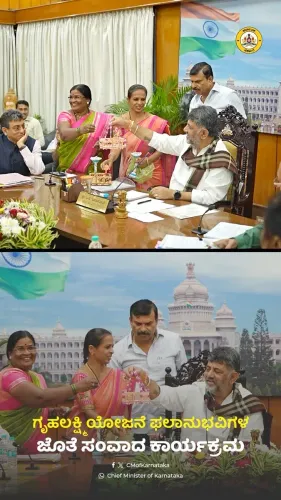
A ₹2,000 monthly transfer is quietly rewriting household economics for over a crore women across Karnataka — and the Chief Minister's Office of Karnataka wants the country to take note. On Saturday, 7 November 2026, the official CMO account posted a pointed update on the Gruhalakshmi scheme, citing 1.24 crore women beneficiaries and describing real-world outcomes spanning children's education, family healthcare, and small-business startups.
What Gruhalakshmi Promises — and Claims to Deliver
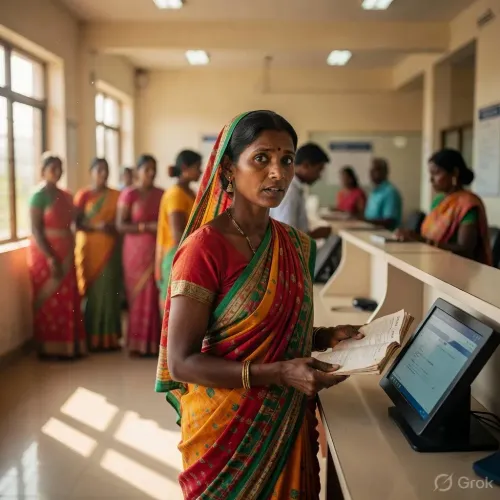
Launched as one of the five Congress election guarantees ahead of the 2023 Karnataka assembly elections, Gruhalakshmi targets women who are heads of their households, delivering a flat ₹2,000 per month directly into their accounts through the Direct Benefit Transfer mechanism. The CMO's post describes the assistance as enabling mothers to 'support their children's education, families meet healthcare needs and women build independent livelihoods through small businesses.'
The framing is deliberate: rather than positioning the transfer as a subsidy, the Government of Karnataka is presenting it as a foundation for economic agency — women using cash not just to survive, but to invest, start businesses, and gain financial confidence.
Karnataka's Bet on the '#KarnatakaModel'
The hashtag #KarnatakaModel appended to the post signals something beyond a routine scheme update — it is a political statement, positioning the state's welfare architecture as a replicable template for the rest of India. Karnataka sits at the centre of a broader national debate about state-level cash-transfer programmes for women, a trend that has accelerated sharply since 2022, with multiple states across the political spectrum rolling out similar direct-benefit schemes.
What sets Gruhalakshmi apart in its framing, at least, is the explicit emphasis on women's dignity and confidence alongside financial support — language that connects the programme to wider gender-empowerment goals rather than pure consumption support. The CMO's post states that the government 'remains committed to ensuring that every woman has the financial support, dignity and confidence to shape a better future for herself and her family.'
Scale, Scrutiny, and What the Budget Will Reveal
The figure of 1.24 crore beneficiaries — cited in the official post — represents a substantial fiscal commitment. At ₹2,000 per beneficiary per month, sustaining that reach requires consistent budget allocations, and the Karnataka state budget will be the clearest test of whether the programme's political promise translates into durable funding. Independent evaluation reports on actual household outcomes remain limited, meaning much of the scheme's impact narrative rests on government-reported data for now.
The scale is nonetheless striking: 1.24 crore women represent a significant share of Karnataka's total female adult population, suggesting the scheme has achieved broad saturation in its target demographic since its 2023 launch.
Whether the '#KarnatakaModel' earns its name will depend less on the hashtag and more on what the next budget says — and what independent assessments eventually show.
Point of View
Particularly ahead of any future state or federal electoral cycle. Cash-transfer schemes for women have become the dominant welfare battleground in Indian state politics since 2022, and Karnataka's Congress government is staking its identity on being the originator and standard-bearer of this trend. The 1.24 crore beneficiary figure, if independently verified, would represent one of the largest state-level women's cash-transfer programmes in India by reach, adding genuine policy weight to the political claim. The critical question remains fiscal durability: without a credible budget commitment and independent impact data, the '#KarnatakaModel' risks becoming a tagline rather than a template.
NationPress
7 Nov 2026
Frequently Asked Questions
What is the Gruhalakshmi scheme in Karnataka?
Gruhalakshmi is a Karnataka government programme that provides a monthly cash assistance of ₹2,000 to eligible women who are heads of their households, delivered through Direct Benefit Transfer. It was launched as one of five Congress guarantees after the 2023 Karnataka assembly elections .
How many women benefit from Gruhalakshmi?
According to the Chief Minister's Office of Karnataka , the scheme currently reaches 1.24 crore women across the state as of November 2026.
Who is eligible for the Gruhalakshmi scheme?
The scheme targets women who are heads of their households in Karnataka , with the monthly transfer aimed at low-income families to support education, healthcare and livelihood expenses.
What is the '#KarnatakaModel' the government refers to?
The #KarnatakaModel is a framing used by the Government of Karnataka to position its package of direct-benefit welfare guarantees — including Gruhalakshmi — as a replicable model of women-centric governance for other Indian states.
How much does Gruhalakshmi cost the Karnataka government?
At ₹2,000 per beneficiary per month across 1.24 crore women , the scheme's annual outlay runs to thousands of crores of rupees; precise current budget allocations will be confirmed in the next Karnataka state budget .