CM Shivakumar Vows Gruha Lakshmi, Gruha Jyothi Won't Stop
Synopsis
Deputy CM D.K. Shivakumar, quoted by Karnataka's Chief Minister's Office on June 14, 2026, declared that the state's Gruha Lakshmi and Gruha Jyothi welfare schemes will not be discontinued, dismissing opposition claims as misinformation. Both schemes were central Congress poll promises from 2023.
Key Takeaways
Shivakumar stated on June 14, 2026 that Gruha Lakshmi and Gruha Jyothi will not be stopped under any circumstances.
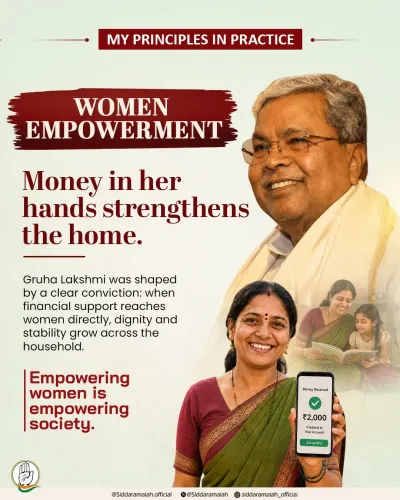
Gruha Lakshmi provides Rs 2,000 per month to women heads of households in Karnataka.
Gruha Jyothi offers free electricity up to 200 units per month to eligible households.
Both schemes were launched from July 2023 as part of the Congress party's five-guarantee election manifesto.
The clarification was framed as a direct rebuttal to opposition parties' claims that the schemes would be discontinued.
The next Karnataka state budget will be a key indicator of the government's commitment to sustaining these welfare transfers.
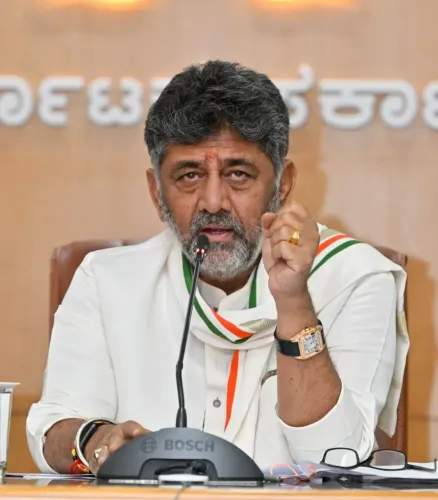
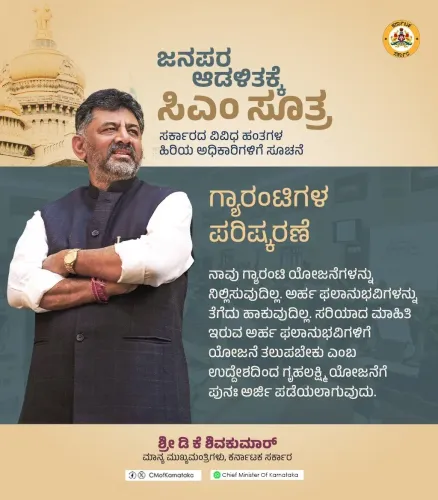
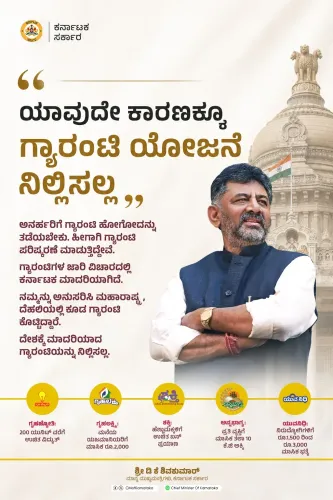
The Chief Minister's Office of Karnataka on Sunday, June 14, 2026, shared a direct clarification from Deputy Chief Minister D.K. Shivakumar, firmly rejecting opposition claims that the state government's flagship guarantee schemes would be discontinued.
The post, shared in Kannada, quoted Shivakumar as stating: 'Our government's pride, the guarantee schemes Gruha Lakshmi and Gruha Jyothi, will not be stopped under any circumstances.' The statement was framed as a rebuttal to what the government described as apaprachara — misinformation or propaganda — being spread by opposition parties.
Context
The clarification comes amid a sustained campaign by opposition parties in Karnataka alleging that the Congress government's welfare guarantees are financially unsustainable and may be wound down. The Chief Minister's Office characterised these claims as deliberate misinformation targeting beneficiaries of the schemes.
Gruha Lakshmi provides a monthly cash transfer of Rs 2,000 to women who are heads of households, while Gruha Jyothi offers free electricity up to 200 units per month to eligible households. Both schemes were central promises in the Congress party's 2023 Karnataka assembly election manifesto.
Policy Backdrop
The Congress party swept to power in Karnataka in May 2023, defeating the incumbent Bharatiya Janata Party, on the back of five guarantee schemes. The phased rollout of Gruha Jyothi and Gruha Lakshmi began in July 2023 under Chief Minister Siddaramaiah, with D.K. Shivakumar serving as Deputy Chief Minister.
Karnataka's direct-benefit welfare model follows a broader pattern seen in states such as Telangana and Andhra Pradesh, where large-scale subsidy and cash-transfer programmes have been used to consolidate political support among lower-income households. The state's finance department has been under periodic scrutiny over the impact of these transfers on revenue expenditure ratios.
Stakeholders and Impact
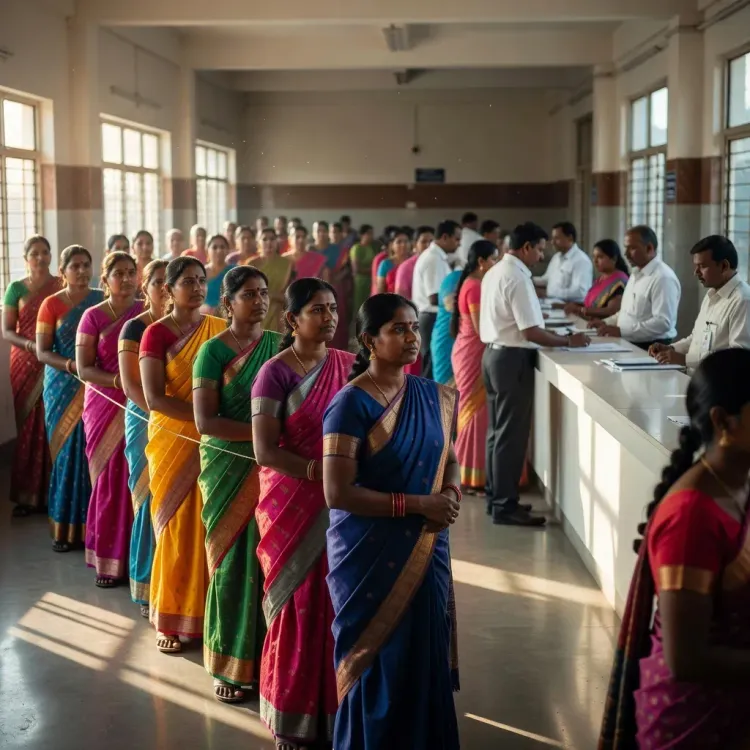
The primary beneficiaries of Gruha Lakshmi are women heads of households across Karnataka, while Gruha Jyothi reaches domestic electricity consumers in the eligible income bracket. Together, the two schemes represent a significant share of the state's welfare expenditure.
Opposition criticism — primarily from the BJP, which governed Karnataka from 2019 to 2023 — has centred on the state's fiscal deficit and the long-term viability of sustaining these transfers. Government clarifications defending scheme continuity, such as Sunday's post, have become a recurring feature whenever opposition pressure intensifies around budget cycles or fiscal data releases.
What's Next
Attention will now turn to the next Karnataka state budget presentation, where any revised allocations, eligibility norms, or beneficiary figures for Gruha Lakshmi and Gruha Jyothi will be closely watched. The government's ability to sustain disbursements without revising eligibility criteria will serve as the clearest test of the assurances made in Sunday's statement.
For now, D.K. Shivakumar's unequivocal public commitment signals that the Congress administration intends to treat the guarantee schemes as a non-negotiable political and policy priority heading into the remaining years of its term.
Point of View
The Congress administration is signalling dual ownership of the guarantee agenda between the Chief Minister and Deputy Chief Minister. The move fits a broader national pattern where ruling parties use direct-to-beneficiary communication to insulate welfare programmes from opposition-driven anxiety. How the state manages fiscal headroom in the next budget will ultimately determine whether the assurance holds political weight.
NationPress
14 Sept 2026
Frequently Asked Questions
Will Gruha Lakshmi scheme be stopped in Karnataka?
Deputy Chief Minister D.K. Shivakumar stated on June 14, 2026, that Gruha Lakshmi will not be stopped under any circumstances, dismissing such claims as opposition misinformation.
What is the Gruha Lakshmi scheme in Karnataka?
Gruha Lakshmi is a Karnataka government scheme that provides Rs 2,000 per month directly to women who are heads of households, launched in 2023 as part of the Congress party's five election guarantees.
What is the Gruha Jyothi scheme?
Gruha Jyothi is a Karnataka scheme offering free electricity up to 200 units per month to eligible households. It was rolled out from July 2023 alongside other Congress guarantee schemes.
Why did DK Shivakumar clarify about the guarantee schemes?
Shivakumar issued the clarification to counter claims by opposition parties that the Gruha Lakshmi and Gruha Jyothi schemes would be discontinued, calling such claims misinformation.
When did Karnataka's Congress government launch its guarantee schemes?
The Congress government began the phased rollout of its guarantee schemes, including Gruha Jyothi and Gruha Lakshmi, from July 2023 after winning the Karnataka assembly elections in May 2023.