Karnataka's Gruha Jyothi crosses ₹31,842 crore in spending
Synopsis
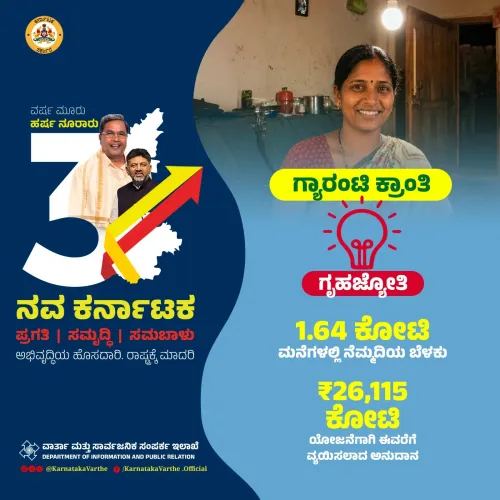
On Independence Day 2026, the Chief Minister's Office of Karnataka announced that the Gruha Jyothi scheme — which provides up to 200 units of free electricity monthly to eligible households — has cumulatively spent ₹31,842 crore, with crores of families across the state benefiting.
Key Takeaways
The Gruha Jyothi scheme provides up to 200 units of free electricity per month to eligible Karnataka households.
Cumulative state expenditure on the scheme has reached ₹31,842 crore as of August 15, 2026 .
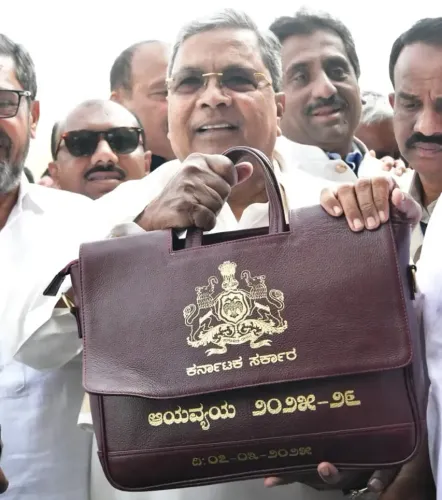
The scheme was launched under Chief Minister Siddaramaiah 's Congress government in the 2023-24 Karnataka state budget .
The CMO framed the milestone on Independence Day , invoking the theme of moving 'from darkness towards light.' Karnataka's model fits a broader national pattern of state-level domestic electricity subsidies, with similar schemes in Telangana and Tamil Nadu .
Fiscal sustainability — particularly the impact on power distribution companies — remains the key variable to watch in future budgets.
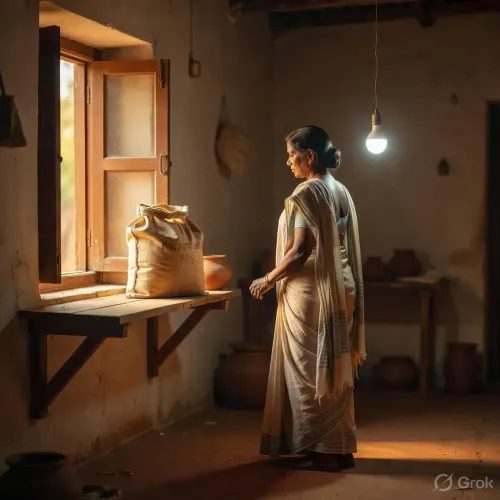
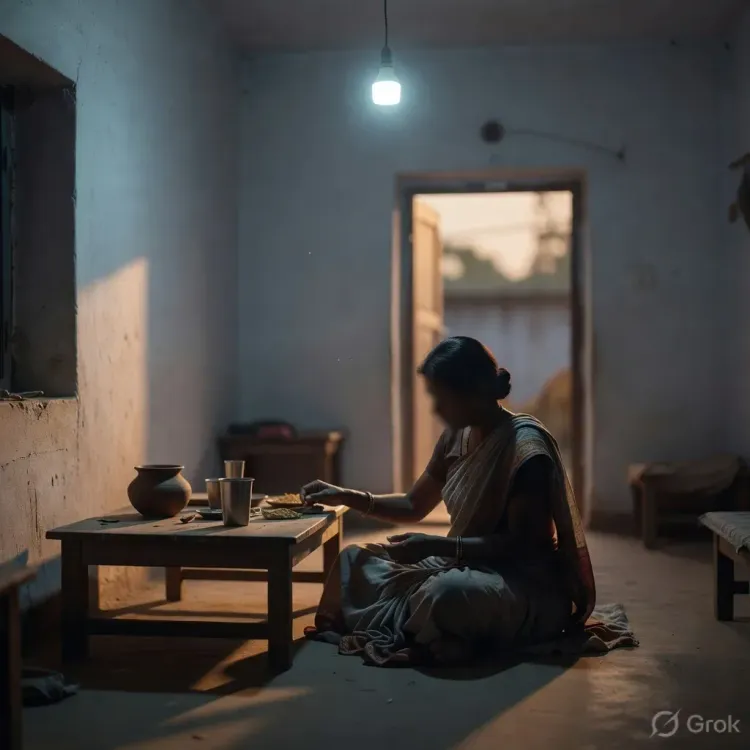
Free electricity for millions of Karnataka households has now cost the state ₹31,842 crore — and the Chief Minister's Office of Karnataka marked Independence Day, August 15, 2026, by framing that figure as a milestone of liberation in its own right. The post invoked the Kannada phrase ಕತ್ತಲೆಯಿಂದ ಬೆಳಕಿನೆಡೆಗೆ ('from darkness towards light') to describe what the scheme has delivered to homes across the state.
What Gruha Jyothi promises — and what it has paid out
Launched under the Siddaramaiah-led Congress government as a flagship guarantee in the 2023-24 Karnataka state budget, the Gruha Jyothi scheme provides eligible households up to 200 units of free electricity every month. The intent was direct: strip out the power bill from the monthly anxiety of low- and middle-income families. By the government's own account on August 15, 2026, crores of households across Karnataka are now drawing that benefit.
The cumulative outlay of ₹31,842 crore makes it one of the most expensive single-welfare line items in the state's recent history. The CMO's Independence Day framing was deliberate — electricity access as a second-order freedom, the kind that shows up not in a speech but in a monthly bill.
Karnataka in a wave of state electricity subsidies
Karnataka is not alone. Since the early 2020s, states including Telangana and Tamil Nadu have rolled out comparable domestic-consumer electricity subsidies, each calibrated to local grid economics and political priorities. What distinguishes the Gruha Jyothi model is its universal-ish design — targeting eligible households broadly rather than a narrow below-poverty-line slice — and the sheer scale of fiscal commitment it has required.
That commitment raises the question that follows every large subsidy: what it costs the distribution companies. Power utilities absorb the gap between what consumers pay (zero, in this case) and what electricity actually costs to procure and deliver. State budget allocations and any adjustments to power purchase agreements will be the numbers to watch in coming budget cycles.
Independence Day as the chosen moment
Timing the announcement to India's 80th Independence Day was a studied political choice. Welfare delivery framed as emancipation — from poverty, from energy insecurity — is a well-worn but effective rhetorical move, and the bilingual post (Kannada and English) ensured the message landed with both the state's vernacular audience and a national readership.
For the Congress government in Bengaluru, the ₹31,842 crore figure is also a shield: a large, concrete number that answers critics who question whether the 'guarantee' schemes announced before the 2023 Karnataka assembly election have actually been funded and delivered.
The lights are on. The bill is landing on the state exchequer. Whether that arithmetic is sustainable across the next budget cycle is the real story still unfolding.
Point of View
Designed to cement the Congress government's 'guarantee' narrative ahead of future electoral cycles. At ₹31,842 crore, Gruha Jyothi is now too large to dismiss as a token gesture, but also too large to ignore as a fiscal stress point for Karnataka's distribution utilities. The scheme sits within a competitive federalism dynamic where states race to out-subsidise each other on household electricity, raising structural questions about long-term grid financing that no government, in Karnataka or elsewhere, has fully answered.
NationPress
30 Sept 2026
Frequently Asked Questions
What is the Gruha Jyothi scheme in Karnataka?
Gruha Jyothi is a Karnataka government welfare scheme that provides up to 200 units of free electricity every month to eligible households, launched under Chief Minister Siddaramaiah's Congress government in the 2023-24 state budget to reduce the power-bill burden on families.
How much has Karnataka spent on Gruha Jyothi so far?
According to the Chief Minister's Office of Karnataka, the state has spent ₹31,842 crore on the Gruha Jyothi scheme as of August 15, 2026.
Who is eligible for the Gruha Jyothi free electricity scheme?
The scheme targets eligible domestic households across Karnataka. The government has described crores of families as current beneficiaries, though precise eligibility criteria are set by the state and may be subject to periodic revision.
When was Gruha Jyothi launched?
Gruha Jyothi was announced in the Karnataka 2023-24 state budget by the Siddaramaiah-led Congress government as one of its flagship pre-election guarantee schemes.
Are other Indian states offering free electricity like Karnataka?
Yes. States including Telangana and Tamil Nadu have introduced comparable domestic-consumer electricity subsidies since the early 2020s, reflecting a broader trend of state governments using power subsidies as a direct household relief measure.