Karnataka's Gruha Lakshmi Crosses ₹76,908 Cr Spend
Synopsis
On Independence Day 2026, the Chief Minister's Office of Karnataka announced that the Gruha Lakshmi scheme — which provides ₹2,000 monthly to women heads of households — has cumulatively spent ₹76,908 crore, marking a major milestone in the state's women's financial empowerment agenda.
Key Takeaways
The Gruha Lakshmi scheme has disbursed a cumulative ₹76,908 crore since its launch, according to the Chief Minister's Office of Karnataka.
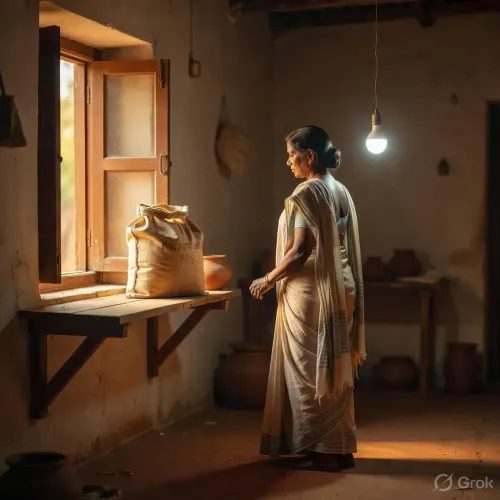
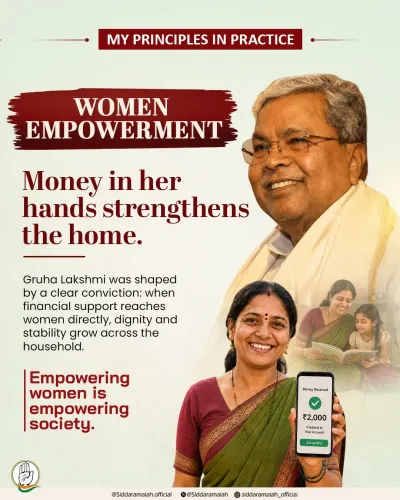
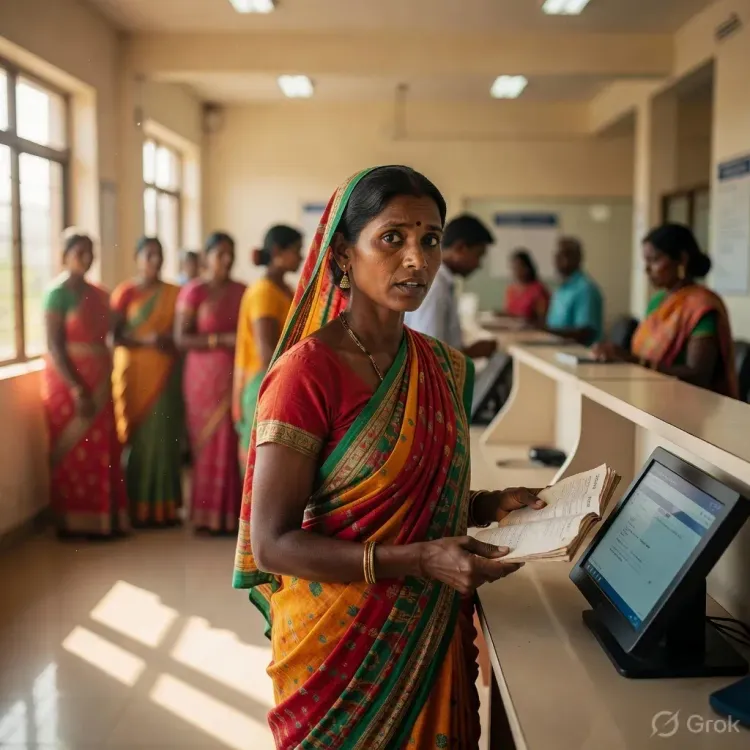
The scheme provides ₹2,000 per month directly to women heads of households across Karnataka.
It was one of five major Congress guarantees announced during the 2023 Karnataka assembly elections .
The announcement was made on Independence Day, 15 August 2026 , framing women's economic freedom alongside national freedom.
Karnataka's model is part of a broader national trend of state governments using direct benefit transfers to address gender gaps in financial inclusion.
The precise beneficiary count and independent verification of the ₹76,908 crore figure have not been publicly confirmed.
Freedom from financial dependence — that is the promise Karnataka's Congress government staked its 2023 election on, and on Independence Day, 15 August 2026, the Chief Minister's Office of Karnataka put a number to it: ₹76,908 crore spent under the Gruha Lakshmi scheme, with crores of women across the state now drawing a monthly direct benefit into their own hands.
The post, shared in both Kannada and English, declared that the scheme is 'strengthening women's financial independence and placing greater economic security in their hands' — framing the cash transfer not merely as welfare, but as structural liberation from economic dependence.
What Gruha Lakshmi actually does
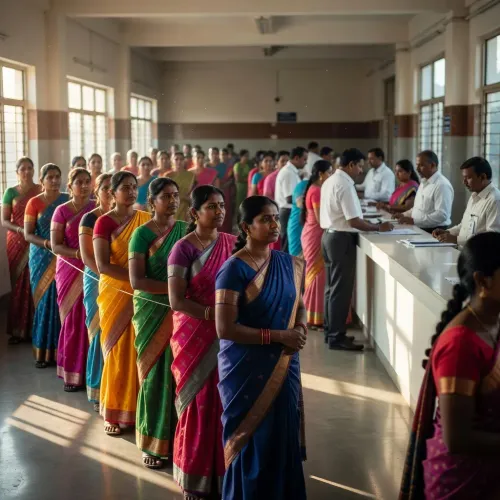
Launched as one of five major Congress guarantees during the 2023 Karnataka assembly election campaign, Gruha Lakshmi channels ₹2,000 per month directly to women heads of households. The design is deliberate: money routed to women, not households, to shift the locus of financial control. Since the scheme's rollout, Karnataka has positioned it as a flagship proof point that direct benefit transfers can address gender gaps in financial inclusion.
₹76,908 crore and the scale it implies
The cumulative spend figure — ₹76,908 crore — signals a programme running at significant scale across Karnataka's districts. At ₹2,000 per beneficiary per month, the arithmetic points to tens of millions of monthly disbursements sustained over multiple years. The Chief Minister's Office has not released a precise beneficiary headcount alongside this figure, and independent verification of the expenditure total is pending.
Karnataka is not alone in this approach. West Bengal, Madhya Pradesh and several other states have deployed comparable women-targeted cash transfer schemes, reflecting a wider sub-national trend of using direct benefit transfers to close gender gaps in formal financial access. What distinguishes the Gruha Lakshmi model is its explicit framing around household financial headship — the woman must be the recognised head of the household to qualify.
Independence Day as a deliberate backdrop
Announcing this milestone on 15 August is not accidental. The government is drawing a direct line between national independence and women's economic independence — ಆರ್ಥಿಕಾವಲಂಬನೆಯಿಂದ ಸ್ವಾತಂತ್ರ್ಯ ('freedom from economic dependence') opens the Kannada text. It is a framing choice that anchors a welfare programme inside a larger national narrative, and one that will sharpen as Karnataka approaches its next budget cycle and the Congress looks to defend its guarantee model ahead of future electoral contests.
The next test will come in the state's upcoming budget allocations — whether funding for Gruha Lakshmi and the four companion guarantee schemes holds, grows, or faces fiscal pressure will determine whether this milestone is a high-water mark or a waypoint.
Point of View
Reinforcing the narrative that its 2023 guarantee promises are delivering at scale — a template the party is keen to showcase nationally. The ₹76,908 crore figure, if verified, would represent one of the largest state-level women-targeted cash transfer programmes in India's recent history, setting a benchmark that rival state governments will feel pressure to match or counter. The scheme also reflects a broader ideological shift in Indian welfare policy: moving from household-level subsidies to individual women as direct economic agents. How the programme weathers fiscal scrutiny in the next budget cycle will determine whether it becomes a durable policy model or a cautionary tale about electoral promise versus fiscal sustainability.
NationPress
30 Sept 2026
Frequently Asked Questions
What is the Gruha Lakshmi scheme in Karnataka?
Gruha Lakshmi is a Karnataka government scheme that provides ₹2,000 per month directly to women heads of households to promote financial independence. It was launched as one of five Congress guarantees after the party's victory in the 2023 Karnataka assembly elections .
How much has Karnataka spent on Gruha Lakshmi so far?
The Chief Minister's Office of Karnataka stated on 15 August 2026 that a cumulative ₹76,908 crore has been spent under the Gruha Lakshmi scheme. Independent verification of this figure is pending.
Who is eligible for the Gruha Lakshmi scheme?
Women who are the recognised heads of their households in Karnataka are eligible to receive the ₹2,000 monthly direct benefit transfer under the Gruha Lakshmi scheme.
When did Karnataka launch the Gruha Lakshmi scheme?
The scheme was announced as a Congress election guarantee during the 2023 Karnataka assembly election campaign and rolled out after the Congress government came to power following its victory in that election.
Are other Indian states running similar women's cash transfer schemes?
Yes. States including West Bengal and Madhya Pradesh have comparable women-targeted direct benefit transfer programmes, reflecting a wider trend of sub-national governments using cash transfers to close gender gaps in financial inclusion.