CM Siddaramaiah Champions Gruha Lakshmi as Tool for Women's Dignity
Synopsis
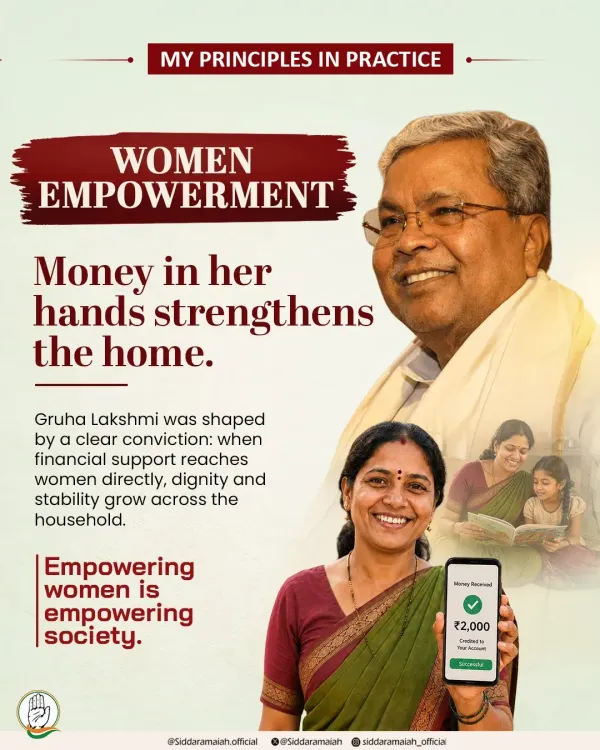
Karnataka Chief Minister Siddaramaiah on June 8, 2026, reaffirmed the Gruha Lakshmi scheme's core premise — that placing Rs 2,000 monthly directly in women's hands strengthens households and advances social progress — framing it as a governing principle, not just a policy.
Key Takeaways
Siddaramaiah posted on June 8, 2026 , reaffirming his belief that financial support must reach women directly to be effective.
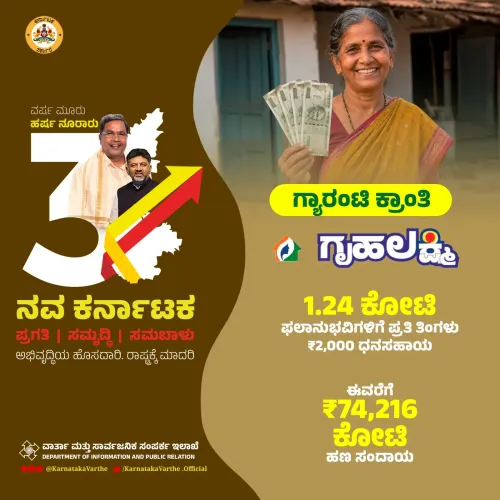
The Gruha Lakshmi scheme provides Rs 2,000 per month via direct bank transfer to eligible women heads of households in Karnataka .
The scheme was announced in the July 2023 Karnataka budget and is one of five guarantees the Congress made in its 2023 election manifesto .
The Congress government came to power in Karnataka in May 2023 on a platform that included multiple women-focused welfare commitments.
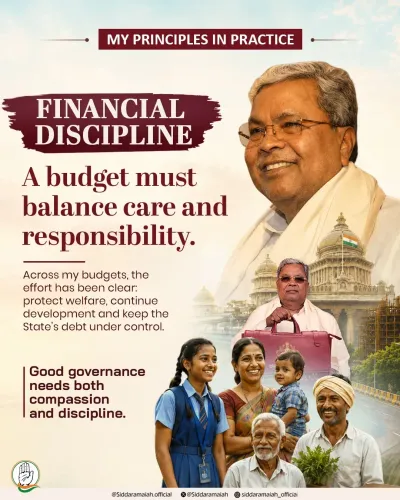
The Chief Minister framed the scheme as part of his personal governing principles under the hashtag #MyPrinciplesInPractice .
The Karnataka budget 2026-27 will be a key indicator of the scheme's continued scale and political priority.
Karnataka Chief Minister Siddaramaiah on Monday, June 8, 2026, reaffirmed the philosophical foundation of the state's Gruha Lakshmi scheme, stating that women's empowerment begins only when financial support reaches women directly and strengthens the entire household.
Context
Posting on X, Siddaramaiah wrote: 'Women's empowerment begins when support reaches them directly. Gruha Lakshmi was built on this belief — that financial assistance in a woman's hands strengthens not just her, but the entire household.' He added that when women gain dignity, stability, and confidence, 'society moves forward.'
The post, tagged #MyPrinciplesInPractice and #GruhaLakshmi, positions the scheme not merely as a welfare measure but as an expression of the Chief Minister's governing philosophy — direct, unconditional transfers to women as a structural lever for social progress.
Policy Backdrop
The Gruha Lakshmi scheme provides a monthly direct benefit transfer of Rs 2,000 to eligible women heads of households in Karnataka. It was formally announced in the state budget presented in July 2023 and rolled out later that year, fulfilling one of the five guarantees the Indian National Congress listed in its 2023 Karnataka election manifesto.
The Congress government, which came to power in Karnataka in May 2023, built its campaign on a platform of targeted welfare for women and low-income families. Gruha Lakshmi sits alongside other guarantee schemes as a flagship commitment of the Siddaramaiah administration.
The scheme is delivered via direct bank transfer, bypassing intermediaries — a design choice that aligns with the Chief Minister's stated belief that impact is maximised only when money reaches women's hands without leakage.
Stakeholders and Impact
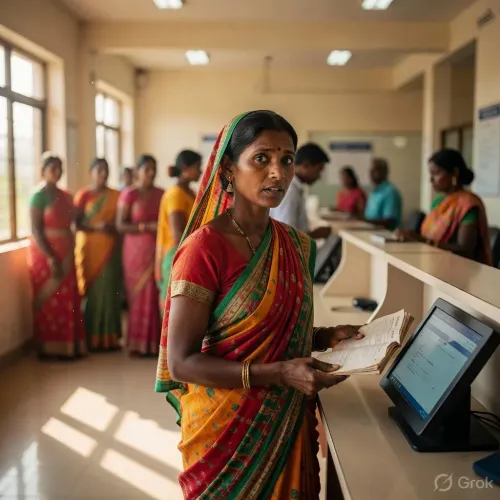
The primary beneficiaries of Gruha Lakshmi are women heads of households, particularly from low-income families across Karnataka. By directing funds to women rather than households at large, the scheme is designed to increase women's decision-making power within the family unit.
Across India, multiple state governments governed by different parties have introduced unconditional monthly cash transfers to women since 2022, citing household-level economic impact. These programmes are typically funded through state budgets and have become a prominent feature of competitive welfare politics ahead of assembly and general elections.
The Indian National Congress has promoted similar targeted cash-transfer models in states it governs, framing them as instruments of both economic inclusion and gender equity.
What's Next
Attention will now turn to the Karnataka budget for 2026-27 and whether allocations for Gruha Lakshmi are maintained, expanded, or revised in terms of eligibility or payment amounts. The Chief Minister's public restatement of the scheme's core principles signals that it remains central to the Congress government's political and policy identity in the state.
As welfare-based governance continues to define state-level political competition across India, Karnataka's model of direct transfers to women is likely to remain a reference point in national debates around social protection and women's economic agency.
Point of View
He elevates Gruha Lakshmi from a transactional benefit to a moral argument for the Congress model of governance. This mirrors a broader pattern across Indian states where direct transfers to women have become both a policy tool and an electoral asset. The timing and hashtag framing suggest the Chief Minister is building a narrative around his legacy, with the 2026-27 budget cycle likely to test whether that narrative is backed by sustained fiscal commitment.
NationPress
23 Oct 2026
Frequently Asked Questions
What is the Gruha Lakshmi scheme in Karnataka?
Gruha Lakshmi is a Karnataka government scheme that provides a monthly direct benefit transfer of Rs 2,000 to eligible women heads of households. It was launched after the Congress party included it as one of five guarantees in its 2023 Karnataka election manifesto.
Who is eligible for Gruha Lakshmi?
The scheme targets women who are heads of their households in Karnataka, with a focus on low-income families. Payments are made directly to beneficiaries' bank accounts.
When was Gruha Lakshmi launched?
The scheme was formally announced in the Karnataka state budget presented in July 2023 and was rolled out later that year after the Congress government took office in May 2023.
What did Siddaramaiah say about Gruha Lakshmi on June 8, 2026?
Chief Minister Siddaramaiah posted on X that women's empowerment begins when support reaches women directly, describing Gruha Lakshmi as built on the belief that financial assistance in a woman's hands strengthens not just her but the entire household.
How does Gruha Lakshmi compare to similar schemes in other states?
Multiple Indian states governed by different parties have introduced unconditional monthly cash transfers to women since 2022, delivered via direct bank transfer and funded through state budgets. Karnataka's Gruha Lakshmi is among the more prominent such schemes nationally.