CM Siddaramaiah: Karnataka budgets balance welfare and fiscal discipline

Synopsis
Karnataka Chief Minister Siddaramaiah on June 21, 2026 defended his multi-tenure budgetary record, saying budgets reflect priorities — not just numbers — and that protecting welfare, driving development and maintaining fiscal responsibility are the three pillars of his governance philosophy.
Key Takeaways
Karnataka Chief Minister Siddaramaiah posted on June 21, 2026 that budgets represent political priorities, not just financial figures.
He has presented state budgets across two tenures: 2013-2018 and since 2023 .
The Five Guarantees — including cash transfers to women and subsidised electricity — were funded through post-2023 budgets.
Earlier Bhagya-branded schemes such as Anna Bhagya and Ksheera Bhagya were introduced through budgets during his first tenure.
Siddaramaiah framed 'compassion and discipline' as the twin pillars of responsible governance.
The post was tagged #MyPrinciplesInPractice , positioning the statement as part of a broader personal-governance narrative.
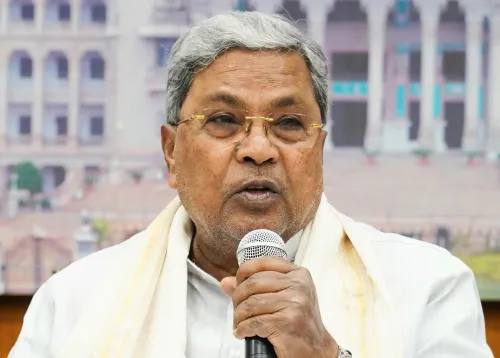
Karnataka Chief Minister Siddaramaiah on Sunday, June 21, 2026, used social media to articulate the governing philosophy behind his multiple state budgets, asserting that fiscal choices reflect political priorities rather than mere arithmetic.
In the post, the Chief Minister wrote: 'A budget is not just about numbers. It is about priorities. Across my budgets, the effort has been clear: protect welfare, continue development and keep Karnataka's finances responsible. Good governance needs both compassion and discipline.'
Context
Siddaramaiah has presented state budgets across two separate tenures as Chief Minister — first between 2013 and 2018, and again since returning to power in 2023. The post, tagged #MyPrinciplesInPractice, frames these budgets collectively as a coherent expression of his governance values rather than isolated annual exercises.
His remarks come as Karnataka continues to implement a wide welfare agenda alongside capital expenditure commitments, drawing both praise from beneficiaries and scrutiny from fiscal observers.
Policy Backdrop
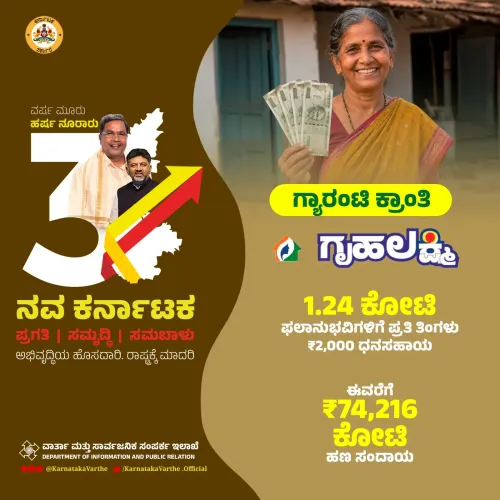
The clearest expression of Siddaramaiah's welfare-first budgeting came after the 2023 Karnataka assembly elections, when the Indian National Congress swept to power on the strength of its Five Guarantees — a cluster of direct-benefit commitments including cash transfers to women under the Gruha Lakshmi scheme and subsidised electricity under Gruha Jyoti.
These guarantees were funded through successive budget allocations, requiring the state to manage competing pressures on its revenue and borrowing limits. During his earlier tenure, Siddaramaiah introduced the Bhagya-branded schemes — including Anna Bhagya (subsidised foodgrain) and Ksheera Bhagya (free milk for schoolchildren) — through annual budgets, establishing a pattern of using fiscal instruments to deliver social-sector outcomes.
The dual emphasis on 'compassion and discipline' in Sunday's post echoes a broader argument made by Congress-governed states: that expanded social spending and fiscal responsibility are not mutually exclusive when revenue mobilisation and expenditure prioritisation are managed carefully.
Stakeholders and Impact
The primary beneficiaries of Karnataka's welfare-oriented budgets are low- and middle-income households across the state, particularly women enrolled in direct-benefit transfer schemes and families dependent on subsidised food and utilities. Collectively, these programmes cover crores of Karnataka residents.
State taxpayers and the broader fiscal ecosystem — including the state's credit ratings and borrowing costs — are the other key stakeholders, as higher welfare outlays must be balanced against debt sustainability targets set by the Karnataka Fiscal Responsibility Act and central guidelines.
Political opponents have periodically questioned whether the scale of welfare commitments strains the state's finances, making Siddaramaiah's public defence of his budgetary philosophy a recurring feature of Karnataka's political discourse.
What's Next
The next Karnataka state budget presentation will be the most direct test of the principles Siddaramaiah articulated on Sunday. Any mid-year fiscal review by the state finance department will also offer a data-backed window into whether the balance between welfare expansion and fiscal discipline is being maintained. The Chief Minister's framing of budgets as statements of political priority signals that social-sector spending is unlikely to be trimmed as the government heads into the second half of its term.
Point of View
A rebuttal to opposition arguments that the Five Guarantees strain Karnataka's finances. By invoking both tenures together, he constructs a long-arc narrative of consistent governance rather than electoral opportunism. The hashtag #MyPrinciplesInPractice suggests a deliberate personal-branding exercise aimed at distinguishing his model of Congress governance from critics' characterisations. This kind of budget-as-values messaging is increasingly common among state leaders seeking to hold welfare-voter coalitions together between election cycles.
NationPress
20 Sept 2026
Frequently Asked Questions
What is Siddaramaiah's budget philosophy?
Siddaramaiah has stated that budgets are about priorities, not just numbers, with his approach centred on protecting welfare, continuing development and maintaining fiscal responsibility in Karnataka.
What are the Five Guarantees in Karnataka?
The Five Guarantees are a set of welfare commitments implemented by the Karnataka Congress government after the 2023 elections, including cash transfers to women under Gruha Lakshmi and subsidised electricity under Gruha Jyoti, funded through state budget allocations.
How many budgets has Siddaramaiah presented as Karnataka CM?
Siddaramaiah has presented multiple Karnataka state budgets across two tenures as Chief Minister — from 2013 to 2018 and again since 2023.
What were the Bhagya schemes introduced by Siddaramaiah?
During his first tenure, Siddaramaiah introduced Bhagya-branded welfare schemes including Anna Bhagya, which provided subsidised foodgrain, and Ksheera Bhagya, which supplied free milk to schoolchildren, both funded through state budgets.
Is Karnataka's budget fiscally responsible under Siddaramaiah?
Siddaramaiah has publicly maintained that his budgets balance welfare expansion with fiscal discipline, though the precise fiscal outcomes of recent budgets remain subject to ongoing review by the state finance department.