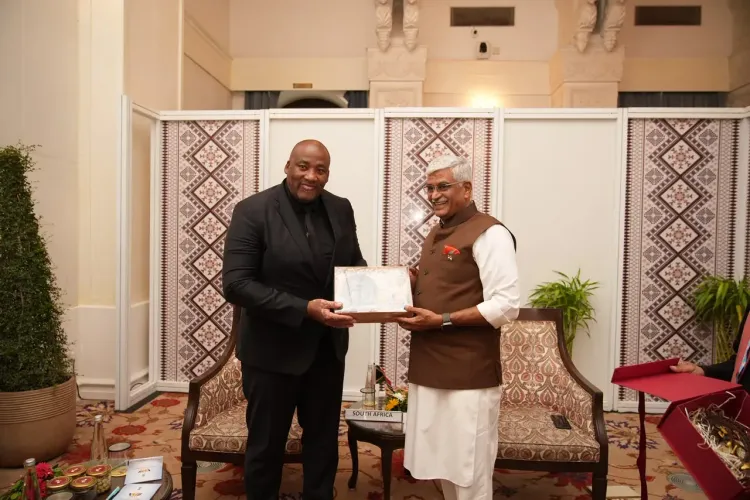
Shekhawat meets South Africa's McKenzie at BRICS Culture Meet
Synopsis
Union Culture Minister Gajendra Singh Shekhawat met South Africa's Gayton McKenzie at the BRICS Culture Ministers' Meeting in Bhopal, discussing heritage, creative industries, and India's flagship cultural missions as the two strategic partners sought to deepen bilateral ties.
Key Takeaways
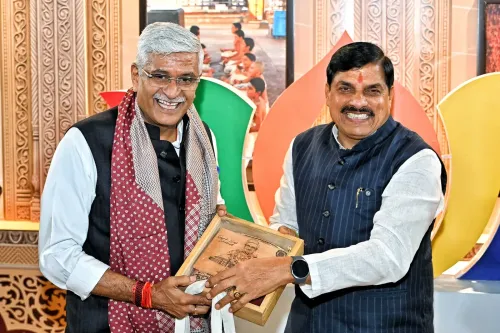
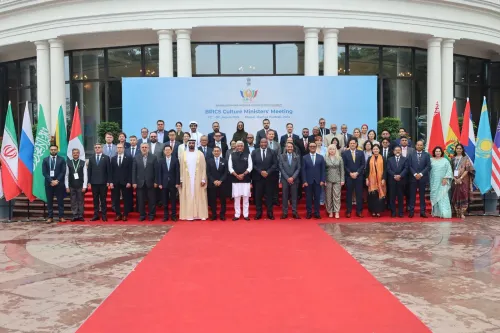
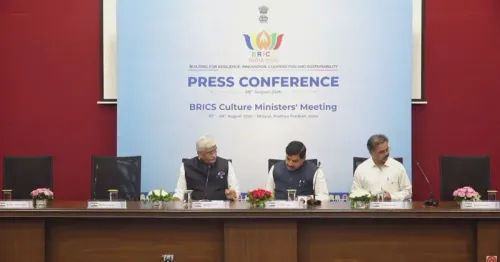
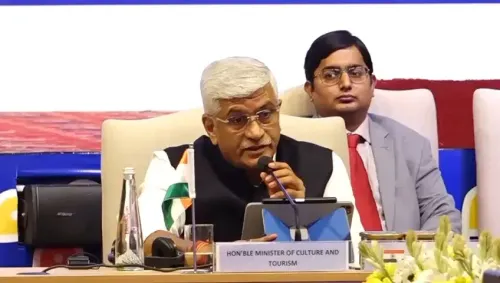
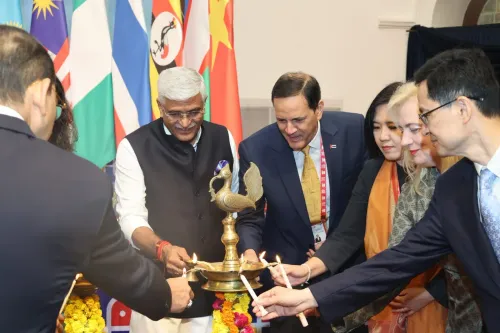
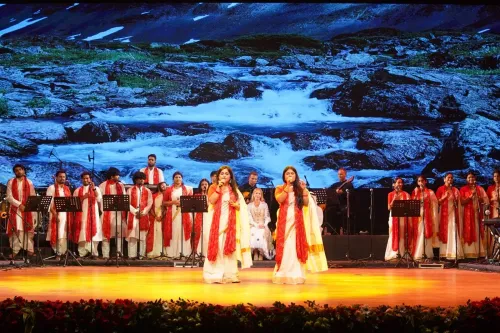
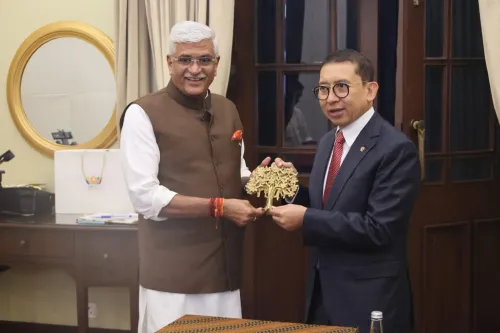
Union Culture and Tourism Minister Gajendra Singh Shekhawat held a bilateral meeting with South African counterpart Gayton McKenzie on the sidelines of the BRICS Culture Ministers' Meeting in Bhopal on 7 August 2026 .
Talks covered culture, heritage, creative industries, skills development, and people-to-people exchanges between India and South Africa .
Shekhawat presented India's flagship programmes — the Gyan Bharatam Mission and the Brihattar Bharat Project — as frameworks for deeper collaboration.
India and South Africa have maintained formal diplomatic relations since 1993 and signed a cultural cooperation agreement in 1996 .
BRICS culture ministers have held periodic meetings since 2015 to advance heritage and creative-industry collaboration among member states.
On the sidelines of the BRICS Culture Ministers' Meeting in Bhopal, Union Culture and Tourism Minister Gajendra Singh Shekhawat held a bilateral meeting with Gayton McKenzie, South Africa's Minister of Sport, Arts and Culture — a conversation that put India's soft-power ambitions squarely on the BRICS table.
What the two ministers put on the table
The discussions ranged across culture, heritage, creative industries, skills development, and people-to-people exchanges. Shekhawat also presented India's flagship cultural programmes — the Gyan Bharatam Mission and the Brihattar Bharat Project — as potential vehicles for deeper bilateral collaboration. The emphasis, both ministers agreed, was on preserving and promoting what Shekhawat called their 'shared civilisational heritage.'
Why India–South Africa ties carry unusual weight
India and South Africa formalised diplomatic relations in 1993 and signed a cultural cooperation agreement in 1996 — a relationship built on historical diaspora links that predate modern diplomacy by more than a century. As fellow BRICS members, the two countries have used the grouping's periodic culture ministers' forums, running since 2015, to advance heritage and creative-industry collaboration beyond the economic headlines that dominate summit coverage.
Bhopal as a stage for India's cultural diplomacy
Hosting the BRICS Culture Ministers' Meeting in Bhopal, the capital of Madhya Pradesh, is itself a statement — a city whose Buddhist monuments, Bhimbetka rock shelters, and Sanchi stupa complex make it a living argument for India's civilisational depth. India has increasingly used BRICS forums to advance cultural diplomacy as a complement to its economic and strategic outreach across Africa, part of a broader multi-alignment approach that keeps New Delhi engaged across geopolitical blocs without binding it to any single one.
The next test is concrete: whether the Bhopal conversations produce joint heritage projects or formal MoUs that move beyond the language of commitment into signed frameworks. That is the gap Indian cultural diplomacy has historically struggled to close — and the one Shekhawat's mission now has to bridge.
Point of View
Not just domestic programmes. The India–South Africa axis within BRICS is particularly significant given the historical Indian diaspora presence in South Africa, which gives cultural diplomacy here an emotional and political resonance that most bilateral cultural agreements lack. The real measure of success, however, will be whether Bhopal produces binding frameworks rather than another round of warm communiqués.
NationPress
22 Sept 2026
Frequently Asked Questions
What was discussed at the India–South Africa bilateral meeting at BRICS in Bhopal?
Union Culture Minister Gajendra Singh Shekhawat and South Africa's Gayton McKenzie discussed cooperation in culture, heritage, creative industries, skills development, and people-to-people exchanges. Shekhawat also presented India's Gyan Bharatam Mission and Brihattar Bharat Project as platforms for collaboration.
What is the BRICS Culture Ministers' Meeting?
The BRICS Culture Ministers' Meeting is a periodic forum held among BRICS member nations since 2015 to advance cooperation in heritage, creative industries, and cultural exchange. The 2026 edition was hosted in Bhopal, Madhya Pradesh.
What is the Gyan Bharatam Mission?
The Gyan Bharatam Mission is one of India's flagship cultural initiatives promoted by the Ministry of Culture. Union Minister Shekhawat presented it to South Africa's culture minister as a vehicle for bilateral and international collaboration in preserving knowledge traditions.
What is the history of India–South Africa cultural ties?
India and South Africa established formal diplomatic relations in 1993 and signed a bilateral cultural cooperation agreement in 1996. The two countries share deep historical links rooted in the Indian diaspora's long presence in South Africa.
What is the Brihattar Bharat Project?
The Brihattar Bharat Project is a flagship Indian cultural initiative focused on promoting connections with Indian diaspora communities and shared civilisational heritage beyond India's borders. Minister Shekhawat highlighted it during the bilateral meeting with South Africa's McKenzie in Bhopal.