Strengthening India-Australia Cultural Bonds Through Indigenous Art
Synopsis
The recent exhibition in New Delhi, featuring Grace Lillian Lee's work, exemplifies the vibrant cultural partnership between India and Australia. This showcase emphasizes the importance of Indigenous traditions in contemporary art and fosters deeper connections between both nations.
Key Takeaways
Exhibition highlights Indigenous art as a bridge between cultures.
Grace Lillian Lee's work focuses on contemporary reinterpretation of First Nations traditions.
Strengthening of cultural ties through cross-cultural dialogue .
Importance of sustainability and identity in cultural narratives.
Initiatives like these enhance bilateral cooperation beyond trade.
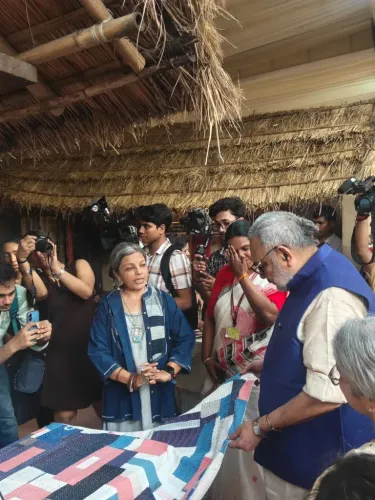
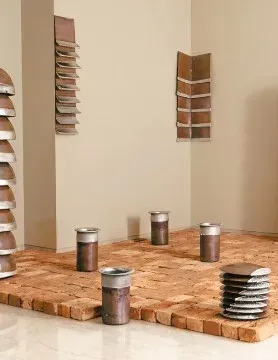
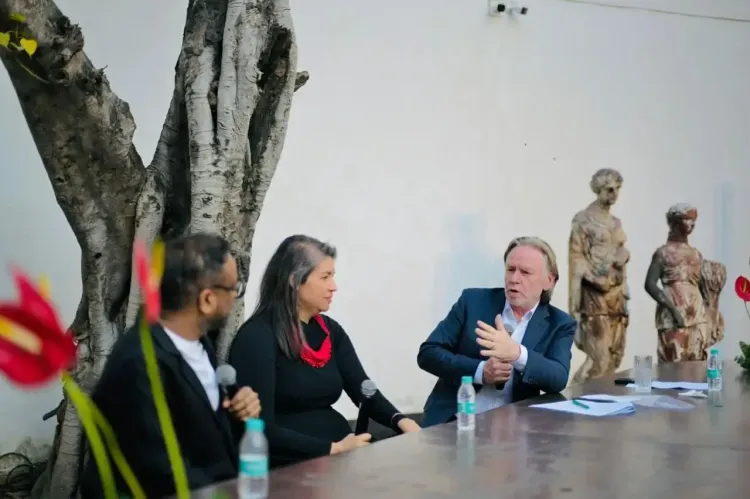
New Delhi, March 10 (NationPress) This week, the blossoming partnership between India and Australia took a vibrant turn at the National Crafts Museum & Hastkala Academy in New Delhi, where Australian artist Grace Lillian Lee showcased her artwork that emphasizes the living practices of First Nations traditions.
The exhibition was inaugurated with the presence of Philip Green, the Australian High Commissioner to India and Bhutan, who highlighted the significance of Indigenous knowledge in shaping modern art and enhancing cross-cultural dialogue.
“Grace’s creations serve as a reminder that ancestral wisdom evolves, adapts, and continues to influence contemporary artistry. This exhibition stands as a powerful testament to the increasing interest in Indigenous and tribal cultures between Australia and India, sparking discussions on identity, sustainability, and the lasting power of Indigenous knowledge,” stated Green.
Lee’s display focused on how the traditional weaving and design techniques of Australia’s First Nations communities are being reimagined within contemporary frameworks.
Her work, deeply rooted in heritage while distinctly modern, showcases the flexibility of Indigenous knowledge systems and their importance in today’s global art scene.
This event also marked a pivotal moment in fortifying cultural connections between India and Australia.
By organizing such exhibitions, the National Crafts Museum & Hastkala Academy is fostering platforms for exchanges between tribal and Indigenous artists from both nations.
Officials remarked that this initiative aligns with broader objectives to enhance bilateral cooperation not only in trade and technology but also in cultural diplomacy.
The showcase arrives at a crucial time when both countries are highlighting sustainability and identity within their cultural narratives.
As Indigenous traditions gain recognition as essential to global discussions on resilience and ecological balance, the collaboration between Australia and India is poised to grow even further in the coming years.
India and Australia have consistently expanded their cultural collaboration, with Indigenous and tribal art serving as a significant link between the two nations.
Exhibitions, artist exchanges, and museum partnerships emphasize shared traditions of weaving, storytelling, and sustainable practices.
These initiatives not only honor ancestral knowledge but also reinforce bilateral connections, positioning Indigenous art as an essential component of the evolving cultural and identity partnership between India and Australia.
Point of View
It is evident that the cultural partnership between India and Australia is evolving dynamically. The recent showcase of Indigenous art is not just an exhibition; it is a bridge that connects diverse cultures and promotes understanding. Such initiatives are vital in fostering bilateral ties that transcend mere trade and technology, underscoring the importance of cultural diplomacy.
NationPress
16 Sept 2026
Frequently Asked Questions
What was the significance of Grace Lillian Lee's exhibition?
The exhibition highlighted the importance of Indigenous knowledge in contemporary art, showcasing how traditional practices can adapt to modern contexts while fostering cross-cultural dialogue.
Who inaugurated the exhibition?
Philip Green, the Australian High Commissioner to India and Bhutan, inaugurated the exhibition, emphasizing the role of Indigenous traditions in shaping cultural narratives.
How do such exhibitions contribute to India-Australia relations?
These exhibitions create platforms for cultural exchange, celebrating shared traditions and strengthening bilateral ties, particularly in the realm of Indigenous and tribal art.
What themes were explored in the exhibition?
The exhibition explored themes of identity, sustainability, and the adaptability of Indigenous knowledge within the contemporary art landscape.
Why are Indigenous traditions important in global discussions?
Indigenous traditions are recognized as vital to discussions on resilience and ecological balance, contributing significantly to global cultural narratives.