Amit Shah vows to expel every infiltrator, says Bangladesh border crossings declining
Synopsis
Home Minister Amit Shah put illegal infiltration squarely at the centre of the BJP's national security narrative on 28 May, declaring that Bangladesh border crossings into West Bengal are already falling — and warning that a formal identification drive is imminent. His offer of no-case voluntary return is a notable policy signal, blending enforcement with an unusual off-ramp.
Key Takeaways
Home Minister Amit Shah on 28 May pledged to identify and expel every illegal infiltrator from India.
Shah claimed infiltration from Bangladesh into West Bengal has already begun declining under the BJP government.
The BJP government in West Bengal under Suvendu Adhikari has established detention centres for illegal entrants.
Infiltrators who leave voluntarily will face no legal proceedings and will receive assistance from the West Bengal government.
Shah made the remarks at a function in Sonipur village, Gandhinagar , where projects worth ₹340 crore were inaugurated.
He claimed the BJP now governs 80 per cent of India's geographical area.
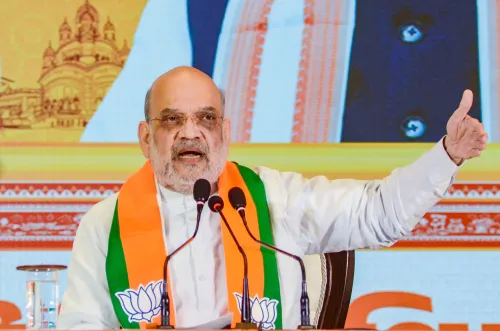
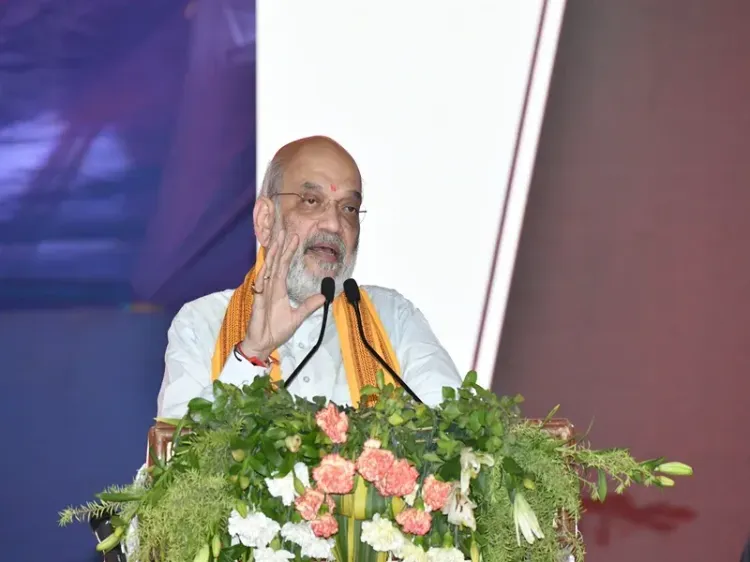
Union Home Minister Amit Shah on Thursday, 28 May declared that the Prime Minister Narendra Modi-led government was fully committed to identifying and expelling every illegal infiltrator from India, asserting that cross-border infiltration from Bangladesh into West Bengal had already begun to decline. Shah made the remarks at a public function in Sonipur village, Gandhinagar district, Gujarat.
Key Statements by the Home Minister
Addressing the gathering, Shah said the government's resolve was unambiguous: 'Our government's resolve is to identify and expel every infiltrator from the country,' he stated directly. He claimed that under the previous Trinamool Congress (TMC) administration led by Chief Minister Mamata Banerjee, infiltration had occurred daily, whereas the situation had now reversed. 'Earlier, under Mamata Banerjee's rule, infiltration took place every day, but now infiltrators are themselves starting to return,' he said.
Detention Centres and Voluntary Return Policy
Shah acknowledged that the Bharatiya Janata Party (BJP) government in West Bengal, under Chief Minister Suvendu Adhikari, had established detention centres as part of its border management strategy. However, he indicated that authorities preferred voluntary departure over legal proceedings. 'Suvendu ji and the BJP government in Bengal have built detention centres, but we all want those who entered illegally through infiltration to voluntarily return to where they came from,' he said. He added that individuals who leave voluntarily would not face cases from the West Bengal government and would even receive assistance in departing. 'If they leave voluntarily, the Bengal government will not file any case against them and will even assist them in leaving,' Shah said, expressing hope that many would leave before a formal identification drive is launched.
Border Fencing and National Security Priorities
The Home Minister outlined that the Centre's approach to infiltration was firmly rooted in national security and border management. He highlighted swift action already taken, including the creation of detention centres and land transfers to facilitate border fencing work along the Bangladesh border. Strengthening border fencing and identifying illegal entrants, Shah said, remained a top priority for the Modi government.
Development Projects and BJP's Governance Reach
Shah's address came during the inauguration of development projects and foundation-stone-laying ceremonies worth ₹340 crore in Gandhinagar district. He also used the occasion to highlight the BJP's governance footprint, claiming the party currently governed 80 per cent of the country's geographical area. He described recent political developments in West Bengal as a significant achievement for the party. This comes amid the BJP's broader push to consolidate its position in eastern India ahead of upcoming electoral cycles.
Point of View
Neither of which has been made public. Notably, independent verification of Shah's claim that infiltration is 'already declining' is absent; the assertion rests solely on government statements. The broader concern is that detention centre expansion and border fencing, while legitimate security tools, have historically raised due-process questions for long-settled communities who may lack documentation. That dimension was conspicuously absent from Thursday's address.
NationPress
11 Oct 2026
Frequently Asked Questions
What did Amit Shah say about illegal infiltrators on 28 May 2025?
Home Minister Amit Shah declared that the Modi government was committed to identifying and expelling every illegal infiltrator from India. Speaking in Gandhinagar, he said Bangladesh border infiltration into West Bengal had already started declining and warned that a formal identification drive would soon be launched.
What is the voluntary return policy for infiltrators announced by Amit Shah?
Shah said that illegal entrants who leave India voluntarily will not face any legal case from the West Bengal government and will even receive assistance in departing. He expressed hope that many would leave on their own before the formal identification campaign begins.
What has the BJP government in West Bengal done on border infiltration?
According to Shah, the BJP government under Chief Minister Suvendu Adhikari has established detention centres and facilitated land transfers for border fencing work along the Bangladesh border. Shah said these steps were part of the Centre's broader national security and border management priorities.
Where did Amit Shah make these remarks?
Shah made these remarks at a public function in Sonipur village, Gandhinagar district, Gujarat, on 28 May. The event also saw the inauguration of development projects worth ₹340 crore in the district.
How much of India does the BJP claim to govern?
Shah claimed during his address that the BJP currently governs 80 per cent of India's geographical area, citing this as evidence of the party's expanding governance footprint across the country.