Goyal shares Amit Shah's warning to illegal immigrants
Synopsis
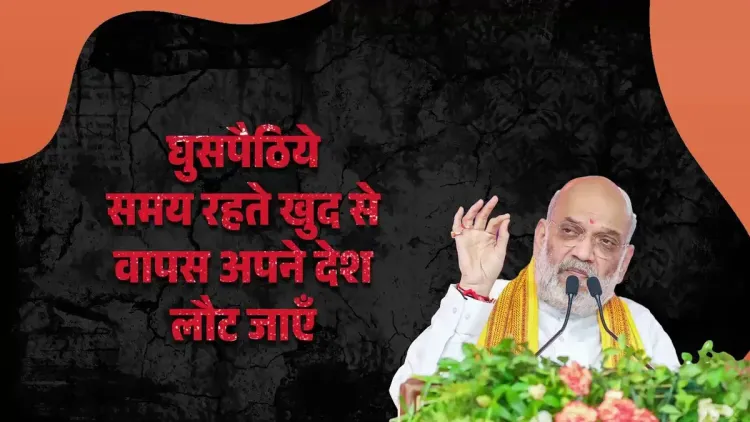
Union Commerce Minister Piyush Goyal shared Home Minister Amit Shah's direct warning to illegal immigrants to voluntarily return to their home countries, amplifying the BJP-led government's long-standing stance on infiltration and citizenship enforcement at the Cabinet level.
Key Takeaways
Piyush Goyal shared a post on 28 May 2026 quoting Home Minister Amit Shah 's warning to illegal immigrants.
Shah urged infiltrators to 'return to your own country on your own, while there is still time.' The statement aligns with the BJP government's policy framework built around the NRC (completed in Assam in 2019 ) and the Citizenship Amendment Act of December 2019 .
Shah has previously committed to a nationwide NRC expansion and deportation of illegal entrants.
Border states including Assam and West Bengal remain the primary zones of concern for cross-border migration from Bangladesh .
A senior economic minister amplifying a Home Ministry message signals coordinated Cabinet-level political communication.
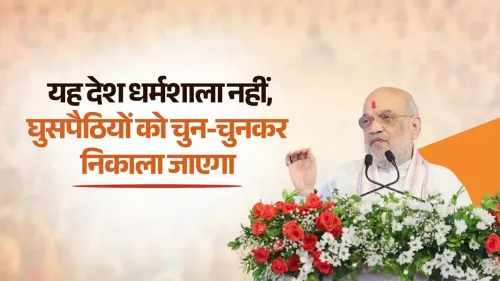
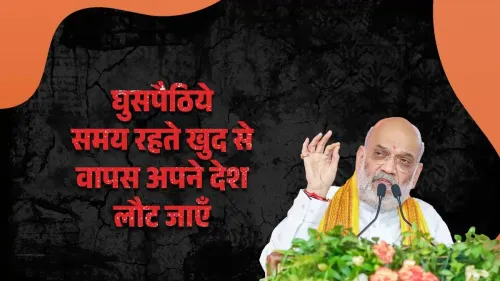
Union Commerce and Industry Minister Piyush Goyal on Thursday, 28 May 2026 shared a pointed warning attributed to Union Home Minister Amit Shah, amplifying the government's hardening stance on illegal immigration. The post, shared on X, quoted Shah as saying that infiltrators should return to their countries on their own while there is still time.
Context
The quoted statement, in Shah's words, reads: 'Main ghuspaithiyon se kehna chahta hoon ki samay rahte khud se apne desh wapas laut jao' — 'I want to tell infiltrators: return to your own country on your own, while there is still time.' By amplifying this message, Goyal signals that the warning carries broad endorsement at the senior Cabinet level, not just within the Home Ministry.
The framing of the message as a direct address to illegal immigrants — rather than a bureaucratic or legislative announcement — marks it as a public-facing political communication. Such messaging has historically been most prominent ahead of policy actions on border management or citizenship documentation.
Policy Backdrop
The statement fits into a policy arc stretching back to 2019, when two landmark measures reshaped India's citizenship and immigration landscape. The National Register of Citizens (NRC), completed in Assam that year under Supreme Court supervision, was designed to identify bonafide Indian citizens and flag those who could not prove legal residency.
The Citizenship Amendment Act (CAA), enacted in December 2019, created a fast-track citizenship pathway for non-Muslim migrants from Afghanistan, Bangladesh, and Pakistan. Together, the two measures form the legislative backbone of the BJP-led government's immigration enforcement framework. Shah has since repeatedly committed to expanding the NRC exercise nationwide and to deporting those found to be illegal entrants.
Cross-border migration — particularly from Bangladesh into Assam and other northeastern states — has been a recurring flashpoint in both electoral politics and security policy. The government has also pursued accelerated border fencing and tightened detention policies as complementary enforcement tools.
Stakeholders and Impact
The warning is directed, in explicit terms, at individuals residing in India without legal documentation. Border states such as Assam, West Bengal, Tripura, and Mizoram are most directly affected by any escalation in enforcement, given their proximity to Bangladesh and Myanmar.
Civil society groups and opposition parties have consistently raised concerns that citizenship and immigration drives disproportionately affect long-settled communities and linguistic or religious minorities. The government, however, frames these measures as essential to national security and demographic integrity.
The fact that a senior economic minister — rather than a home affairs official — chose to amplify the message suggests coordinated political signalling at the Cabinet level, broadening the audience for Shah's statement beyond the Home Ministry's usual communication channels.
What's Next
Observers will watch for any follow-up parliamentary statements, state-level administrative orders, or announcements on expanding the NRC framework beyond Assam. Any new detention or deportation mechanisms, or updates to border fencing timelines, would indicate that the warning is being backed by operational steps rather than remaining at the level of political messaging.
Point of View
Designed to show unified government resolve on illegal immigration beyond the usual security establishment. This fits a well-established BJP electoral and governance pattern: using high-profile, direct-address rhetoric on infiltration to energise the base, particularly in border states ahead of any administrative or legislative moves. The framing of the warning as a voluntary 'last chance' — rather than an immediate enforcement announcement — leaves room for escalation while generating political pressure. Observers will treat this as a possible precursor to concrete policy action, such as an NRC expansion notification or new deportation protocols.
NationPress
11 Oct 2026
Frequently Asked Questions
What did Amit Shah say about illegal immigrants?
Home Minister Amit Shah warned illegal immigrants to voluntarily return to their home countries while there is still time, a statement amplified by Commerce Minister Piyush Goyal on X on 28 May 2026.
What is the NRC and how does it relate to illegal immigrants in India?
The National Register of Citizens (NRC) is an exercise to identify legal Indian citizens and flag illegal immigrants. It was completed in Assam in 2019 under Supreme Court supervision, and the BJP government has indicated intent to expand it nationwide.
What is the Citizenship Amendment Act (CAA)?
The Citizenship Amendment Act, enacted in December 2019, provides a fast-track citizenship pathway for non-Muslim migrants from Afghanistan, Bangladesh, and Pakistan who entered India before 31 December 2014.
Why did Piyush Goyal share Amit Shah's statement on illegal immigrants?
Goyal's amplification of Shah's message signals coordinated Cabinet-level endorsement of the government's immigration stance, extending the Home Ministry's communication to a broader political and economic audience.
Which states are most affected by illegal immigration concerns in India?
Border states such as Assam, West Bengal, Tripura, and Mizoram are most directly affected, given their proximity to Bangladesh and Myanmar, where cross-border migration has been a longstanding policy and electoral issue.