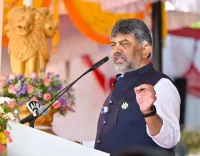
Shekhawat hails Modi's 'Vikas Bhi Virasat Bhi' vision at 12-year mark
Synopsis
Union Culture Minister Gajendra Singh Shekhawat marked 12 years of the Modi government on 18 June 2026, crediting PM Modi's 'Vikas Bhi Virasat Bhi' philosophy for landmark heritage projects at Ayodhya, Kashi Vishwanath Dham, and Kedarnath, and linking them to tourism growth and national pride.
Key Takeaways
Culture Minister Gajendra Singh Shekhawat posted on 18 June 2026 to mark 12 years of the Modi government's cultural-development agenda.
He cited five flagship projects: Ayodhya Ram Temple , Kashi Vishwanath Corridor , Kedarnath reconstruction , Mahakumbh , and artefact repatriation from overseas.
The PRASAD scheme , launched in 2014–15 , and Swadesh Darshan form the policy backbone for heritage-linked tourism infrastructure.
The Kashi Vishwanath Corridor was inaugurated in 2021 ; the Ram Temple followed the Supreme Court's 2019 judgment .
Shekhawat argued the approach has boosted tourism, employment, and local economies alongside strengthening national identity.
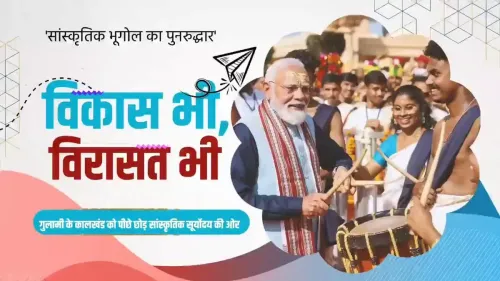
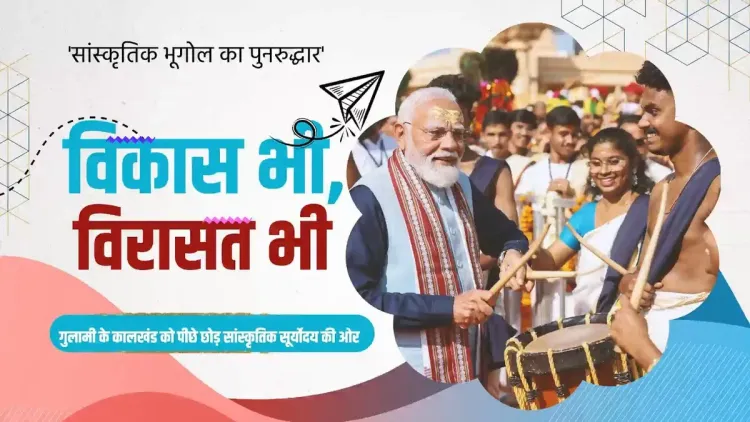
The 'Vikas Bhi, Virasat Bhi' slogan is positioned as a continuing pillar of the government's cultural and political messaging.
Union Culture and Tourism Minister Gajendra Singh Shekhawat on Thursday, 18 June 2026, credited Prime Minister Narendra Modi's leadership over the past 12 years with establishing that development and heritage are complementary rather than contradictory, citing landmark projects at Ayodhya, Varanasi, and Kedarnath as proof of this governing philosophy.
Context
Shekhawat's post, tagged #12YearsOfVikasBhiVirasatBhi, was shared in Hindi on the occasion marking 12 years of the Modi government's cultural agenda. He wrote: 'विकास और विरासत एक-दूसरे के विरोधी नहीं, बल्कि पूरक हैं' — 'development and heritage are not opposites but complements of each other.' The minister framed the past decade-plus as a period in which India 'preserved its cultural roots while establishing new milestones of modern development.'
The post enumerates five flagship undertakings: restoring Ayodhya's identity, the grand expansion of the Kashi Vishwanath Dham, the reconstruction of Kedarnath, the large-scale organisation of Mahakumbh, and the repatriation of ancient Indian artefacts from across the world. Shekhawat said these efforts have 'awakened a new pride in crores of Indians towards their culture and civilisation.'
Policy Backdrop
The projects cited by Shekhawat sit within a broader policy framework the central government has pursued since 2014. The PRASAD scheme (Pilgrimage Rejuvenation and Spiritual Augmentation Drive), launched in 2014–15, directed infrastructure spending to major pilgrimage centres nationwide. The Kashi Vishwanath Corridor was inaugurated in 2021, substantially expanding the temple precinct in Varanasi and improving pilgrim access.
The Ram Temple at Ayodhya was built following the Supreme Court's 2019 judgment, with the government facilitating the project thereafter. Kedarnath, devastated by the 2013 floods, was rebuilt with central support. The Swadesh Darshan scheme and its successor Swadesh Darshan 2.0 have further knitted religious and heritage sites into integrated tourism circuits.
Shekhawat quoted what he described as Modi's core conviction: 'जो राष्ट्र अपनी पहचान को भूल जाता है, उसका विकास पूर्णता नहीं प्राप्त करता' — 'a nation that forgets its identity cannot achieve complete development.' He argued this philosophy has simultaneously strengthened national identity and given 'new momentum to tourism, employment, and local economies.'
Stakeholders and Impact
The minister's framing directly links heritage investment to economic outcomes, pointing to gains for pilgrims and tourists, workers in the hospitality and handicrafts sectors, and local economies around major religious sites. Large-scale events such as Mahakumbh have historically generated significant short-term economic activity for host cities and surrounding regions.
Diplomatic efforts to secure the return of antiquities from overseas collections have added a foreign-policy dimension to the cultural agenda, reinforcing the government's narrative that India is asserting its civilisational identity on the global stage. Shekhawat's post concluded: 'Today India is introducing its civilisation, culture, and traditions to the world with confidence.'
What's Next
The government is expected to expand heritage tourism infrastructure under Swadesh Darshan 2.0, with additional spiritual circuits in the pipeline. Preparations for the next Mahakumbh cycle will also test the administration's capacity to scale up the organisational model used in recent editions. The 'Vikas Bhi, Virasat Bhi' slogan — 'both development and heritage' — is likely to remain a central message in the BJP's cultural-political communications as the government moves into the second half of its current term.
Point of View
Designed to consolidate the BJP's ownership of the 'civilisational pride' narrative ahead of future electoral cycles. By tethering economic outcomes — tourism revenue, employment, local growth — to temple restoration and artefact repatriation, the minister is reinforcing a governing argument that soft cultural power and hard economic development are inseparable under this administration. The emphasis on a 'confident India' presenting its traditions to the world also signals a continued foreign-policy dimension to the cultural agenda. Taken together, the messaging positions heritage investment not as a communal gesture but as a universal development dividend — a framing the BJP has refined over the past decade.
NationPress
17 Sept 2026
Frequently Asked Questions
What is 'Vikas Bhi Virasat Bhi' and who coined it?
'Vikas Bhi Virasat Bhi' — meaning 'both development and heritage' — is a governing philosophy associated with Prime Minister Narendra Modi, used to describe the integration of cultural heritage preservation with modern economic development since 2014.
What projects did Shekhawat highlight in his post?
Culture Minister Gajendra Singh Shekhawat highlighted the restoration of Ayodhya, the Kashi Vishwanath Corridor expansion in Varanasi, the reconstruction of Kedarnath temple, the large-scale organisation of Mahakumbh, and the repatriation of ancient Indian artefacts from abroad.
What is the PRASAD scheme?
PRASAD stands for Pilgrimage Rejuvenation and Spiritual Augmentation Drive, a central government scheme launched in 2014–15 to develop infrastructure and amenities at major pilgrimage and heritage sites across India.
When was the Kashi Vishwanath Corridor inaugurated?
The Kashi Vishwanath Corridor in Varanasi was inaugurated in 2021, substantially expanding the temple precinct and improving access for pilgrims and tourists.
How does heritage development benefit the local economy according to the government?
The government argues that investment in pilgrimage and heritage infrastructure drives tourism footfall, creates employment in hospitality, handicrafts, and services sectors, and stimulates local economies around major religious and cultural sites.