CM Yogi: Over 6 Lakh UP Families Achieve Energy Self-Reliance Under PM Surya Ghar
Synopsis
Uttar Pradesh Chief Minister Yogi Adityanath has announced that over six lakh families in the state have enrolled under PM Surya Ghar: Muft Bijli Yojana, achieving energy self-reliance through rooftop solar installations and free monthly electricity under the Centre's flagship renewable welfare scheme.
Key Takeaways
CM Yogi Adityanath announced on 27 June 2026 that over 6 lakh UP families have joined PM Surya Ghar: Muft Bijli Yojana .
The scheme provides eligible households up to 300 units of free electricity per month via rooftop solar installations and central subsidies.
PM Surya Ghar was announced in Union Budget 2024 with a national target of one crore rooftop solar installations .
Uttar Pradesh is one of the key states in the national rollout, with state agencies actively facilitating registrations.
The scheme builds on earlier solar initiatives including JNNSM (2010) and PM-KUSUM (2019) , and aligns with India's updated climate commitments.
Pending data on actual completed installations and central financial assistance disbursement will be a key measure of ground-level impact.
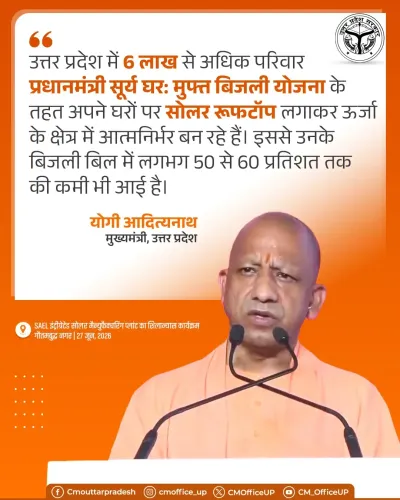
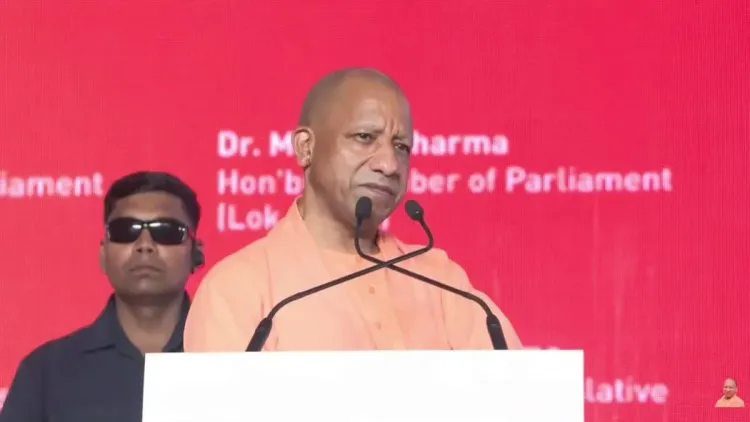
Uttar Pradesh Chief Minister Yogi Adityanath on Saturday, 27 June 2026 highlighted that more than six lakh families in Uttar Pradesh have achieved what he termed 'energy self-reliance' by enrolling under the central government's flagship rooftop solar scheme, PM Surya Ghar: Muft Bijli Yojana.
In his post on X, the Chief Minister stated: 'पीएम सूर्य घर: मुफ्त बिजली योजना' के साथ जुड़कर उत्तर प्रदेश के 6 लाख से अधिक परिवार 'ऊर्जा आत्मनिर्भरता' को प्राप्त हुए हैं — meaning, 'More than six lakh families of Uttar Pradesh have attained energy self-reliance by joining the PM Surya Ghar: Muft Bijli Yojana.'
Context
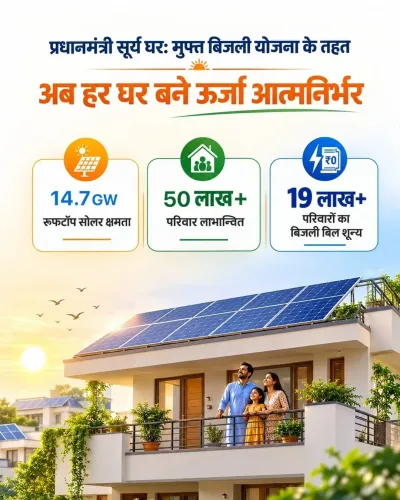
PM Surya Ghar: Muft Bijli Yojana is a central government programme launched by Prime Minister Narendra Modi that provides eligible households with rooftop solar installations and up to 300 units of free electricity per month through central financial assistance and subsidies. The scheme was announced in the Union Budget 2024 with a national target of one crore rooftop solar installations across the country.
Uttar Pradesh, India's most populous state, has been one of the key focus states for the scheme's rollout, with the state government actively promoting adoption among both urban and rural households. CM Yogi Adityanath's post underscores the state administration's role in driving registrations and facilitating central subsidy disbursement.
Policy Backdrop
The PM Surya Ghar scheme sits within a longer arc of India's solar policy, building on earlier initiatives such as the Jawaharlal Nehru National Solar Mission launched in 2010 and the PM-KUSUM scheme introduced in 2019, which extended subsidised solar access to agricultural and household consumers. The current scheme is also aligned with India's updated Nationally Determined Contributions, which commit the country to expanding its renewable energy capacity significantly by 2030.
Distributed rooftop solar is increasingly seen as a tool to reduce the financial burden on state electricity distribution companies (discoms), many of which — including those in Uttar Pradesh — have historically carried large subsidy-related losses. By shifting consumption to self-generated solar power, the scheme aims to ease both household electricity bills and discom liabilities simultaneously.
Stakeholders and Impact
The primary beneficiaries are UP households — particularly lower- and middle-income families — who gain access to subsidised rooftop solar units and monthly free electricity, reducing their out-of-pocket energy expenditure. The scheme also benefits the renewable energy sector, generating demand for solar panel manufacturing, installation services, and grid-integration infrastructure across the state.
For the Uttar Pradesh government, the milestone of over six lakh enrolled families represents a significant implementation achievement in a state with a large and dispersed rural population. Coordinated outreach between central and state agencies has been credited with accelerating registrations beyond initial projections.
What's Next
Observers will watch for official state-wise progress reports on the number of completed rooftop installations versus registrations, as well as data on the actual disbursement of central financial assistance to enrolled families. Parliamentary scrutiny of the scheme's uptake — including state-disaggregated figures — is expected during upcoming legislative sessions.
As Uttar Pradesh continues to scale up its implementation, the state's experience is likely to inform the broader national rollout strategy, particularly regarding last-mile connectivity for rural beneficiaries and the pace of grid-synchronisation approvals by local discoms.
Point of View
Positioning UP's administration as an active delivery partner rather than a passive recipient of central policy. The six-lakh figure, if borne out by official installation data, would represent a meaningful penetration of a large and logistically complex state. The framing of 'energy self-reliance' — echoing the broader 'Atmanirbhar Bharat' vocabulary — signals a deliberate alignment between state governance messaging and the Centre's ideological narrative. The real test will come when registration numbers are matched against verified rooftop installations and subsidy disbursements.
NationPress
26 Sept 2026
Frequently Asked Questions
What is PM Surya Ghar Muft Bijli Yojana?
PM Surya Ghar: Muft Bijli Yojana is a central government scheme launched by Prime Minister Narendra Modi that installs rooftop solar panels on eligible households and provides up to 300 units of free electricity per month through central financial assistance. It was announced in Union Budget 2024 with a target of one crore installations nationwide.
How many UP families have joined PM Surya Ghar scheme?
According to a post by Uttar Pradesh Chief Minister Yogi Adityanath on 27 June 2026, more than six lakh families in Uttar Pradesh have enrolled under the PM Surya Ghar: Muft Bijli Yojana.
What does 'energy self-reliance' mean under PM Surya Ghar?
In the context of PM Surya Ghar, 'energy self-reliance' refers to households generating their own electricity through rooftop solar installations, reducing dependence on the grid and lowering or eliminating monthly electricity bills through the scheme's free-unit provision.
Who launched PM Surya Ghar Muft Bijli Yojana?
The scheme was launched by Prime Minister Narendra Modi and was announced in the Union Budget 2024. It is a central government initiative implemented in coordination with state governments, including Uttar Pradesh.
What is the national target of PM Surya Ghar scheme?
The national target set under PM Surya Ghar: Muft Bijli Yojana is one crore rooftop solar installations across India, as announced in Union Budget 2024.