CM Sai pays tribute to Minímata on her death anniversary
Synopsis
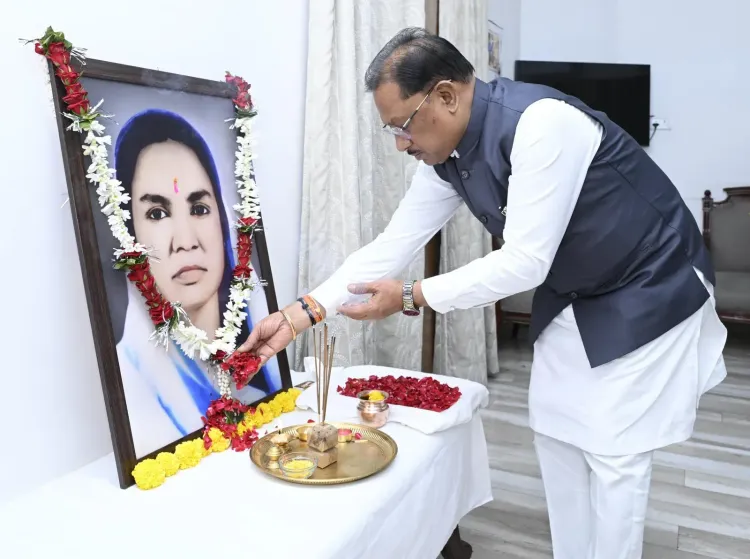
Chhattisgarh Chief Minister Vishnu Deo Sai offered floral tributes to Mini Mata — the state's first woman MP and celebrated social reformer — on her death anniversary at his Raipur residence, honouring her lifelong work for marginalised communities and women's empowerment.
Key Takeaways
CM Vishnu Deo Sai paid tribute to Mini Mata on her death anniversary on 11 August 2026 at his Raipur residence.
Mini Mata was Chhattisgarh's first woman Member of Parliament and a prominent social reformer.
Her work focused on the rights of marginalised communities , women's empowerment , and social harmony .
CM Sai described her legacy of service, compassion, and public welfare as 'an eternal source of inspiration' for society.
The tribute reflects Chhattisgarh's established tradition of honouring its social and political pioneers on their death anniversaries.
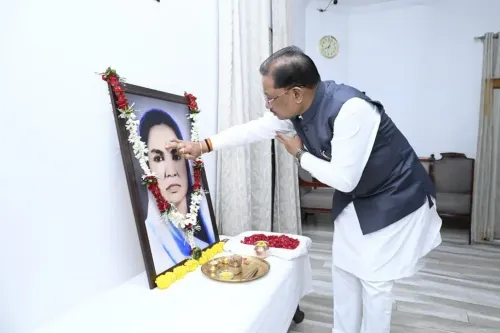
She was Chhattisgarh's first woman Member of Parliament, a tireless voice for the marginalised, and a name that still echoes through the state's social conscience. On her death anniversary, Chhattisgarh Chief Minister Vishnu Deo Sai paid floral tributes to the legendary reformer Mini Mata at his residence in Raipur on Tuesday, 11 August 2026.
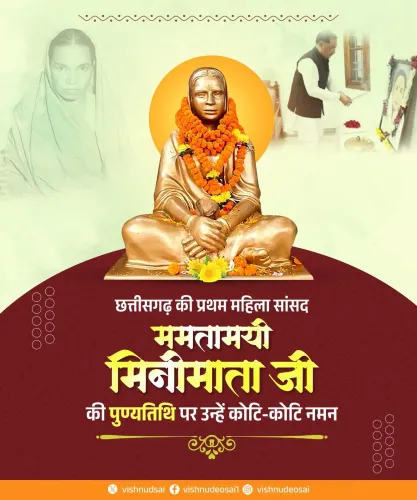
Sharing the tribute on X, CM Sai wrote: 'महान समाज सुधारक एवं छत्तीसगढ़ की प्रथम महिला सांसद ममतामयी मिनीमाता जी की पुण्यतिथि पर... सादर नमन किया' — 'On the death anniversary of the great social reformer and Chhattisgarh's first woman MP, the compassionate Mini Mata ji, I offered floral tributes and paid my respectful homage at my residence in Raipur.'
A life given to those the system forgot
Mini Mata dedicated her entire life to the rights of the deprived and marginalised sections of society, to women's empowerment, and to social harmony — a legacy CM Sai described as 'an eternal source of inspiration.' She remains a towering figure in the political and social history of the region that became Chhattisgarh after its formation in 2000, and her distinction as the state's first woman MP continues to carry symbolic weight for successive generations of women in public life.
CM Sai noted that her work rooted in 'seva, samvedana aur jankалyan' — service, compassion, and public welfare — would continue to guide society. The tribute, offered personally at the Chief Minister's official residence, underscores the political importance that Chhattisgarh's leadership attaches to honouring its social pioneers.
Chhattisgarh's tradition of remembering its pioneers
Such commemorations are a recurring feature of political life in Chhattisgarh, where leaders across parties mark the anniversaries of early elected representatives and social workers who shaped the region's identity before and after statehood. For BJP leaders like CM Sai, invoking Mini Mata's legacy also reinforces the party's outreach to women and marginalised communities — the very constituencies she championed.
Mini Mata's story is a reminder that the arc of representative democracy in central India was bent, early and stubbornly, toward inclusion — and that some names deserve more than a footnote.
Point of View
And they signal continued commitment to the constituencies — women and marginalised communities — that such pioneers championed. For CM Sai and the BJP in Chhattisgarh, invoking Mini Mata's legacy is consistent with a broader effort to build cultural legitimacy in a state with a significant tribal and OBC electorate. These rituals of remembrance, repeated annually, quietly shape the political narrative around which communities a government claims to serve.
NationPress
12 Aug 2026
Frequently Asked Questions
Why did CM Vishnu Deo Sai pay tribute to Mini Mata?
CM Vishnu Deo Sai paid tribute to Mini Mata on her death anniversary on 11 August 2026, offering floral homage at his Raipur residence to honour her enduring legacy as a social reformer and Chhattisgarh's first woman MP.
What is Mini Mata known for in Chhattisgarh?
Mini Mata is remembered as a pioneering figure in Chhattisgarh's social and political history. She is celebrated for her work in uplifting deprived sections of society, championing women's rights, and promoting social harmony across communities.
Where did CM Sai pay tribute to Mini Mata?
CM Sai offered floral tributes to Mini Mata at his official residence in Raipur, the capital of Chhattisgarh, on her death anniversary.
What did Vishnu Deo Sai say about Mini Mata?
CM Sai said that Mini Mata dedicated her entire life to the rights of the deprived and marginalised, to women's empowerment, and to social harmony, and that her work rooted in service, compassion, and public welfare would remain an eternal source of inspiration for society.