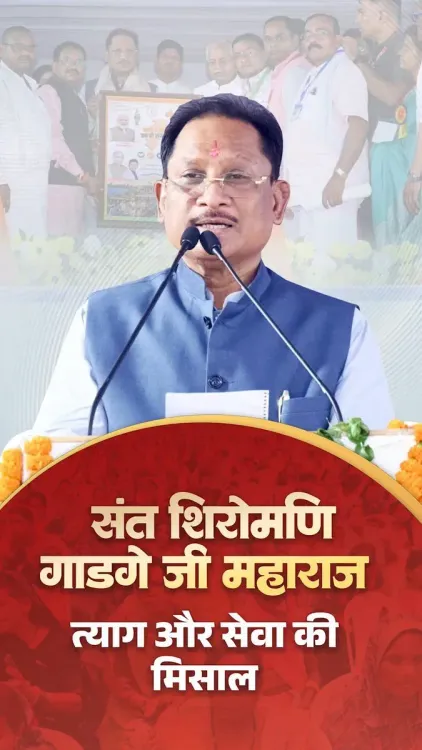
CM Sai Pays Tribute to Sant Gadge Maharaj
Synopsis
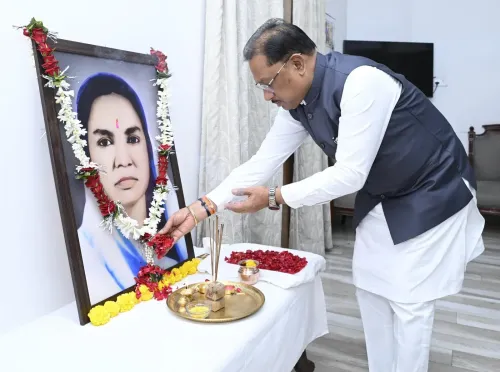
Chhattisgarh Chief Minister Vishnu Deo Sai paid tribute to Sant Gadge Maharaj on 14 June 2026, calling the 19th-century reformer a 'true karmayogi' whose life of sanitation campaigns, caste equality, and public service continues to inspire governance and welfare policy in India.
Key Takeaways
CM Vishnu Deo Sai posted a tribute to Sant Gadge Maharaj on 14 June 2026 via his official X account.
He described Gadge Maharaj as a 'great social reformer and true karmayogi' devoted to cleanliness, equality, and service.
Sant Gadge Maharaj (1876–1956) was a Maharashtrian saint known for grassroots sanitation drives and anti-caste advocacy.
The Swachh Bharat Mission (launched October 2014 ) has officially cited Gadge Maharaj's work as a historical inspiration.
BJP leaders across states periodically invoke pre-independence reformers to link historical social movements with current welfare programmes.
State-level commemorative events or scheme announcements tied to the tribute may follow in Chhattisgarh .
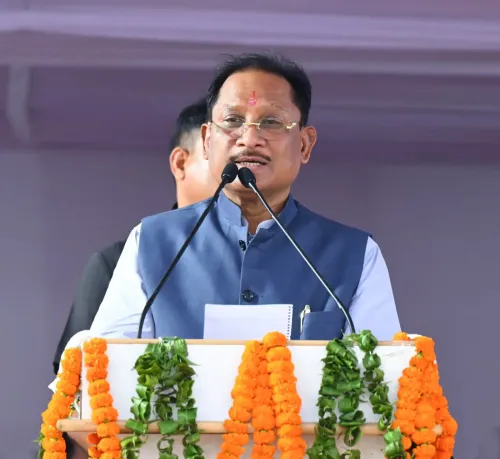
Chhattisgarh Chief Minister Vishnu Deo Sai on Sunday, 14 June 2026 paid tribute to Sant Shiromani Gadge Maharaj, hailing the 19th-century social reformer as a 'great social reformer and true karmayogi' whose life of service to sanitation, equality, and humanity remains a perennial source of inspiration.
Context
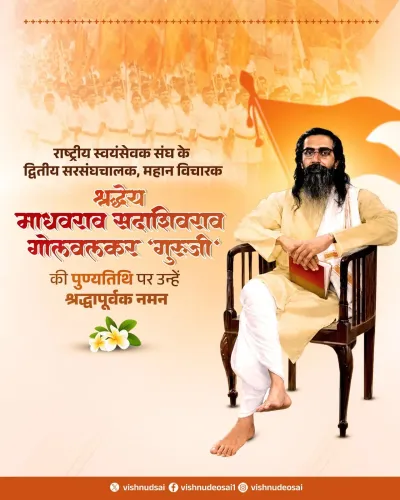
In his post on X, CM Sai wrote in Hindi: 'Sant Shiromani Gadge Ji Maharaj mahan samaj sudharak aur sachche karmayogi the' ('Sant Shiromani Gadge Ji Maharaj was a great social reformer and a true karmayogi'). He added that Gadge Maharaj dedicated his entire life to cleanliness, equality, and service to humanity, and that his life devoted to public welfare and social awakening 'will always remain a source of inspiration for all of us.'
Sant Gadge Maharaj (1876–1956) was a Maharashtrian saint and reformer who traversed villages across central and western India carrying a broom, conducting public clean-up drives, and preaching against caste discrimination, superstition, and untouchability. He established dharamshalas (rest houses), schools, and hospitals for the poor, earning the honorific Gadge Baba for the earthen pot he carried as a symbol of simplicity.
Policy Backdrop
Gadge Maharaj's legacy has been formally woven into India's national sanitation discourse. The Swachh Bharat Mission, launched in October 2014, explicitly cited his grassroots cleanliness campaigns in official communications as a historical precedent for the programme's objectives. His image and teachings have since featured in government outreach material aimed at rural communities and sanitation workers.
Chhattisgarh, a state with a significant rural and tribal population, has been an active participant in central sanitation and social-welfare schemes. CM Sai, who assumed office in December 2023 as the BJP's choice for Chief Minister, has sought to align state governance messaging with both welfare delivery and cultural-heritage recognition.
Stakeholders and Impact
Tributes to reformers such as Gadge Maharaj resonate with rural communities, sanitation workers, and Dalit and OBC constituencies across Maharashtra, Chhattisgarh, and neighbouring states, for whom his anti-caste and pro-hygiene message carries enduring social weight. BJP leaders across states have periodically invoked pre-independence reformers whose themes of cleanliness and equality intersect with current welfare programmes, reinforcing a narrative of policy continuity from historical social movements.
For the Chhattisgarh government, such messaging also serves to underscore the state's commitment to sanitation infrastructure and social harmony at the grassroots level, particularly in districts where access to basic amenities remains a challenge.
What's Next
State-level commemorative events marking Gadge Maharaj's legacy — including cleanliness drives, awareness campaigns, and community outreach programmes — are likely to follow in the coming days. Observers will also watch for any formal policy announcements from the Chhattisgarh government tying the tribute to updates on ongoing sanitation or social-welfare schemes in the state.
Point of View
With significant rural and tribal constituencies, such messaging serves both commemorative and political functions. The tribute also keeps Chhattisgarh visible in national conversations about sanitation and social equity ahead of potential scheme announcements.
NationPress
13 Sept 2026
Frequently Asked Questions
Who was Sant Gadge Maharaj?
Sant Gadge Maharaj (1876–1956) was a Maharashtrian saint and social reformer who travelled across central and western India conducting public cleanliness drives, fighting caste discrimination, and establishing schools and hospitals for the poor. He is widely regarded as a pioneer of grassroots sanitation and social-equality movements in India.
Why did CM Vishnu Deo Sai pay tribute to Sant Gadge Maharaj?
Chhattisgarh Chief Minister Vishnu Deo Sai posted a tribute on 14 June 2026 honouring Gadge Maharaj's legacy of cleanliness, equality, and public service, describing him as a 'great social reformer and true karmayogi.' The exact occasion — anniversary or state event — has not been officially confirmed.
What is the connection between Sant Gadge Maharaj and Swachh Bharat Mission?
The Swachh Bharat Mission, launched in October 2014, explicitly cited Sant Gadge Maharaj's grassroots sanitation campaigns as a historical precedent. His image and teachings have been used in government outreach material to inspire communities to participate in cleanliness drives.
Who is Vishnu Deo Sai?
Vishnu Deo Sai is a BJP leader and the Chief Minister of Chhattisgarh, a position he has held since December 2023. He is the first tribal Chief Minister of the state and represents the Kunkuri constituency.
What impact did Sant Gadge Maharaj have on Indian society?
Sant Gadge Maharaj's campaigns against untouchability, superstition, and poor sanitation helped lay the groundwork for modern social-reform movements in India. He established rest houses, schools, and hospitals for marginalised communities, and his work continues to influence government sanitation and social-welfare policy decades after his death in 1956.