Jal Shakti Minister Paatil: J&K's Growth Gets New Momentum
Synopsis
Union Jal Shakti Minister C. R. Paatil credited PM Modi's leadership for accelerating Jammu and Kashmir's development through connectivity and tourism expansion, linking a 'developed J&K' to the broader 'Viksit Bharat' vision on October 27, 2026.
Key Takeaways
Paatil posted on October 27, 2026 , highlighting Jammu and Kashmir's developmental momentum under PM Modi .
Connectivity improvements and tourism expansion are cited as the twin engines of J&K's economic growth.
Paatil specifically credited the democratic participation of J&K's residents as a key pillar of the region's progress.
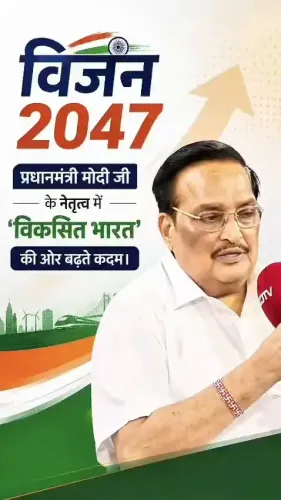
The post invokes the 'Viksit Bharat' framework, framing a developed J&K as foundational to a developed India by 2047 .
The governance push follows the 2019 reorganisation of J&K into a Union Territory after the abrogation of Article 370 .
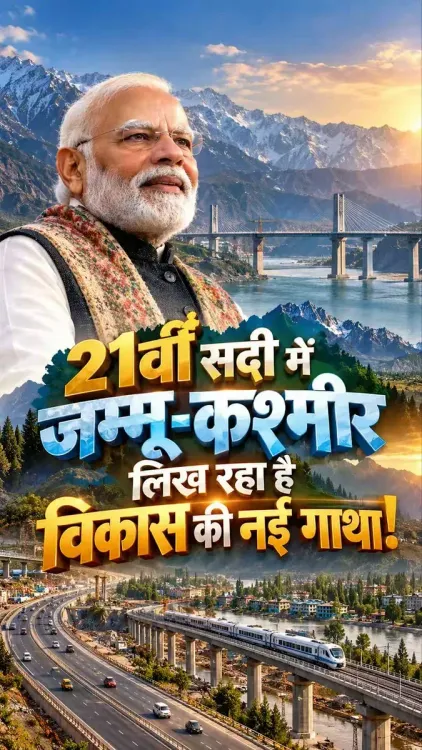
A region once defined by conflict is being reframed as a story of connectivity and possibility. On Tuesday, October 27, 2026, Union Jal Shakti Minister C. R. Paatil took to X to assert that Jammu and Kashmir is gaining fresh developmental momentum — powered by improved connectivity, expanding tourism, and what he described as the democratic faith of its people in a brighter future.
Posting in Hindi, Minister Paatil wrote: 'विकसित जम्मू-कश्मीर, विकसित भारत के संकल्प को सशक्त आधार दे रहा है' — 'A developed Jammu and Kashmir is giving strong foundation to the resolve of a developed India.' He credited Prime Minister Narendra Modi's 'visionary leadership' for steering this transformation, linking better road and transport linkages with a widening tourism footprint across the Union Territory.
From Article 370 to a New Development Push
The post sits squarely within a governance narrative that has been building since August 2019, when the central government reorganised Jammu and Kashmir into a Union Territory following the abrogation of Article 370. That structural shift brought the region under direct central administration — opening the door, the government argued, to faster infrastructure rollout and greater economic integration with the rest of India.
Since then, connectivity has been a stated priority: road widening, tunnel projects, and air-route expansion have all been part of the central push to knit the Union Territory more tightly into the national economy. Tourism, long a natural asset of the Kashmir Valley and the Jammu foothills, has been positioned as the economic lever most likely to generate visible, ground-level impact for residents.
Democratic Participation as a Pillar of Progress
Paatil's statement goes beyond infrastructure. He specifically flagged the 'democratic participation' of Jammu and Kashmir's people as central to the journey of peace, progress, and prosperity — a pointed choice of words given the political history of the region. The framing aligns with the central government's consistent argument that normalisation of democratic processes is both a cause and a consequence of development gains.
The 'Viksit Bharat' — 'Developed India' — framing that closes his message is now a standard ideological anchor for BJP ministers, tying every regional milestone to Prime Minister Modi's broader 2047 vision for India. Jammu and Kashmir, in this telling, is not an exception to the national story but a proof point for it.
The real test of that claim will be in the granular: whether specific connectivity corridors open on schedule, whether tourist footfall translates into local livelihoods, and whether the democratic institutions now operating in the Union Territory deepen over time. Those are the numbers that will either validate or complicate this narrative.
Point of View
Tourism, and democratic normalisation into a single 'development' frame. By invoking 'Viksit Bharat', he ties regional progress to the government's signature 2047 ambition, a rhetorical move that keeps J&K visible in the national conversation. The explicit mention of democratic participation is notable: it pre-empts criticism about political representation by casting citizen engagement itself as evidence of success. Whether the on-ground connectivity and tourism metrics match the political messaging will increasingly determine how durable this narrative proves.
NationPress
27 Oct 2026
Frequently Asked Questions
What did C. R. Paatil say about Jammu and Kashmir development?
Minister Paatil stated that J&K is gaining new developmental momentum through better connectivity and expanded tourism under PM Modi's leadership, and that the region's democratic participation is key to its progress.
What is the 'Viksit Bharat' vision and how does J&K fit into it?
'Viksit Bharat' means 'Developed India' — PM Modi's stated goal of making India a fully developed nation by 2047. The BJP government positions a developed Jammu and Kashmir as a foundational pillar of this national ambition.
What changed in Jammu and Kashmir after Article 370 was abrogated in 2019?
J&K was reorganised from a full state into a Union Territory in August 2019 after Article 370 was abrogated, bringing it under direct central administration and enabling the government to fast-track infrastructure and economic integration projects.
What connectivity and tourism projects are happening in Jammu and Kashmir?
The central government has pursued road widening, tunnel construction, and air-route expansion in J&K since 2019. Tourism promotion has been a parallel priority, leveraging the Kashmir Valley and Jammu foothills as natural assets. Specific ongoing project names were not cited in the minister's post.
Who is C. R. Paatil and what ministry does he head?
C. R. Paatil is the Union Minister of Jal Shakti (water resources) and a senior BJP leader who previously served as BJP Gujarat state president. He is a close associate of PM Modi.