ESTIC 2026: PM Modi's science push key to Viksit Bharat, says Principal Scientific Adviser
Synopsis
India's Principal Scientific Adviser has placed PM Modi at the centre of the country's science ambitions, calling his support 'absolutely essential' ahead of ESTIC 2026 — a 12-theme conclave designed to set the nation's technology roadmap. The adviser also flagged cell and gene therapy, now expanding from rare diseases to cancer and sickle cell, as India's next medical frontier.
Key Takeaways
Principal Scientific Adviser Professor Ajay Kumar Sood called PM Modi 's backing 'absolutely essential' for India's science and technology goals on 27 October 2026 .
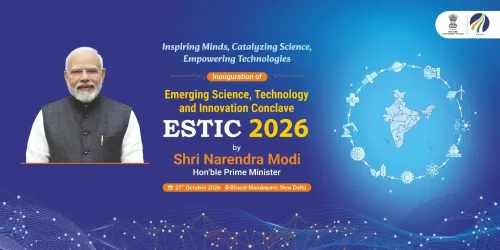
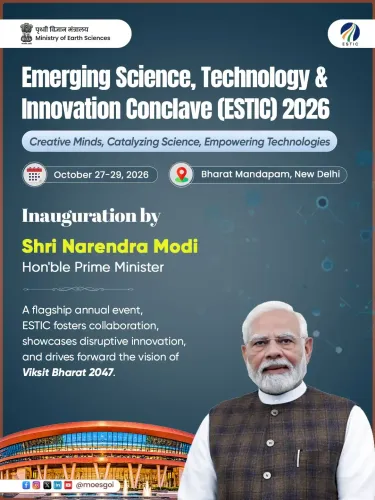
ESTIC 2026 , to be inaugurated by PM Modi , will address 12 contemporary S&T themes across academia, industry, national laboratories, and policymaking.
The conclave builds on ESTIC 2025 , described by Sood as having had an 'inspiring effect' on India's technology ecosystem.
Professor Sood identified cell and gene therapy — covering sickle cell anaemia , cancer , CAR-T , and cystic fibrosis — as the next major frontier in medical science.
Sood described science and technology as the 'pivot point' for achieving Aatmanirbhar Bharat .
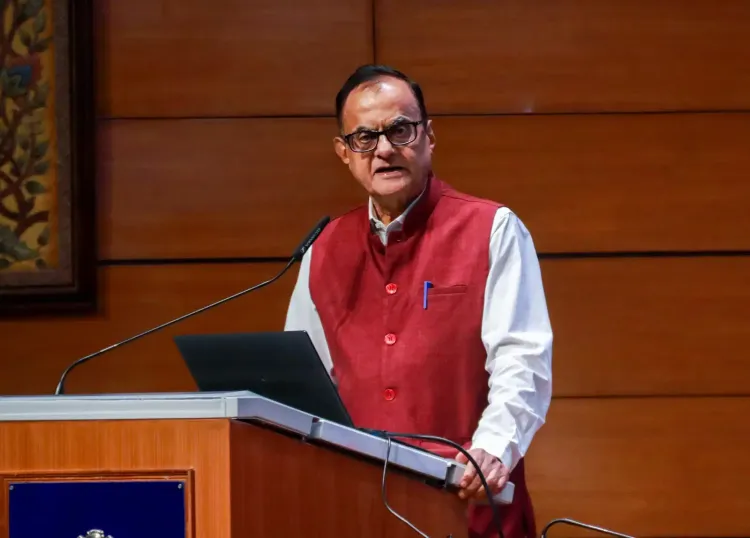
Principal Scientific Adviser (PSA) to the Government of India, Professor Ajay Kumar Sood, said on Tuesday, 27 October 2026 that Prime Minister Narendra Modi's support is indispensable for advancing science and technology and realising the vision of a Viksit Bharat. Sood made the remarks while underscoring the significance of the forthcoming Emerging Technologies, Innovation and Science Conclave (ESTIC) 2026, which PM Modi is scheduled to inaugurate.
PM Modi's Role in India's S&T Ecosystem
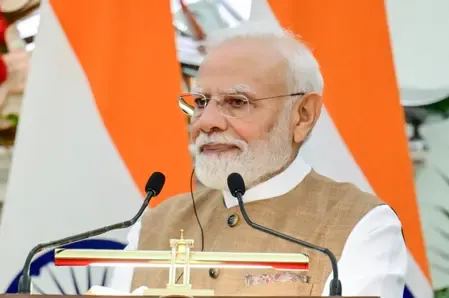
'The Prime Minister's inauguration of this event reflects his commitment and priority for science and technology in making India a Viksit Bharat. His support is absolutely essential, and we have been inspired by his vision and guided by it,' Professor Sood said. He positioned Modi's personal involvement not as ceremonial, but as a signal of the Centre's intent to place science at the core of India's development agenda. This comes amid growing global competition in emerging technologies — from semiconductors to artificial intelligence — where national policy direction can determine industrial outcomes for decades.
What ESTIC 2026 Will Cover
According to Professor Sood, ESTIC 2026 will feature 12 contemporary themes spanning the full breadth of science and technology. Building on what he described as the 'inspiring effect' of ESTIC 2025, the 2026 edition is designed to bring together representatives from academia, industry, national laboratories, and policymaking circles under one platform.
'This gives a new impetus to our ecosystem to see how India can take the lead in all these technologies. Here, we have people from academia, industry, national laboratories, policymakers and everyone who is a stakeholder in our S&T roadmap. I think ESTIC 2026 is again a correct step in that direction to take India towards Viksit Bharat,' Sood said. Notably, the multi-stakeholder format mirrors global best-practice models such as the World Economic Forum's technology councils, signalling an ambition to institutionalise India's science diplomacy.
Science as the Pivot for Aatmanirbhar Bharat
Sood stressed that science and technology lie at the 'pivot point' for achieving self-reliance — a phrase that directly echoes the government's Aatmanirbhar Bharat framework. He described ESTIC 2026 as a purposeful step in that direction, reinforcing the narrative that technological capability, not just manufacturing scale, will define India's next phase of economic growth.
Cell and Gene Therapy: India's Next Medical Frontier
On emerging healthcare innovations, Professor Sood identified cell and gene therapy as the most consequential medical science frontier ahead. He noted that the field has moved well beyond its earlier association with rare diseases. 'Many people call cell and gene therapy precision therapy. The right thing is that it is really needed. Earlier, it used to be called a treatment for rare diseases, but that is not the case now,' he said.
Sood highlighted specific applications including treatment of sickle cell anaemia, cancer, CAR-T cell therapy, and cystic fibrosis. 'My feeling is that cell and gene therapy will be the new frontier in medical science,' he added. India has been making incremental strides in this space, with domestic biotech firms and institutions beginning to pilot CAR-T therapies at significantly lower costs than their Western counterparts.
What Comes Next
With PM Modi's inauguration of ESTIC 2026 scheduled, attention will turn to whether the conclave produces actionable policy commitments — on funding, regulatory reform, or international partnerships — that move beyond the momentum of the event itself. Stakeholders from 12 thematic tracks are expected to submit recommendations that could feed into India's next science and technology policy cycle.
Point of View
Time-bound mandates, or remain aspirational road-maps that look impressive on paper. India's science funding as a share of GDP has hovered below 0.7% for years, well short of the government's own 2% target — a structural gap that no conclave alone can close. The cell and gene therapy call-out is significant: it signals that the PSA's office sees domestic biotech cost-engineering as a genuine competitive lever, not just a health equity measure.
NationPress
27 Oct 2026
Frequently Asked Questions
What did India's Principal Scientific Adviser say about PM Modi and science?
Principal Scientific Adviser Professor Ajay Kumar Sood said PM Modi's support is 'absolutely essential' for advancing science and technology in India. He stated that Modi's decision to inaugurate ESTIC 2026 reflects the government's commitment to science-led development and the Viksit Bharat vision.
Why is cell and gene therapy significant for India according to Professor Sood?
Professor Sood identified cell and gene therapy as the next major frontier in medical science, noting it has expanded far beyond rare disease treatment to conditions such as sickle cell anaemia, cancer, CAR-T cell therapy applications, and cystic fibrosis. He described it as 'precision therapy' with transformative potential for India's healthcare landscape.
How does ESTIC 2026 differ from ESTIC 2025?
ESTIC 2026 builds on the 2025 edition, which Professor Sood credited with having an 'inspiring effect' on India's science and technology ecosystem. The new edition expands the scope with 12 thematic tracks covering all aspects of science and technology, aiming to generate fresh momentum and actionable policy directions.
What is the connection between ESTIC 2026 and Aatmanirbhar Bharat?
Professor Sood described science and technology as the 'pivot point' for making India self-reliant under the Aatmanirbhar Bharat framework. He said ESTIC 2026 will serve a direct purpose in advancing that goal by aligning stakeholders around India's emerging technology priorities.