Giriraj Singh Urges Swadeshi Push This Festive Season
Synopsis
Union Textiles Minister Giriraj Singh called on Indians to prioritise local products this festive season, citing Bihar's makhana, Karnataka's tur dal, and Gandhi Jayanti khadi sales of over ₹28 crore as evidence that the Vocal for Local movement is gaining real economic ground.
Key Takeaways
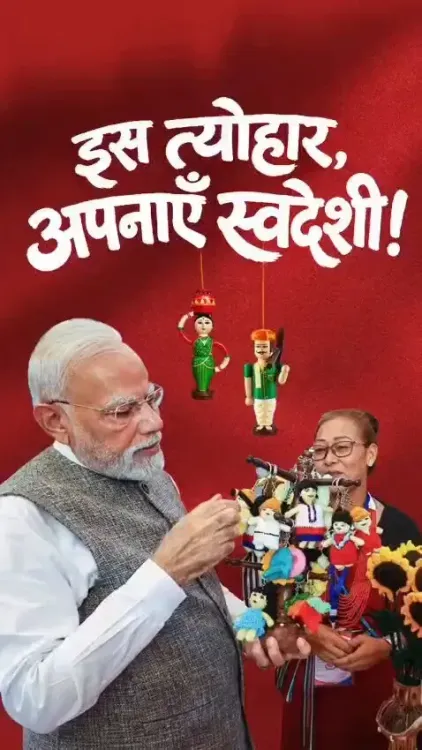
Union Textiles Minister Giriraj Singh posted a Swadeshi appeal on October 27, 2026 , urging citizens to buy local during the festive season.
He cited Bihar's makhana and Karnataka's tur dal as examples of Indian products gaining a foothold in global markets.
Khadi sales on Gandhi Jayanti reportedly crossed ₹28 crore , which Singh called a reflection of public faith in Swadeshi.
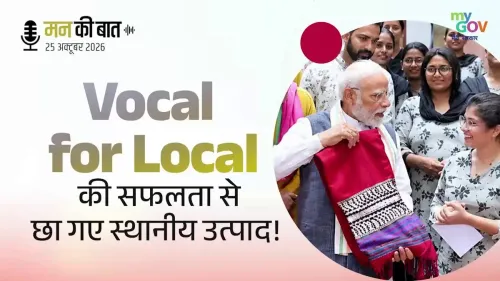
The appeal is rooted in PM Modi's Vocal for Local initiative, first launched in May 2020 under the Atmanirbhar Bharat stimulus package.
Singh urged citizens to make Vocal for Local a jan andolan (people's movement), particularly during the high-spending Navratri–Diwali window.
As India's festive season peaks, Union Textiles Minister Giriraj Singh on Tuesday, October 27, 2026, made a pointed call for citizens to turn celebration into an act of economic patriotism — choose local, buy Indian, and transform 'Vocal for Local' from a slogan into a mass movement.
Posting in Hindi on X, Singh wrote: 'स्वदेशी अपनाएँ, देश की आर्थिक प्रगति में भागीदार बनें' — 'Adopt Swadeshi, become a partner in the nation's economic progress.' He reached for two vivid, concrete anchors: Bihar's makhana (fox nuts) and Karnataka's tur dal (split pigeon peas) — crops from opposite ends of the country — arguing that Indian products are now 'making their identity in global markets.' Then he landed the headline number: khadi sales exceeding ₹28 crore on Gandhi Jayanti alone, citing it as proof of a genuine, deepening public faith in domestic goods.
Makhana to tur dal — why the geography of the shoutout matters
The minister's choice of examples is deliberate political geography. Bihar's makhana, a GI-tagged superfood that has seen soaring international demand, sits squarely in his own Lok Sabha constituency of Begusarai's broader ecosystem. Karnataka's tur dal represents the agricultural south. Together, they signal that the Swadeshi pitch is not a Hindi-heartland project — it spans the republic. That framing directly serves the BJP's effort to cast Atmanirbhar Bharat as a national, not regional, economic identity.
Gandhi Jayanti khadi sales as a political measuring stick
The reference to Gandhi Jayanti khadi sales is loaded with symbolism. Since Prime Minister Narendra Modi revived the practice of gifting and wearing khadi around October 2, the Khadi and Village Industries Commission (KVIC) has tracked single-day sales figures as a barometer of the movement's health. A figure of ₹28 crore-plus in a single day — if confirmed — would represent a significant milestone for a fabric that once risked fading into ceremonial irrelevance. The number, as Singh frames it, is not just a sales figure; it is a confidence index for the Swadeshi idea itself.
Vocal for Local — from a 2020 crisis call to festive-season mainstream
Prime Minister Modi first invoked 'Vocal for Local' in May 2020 as part of the Atmanirbhar Bharat economic stimulus, a ₹20-lakh-crore package designed to reduce India's import dependence and build domestic supply chains in the wake of the pandemic. Six years on, Singh's post is evidence of how thoroughly that emergency call has been institutionalised into routine ministerial messaging — especially around festivals, when consumer spending spikes and the government wants to direct that impulse toward Indian artisans, weavers, and farmers. The festive window from Navratri through Diwali is now treated as a policy opportunity, not just a commercial one. For khadi artisans and MSME producers, the stakes are real: a meaningful share of festive-season purchases can sustain livelihoods through the lean winter months that follow.
Point of View
Election-friendly cultural identity. By anchoring the appeal in regional specifics — Bihar's makhana, Karnataka's tur dal — the minister is doing double duty: reinforcing national economic messaging while speaking directly to agricultural constituencies across the political map. The Gandhi Jayanti khadi sales figure, whether or not independently verified, functions as a narrative device to show the movement has popular momentum beyond government diktat. Watch for KVIC to release formal festive-season sales data, which will either validate or complicate this framing ahead of any upcoming state elections.
NationPress
27 Oct 2026
Frequently Asked Questions
What is the Vocal for Local initiative in India?
'Vocal for Local' is a campaign launched by Prime Minister Narendra Modi in May 2020 under the Atmanirbhar Bharat package, urging Indians to buy domestically produced goods to strengthen the local economy and reduce import dependence.
What did Giriraj Singh say about khadi sales on Gandhi Jayanti?
Union Textiles Minister Giriraj Singh stated that khadi sales on Gandhi Jayanti exceeded ₹28 crore, citing the figure as a sign of growing public trust in Swadeshi products.
Why is Bihar makhana significant for India's Swadeshi push?
Bihar's makhana (fox nuts) is a GI-tagged superfood that has seen rising international demand, making it a flagship example of an Indian regional product successfully entering global markets.
What is Atmanirbhar Bharat and how does it relate to textiles?
Atmanirbhar Bharat is a self-reliance economic programme announced in 2020. For the textiles sector, it means boosting domestic production, promoting Indian fabrics like khadi, and supporting artisans and MSME exporters to reduce dependence on imports.
What is KVIC and what role does it play in promoting khadi?
The Khadi and Village Industries Commission (KVIC) is a government body under the Ministry of MSME that promotes and markets khadi products, tracks sales milestones, and supports the livelihoods of weavers and artisans across India.