CM Yogi: 'Nothing Greater Than the Nation'
Synopsis
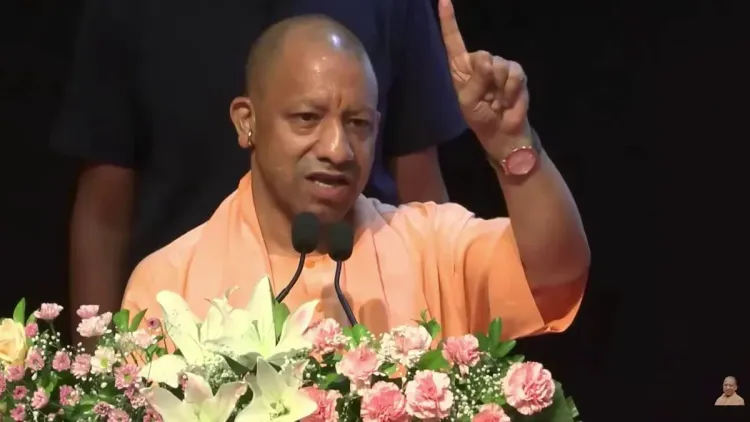
Uttar Pradesh Chief Minister Yogi Adityanath declared on X that 'nothing is greater than the nation,' asserting that every citizen's safety, prosperity, and happiness is directly tied to India's own well-being. The post, shared on 3 October 2026 with a video, reflects his enduring nationalist governing philosophy.
Key Takeaways
CM Yogi Adityanath posted a reflection on nationalism on X on 3 October 2026 .
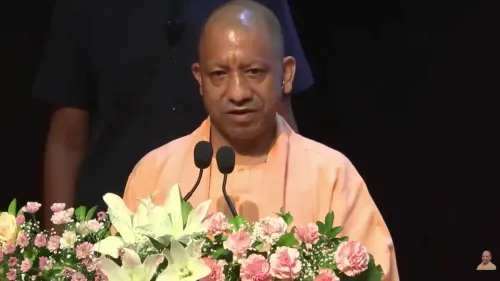
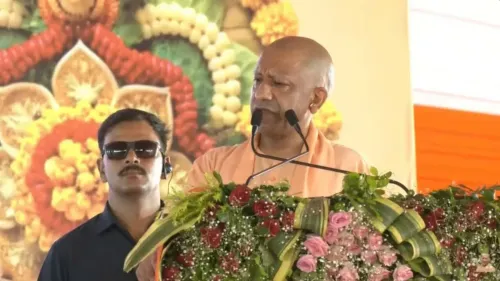
The post states: 'Nothing is greater than the nation — if the country is safe and prosperous, we are too; if the country is happy, we are happy.' The message was accompanied by a video , indicating a deliberate, composed communication.
Adityanath leads Uttar Pradesh , India's most populous state with over 240 million residents, and the Gorakhnath Math in Gorakhpur.
The post reflects a core tenet of his political identity: the inseparability of individual and national well-being.
A message as old as statecraft, delivered in two plain sentences — and yet its timing carries weight. On Saturday, 3 October 2026, Uttar Pradesh Chief Minister Yogi Adityanath posted a reflection on national identity and collective well-being on X, asserting that the prosperity and safety of every citizen is inseparable from the prosperity and safety of India itself.
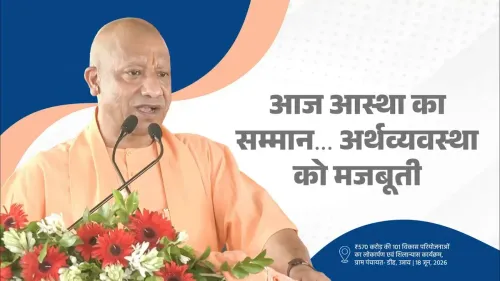
In Hindi, the post reads: 'देश से बढ़कर कुछ नहीं...' — 'Nothing is greater than the nation.' The Chief Minister continued: 'If our country is safe and prosperous, then we too are safe and prosperous; if the country is happy, then we too are happy.' The statement was accompanied by a video, underscoring that this was a composed, deliberate communication rather than an offhand remark.
The idea behind the words
The sentiment CM Yogi expressed is a cornerstone of nationalist political thought in India — that individual and community flourishing cannot be disaggregated from the condition of the republic. For Adityanath, who leads both Uttar Pradesh — India's most populous state with over 240 million people — and the Gorakhnath Math, a centuries-old religious institution in Gorakhpur, the fusion of personal well-being with national well-being reflects a worldview that has defined his public persona since he first entered electoral politics.
The brevity of the post is itself a communication choice. No policy reference, no adversarial framing — just a foundational assertion that the nation's health is the citizen's health, offered as an axiom rather than an argument.
Why a sitting Chief Minister frames it this way
Chief Ministers routinely use their social media presence to project governing philosophy beyond the immediate churn of legislation and administration. For Yogi Adityanath, whose political identity is built on the twin pillars of governance delivery and cultural nationalism, posts of this nature serve to remind his base — and a wider audience — of the ideological frame through which his government's decisions are made. Security, prosperity, and national happiness are not abstract terms in his political vocabulary; they are recurring metrics he invokes when discussing law-and-order improvements in UP, infrastructure expansion, and economic growth in the state.
Whether the video attached to the post adds specific context — a speech, a visit, a commemoration — was not determinable from the available information, but the written message stands on its own as a statement of political philosophy.
When a leader of one of the world's largest sub-national governments reduces the social contract to three clean lines, the real question is what action — or what moment — made this the right day to say it.
Point of View
This kind of stripped-down nationalist assertion is not incidental — it is the ideological scaffolding his governance rests on. By framing citizen well-being as contingent on national well-being, he reinforces a top-down, nation-first social contract that has been central to BJP's political messaging for over a decade. Posts like this also function as a soft reset of political narrative — moving public attention from administrative specifics to shared first principles. Coming from the leader of India's largest state, the message carries an audience of hundreds of millions, making even a two-sentence post a consequential act of political communication.
NationPress
3 Oct 2026
Frequently Asked Questions
What did CM Yogi Adityanath post on X on 3 October 2026?
He posted a Hindi message stating 'nothing is greater than the nation,' and that every citizen's safety, prosperity, and happiness is tied to India's own condition. The post included a video.
What does Yogi Adityanath's 'nation first' post mean?
It reflects his long-held political philosophy that individual and collective well-being cannot be separated from the health of the Indian nation — a recurring theme in his public communication.
Who is Yogi Adityanath?
Yogi Adityanath is the Chief Minister of Uttar Pradesh, India's most populous state, and the head of the Gorakhnath Math, a historic religious institution in Gorakhpur. He is a senior leader of the Bharatiya Janata Party (BJP).
Why does CM Yogi frequently post nationalist messages on social media?
As a leader whose identity combines governance and cultural nationalism, Adityanath uses social media to reinforce the ideological frame behind his administration's decisions and to communicate directly with a large national audience.
Where is Yogi Adityanath based?
He is based in Lucknow , the capital of Uttar Pradesh, where he serves as Chief Minister, and maintains deep ties to Gorakhpur , the seat of the Gorakhnath Math.