CM Saini Meets Punjab Delegation, Discusses Public Grievances
Synopsis
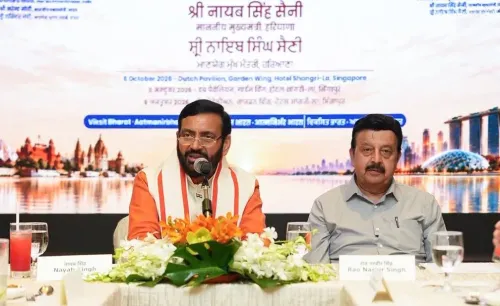
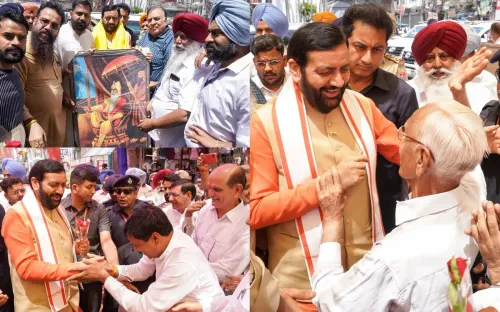
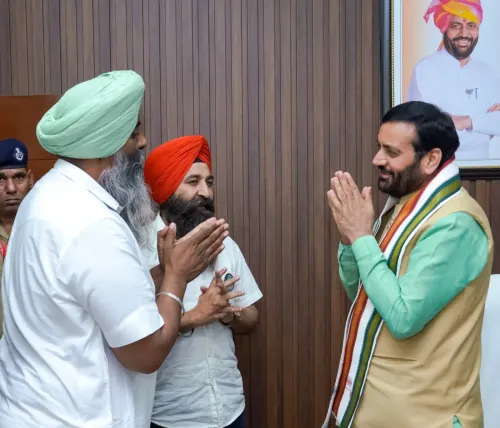
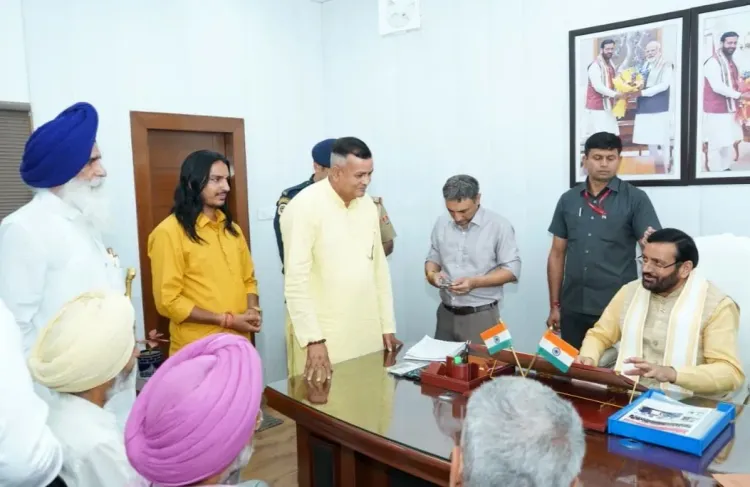
Haryana Chief Minister Nayab Singh Saini met a delegation from Punjab on May 25, 2026, holding wide-ranging discussions on public grievances and contemporary issues. Delegation members shared their views and suggestions with the CM in what reflects routine but significant inter-state bilateral engagement.
Key Takeaways
Haryana CM Nayab Singh Saini met a delegation from Punjab on May 25, 2026 .
Discussions covered important subjects related to Punjab's public grievances and various contemporary issues.
Delegation members formally shared their views and suggestions with the chief minister.
The meeting reflects the routine inter-state coordination framework rooted in the Punjab Reorganisation Act of 1966 .
Saini has been Haryana Chief Minister since March 2024 , succeeding Manohar Lal Khattar.
Follow-up action on specific issues raised will be watched through Haryana-Punjab coordination mechanisms .
Haryana Chief Minister Nayab Singh Saini met with a delegation from Punjab on Monday, May 25, 2026, holding detailed discussions on public grievances and contemporary issues of concern to Punjab residents. The meeting, which Saini shared on social media, saw delegation members present their views and suggestions to the Haryana chief minister.
Context
Saini posted about the meeting in Hindi, noting: 'आज पंजाब से आए प्रतिनिधिमंडल से मुलाकात की' ('Today I met with a delegation that came from Punjab'). He added that 'विस्तृत चर्चा हुई' — 'detailed discussions were held' — on important subjects related to the public problems of Punjab and various contemporary issues. Members of the delegation shared their thoughts and suggestions during the meeting.
The engagement underscores the routine but important bilateral coordination that takes place between Haryana and Punjab, two states that share a long administrative and geographic relationship dating to the Punjab Reorganisation Act of 1966.
Policy Backdrop
The 1966 reorganisation created Haryana as a separate state from the erstwhile Punjab, setting the stage for decades of shared concerns spanning river water distribution, agricultural policy, and administrative boundaries. Since then, inter-state engagements between the two governments have been a recurring feature of India's federal governance framework.
Such meetings occur regularly regardless of which party holds power in either state, and are considered part of standard bilateral coordination rather than formal treaty-level negotiations. Issues around canal waters, farmer welfare, and cross-border public grievances have historically formed the core of these discussions.
Stakeholders and Impact
The primary stakeholders in such engagements are Punjab residents whose grievances were brought before the Haryana government, as well as communities on both sides of the shared border who are affected by decisions on water, agriculture, and public services. Delegations of this nature serve as a direct channel for citizen concerns to reach senior leadership.
For CM Saini, who assumed office in March 2024 succeeding Manohar Lal Khattar, receiving cross-state delegations signals an open-door approach to inter-state public engagement. The BJP-led Haryana government's willingness to hear Punjab voices also carries political significance given the different political landscapes of the two neighbouring states.
What's Next
Attention will now turn to any follow-up action or formal statements from either state government on the specific issues raised during the meeting. Scheduled sessions of Haryana-Punjab coordination mechanisms — particularly those dealing with water sharing and farmer concerns — will be closely watched for any concrete outcomes stemming from this dialogue.
As inter-state public grievance meetings increasingly become a tool of proactive governance, the frequency and outcomes of such engagements between Haryana and Punjab are likely to remain a barometer of the bilateral relationship between the two states.
Point of View
Farmlands, and administrative history — such engagements are both routine governance and politically meaningful optics. For a relatively new chief minister consolidating his administrative identity, being seen as accessible to cross-border public concerns reinforces a broader BJP governance narrative of federal cooperation. The absence of specific outcomes, however, means the meeting's real significance will only be measured by any concrete follow-up action.
NationPress
10 Oct 2026
Frequently Asked Questions
Why did a Punjab delegation meet Haryana CM Nayab Singh Saini?
A Punjab delegation met Haryana CM Nayab Singh Saini on May 25, 2026, to discuss public grievances and contemporary issues of concern to Punjab residents, sharing their views and suggestions directly with the chief minister.
What issues were discussed between CM Saini and the Punjab delegation?
The discussions covered important subjects related to Punjab's public problems and various contemporary issues, though the specific topics were not detailed publicly. Inter-state meetings of this nature typically address concerns around water sharing, agriculture, and cross-border public grievances.
Who is Nayab Singh Saini and when did he become Haryana CM?
Nayab Singh Saini is the Chief Minister of Haryana and a BJP leader. He assumed office in March 2024, succeeding Manohar Lal Khattar.
What is the historical background of Haryana-Punjab relations?
Haryana and Punjab share a common history rooted in the Punjab Reorganisation Act of 1966, which created Haryana as a separate state. Since then, the two states have maintained ongoing coordination on issues such as river water distribution, agriculture, and administrative boundaries.
What is the significance of inter-state delegation meetings between Punjab and Haryana?
Such meetings are a regular feature of India's federal governance framework, serving as a direct channel for citizen concerns to reach senior leadership. They address shared issues arising from the two states' common geography and history, and occur irrespective of which party holds power in either state.