Pralhad Joshi warns against 'regime change' bids targeting India
Synopsis
Senior BJP minister Pralhad Joshi on 17 October 2026 warned that 'foreign-inspired regime change scripts and engineered chaos' will not be permitted to subvert India's democratic progress under PM Modi, reinforcing the ruling party's sovereignty-first political line.
Key Takeaways
Pralhad Joshi , Union Consumer Affairs Minister, posted a pointed sovereignty warning on 17 October 2026 .
He accused unnamed actors of deploying 'foreign-inspired regime change scripts and engineered chaos' against India.
The statement directly links PM Narendra Modi 's electoral mandate to the protection of national sovereignty.
The BJP has used similar sovereignty-first framing consistently since its 2014 electoral victory.
The post names no specific country, group, or event — keeping the political target deliberately broad.
Opposition responses and any parliamentary follow-up in the coming weeks will test how politically loaded the immediate trigger is.
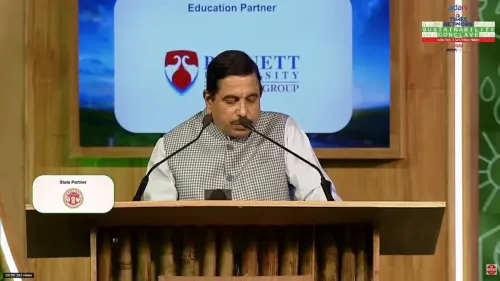
Foreign-inspired scripts to unseat elected governments have no place in India's democratic order — that is the blunt message Union Consumer Affairs Minister Pralhad Joshi fired on Saturday, 17 October 2026, in a pointed post on X that put the ruling establishment's sovereignty argument front and centre.
The charge: 'engineered chaos' against a popular mandate
Joshi's post does not pull punches. 'India's progress under Hon'ble PM Shri Narendra Modi ji cannot be subverted by foreign-inspired 'regime change' scripts and engineered chaos,' he wrote, adding that 'those unable to win the people's mandate will never be allowed to destabilize our national sovereignty.' The framing is deliberate: it couples electoral legitimacy with national security, casting any challenge to the current government not merely as political opposition but as an externally orchestrated threat.
A well-worn BJP playbook — and why it still lands
This is not new rhetoric, but it is rhetoric that travels. Since 2014, the Bharatiya Janata Party has systematically framed its electoral victories as popular mandates that insulate India from destabilisation — a line that resonates with a voter base primed on 'India First' nationalism. Prime Minister Narendra Modi himself has invoked sovereignty as a shield in multiple high-stakes moments, from post-election pressures to periods of street-level unrest. Joshi, a senior BJP voice from Karnataka and a trusted cabinet face, amplifies the same frequency.
What makes the October 2026 iteration notable is the specificity of the language — 'regime change scripts' is a phrase with an unmistakably geopolitical charge, invoking a global vocabulary of colour revolutions and externally funded civil disruption. The post stops short of naming any country, group, or specific event, keeping the accusation broad and the political target flexible.
Opposition and sovereign legitimacy: the permanent tension
Indian ministers have periodically deployed this style of messaging after national elections or during spells of high-decibel domestic protest. The implicit argument is consistent: a government returned by popular vote carries a democratic shield that outside actors — and domestic forces aligned with them — cannot pierce. Critics, predictably, read the same messaging as an effort to pre-emptively delegitimise dissent by labelling it foreign-inspired. That argument will play out in Parliament corridors and on social media timelines in the days ahead.
Watch for responses from opposition leaders and any follow-up statements in Parliament — the temperature of the reaction will signal how politically loaded the underlying trigger actually is.
Point of View
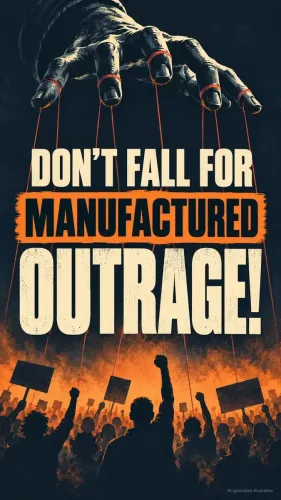
Borrowing from global discourse on externally funded political transitions to give a domestic political message an international weight. By tying India's 'progress' directly to Modi's leadership, the statement also performs a loyalty function within the party's communication ecosystem. The real test is whether a specific triggering event surfaces — if it does, the vagueness of this post will be read as strategic; if none emerges, critics will frame it as manufactured alarm.
NationPress
17 Oct 2026
Frequently Asked Questions
What did Pralhad Joshi say about foreign interference in India?
Joshi warned on 17 October 2026 that 'foreign-inspired regime change scripts and engineered chaos' cannot subvert India's progress under PM Modi, asserting that those who fail to win electoral mandates will not be allowed to destabilise national sovereignty.
Who is Pralhad Joshi?
Pralhad Joshi is a senior BJP leader from Karnataka and Union Minister holding the portfolios of Consumer Affairs, Food and Public Distribution, and New and Renewable Energy in the Modi cabinet.
What does 'regime change script' mean in the Indian political context?
In the BJP's political vocabulary, 'regime change script' refers to alleged attempts — attributed to foreign actors or their domestic allies — to destabilise or remove an elected government outside the democratic process of elections.
Has the BJP used similar sovereignty rhetoric before?
Yes. Since 2014, the BJP and PM Modi have repeatedly invoked India's electoral mandate as a sovereign shield against external interference, particularly during periods of large-scale domestic protest or heightened geopolitical pressure.
What happens next after Joshi's statement?
Political watchers will track responses from opposition parties and any follow-up statements in Parliament; the intensity of those reactions is likely to reveal how significant the immediate trigger behind Joshi's post actually is.