Fadnavis: No votes stolen in SIR, it's Rahul Gandhi's mind that's been stolen
Synopsis
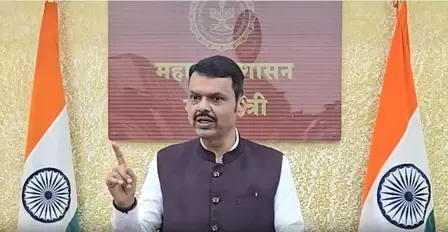
Maharashtra CM Devendra Fadnavis took the sharpest BJP swipe yet at Rahul Gandhi over the SIR controversy — invoking West Bengal election data to debunk vote-deletion claims and quipping that it is 'Rahul Gandhi's mind, not votes, that has been stolen.' He went so far as to urge PM Modi to form a committee to 'return' Gandhi's mind.
Key Takeaways
Maharashtra CM Devendra Fadnavis on 27 September 2026 in Nagpur launched a pointed attack on Congress leader Rahul Gandhi over the SIR controversy.
Fadnavis declared: 'No votes were stolen during SIR, but it is Rahul Gandhi's mind that has been stolen.' He cited West Bengal data — TMC winning 15 seats despite SIR-related vote drops — to challenge Opposition's vote-deletion narrative.
The CM described Gandhi's strategy as a 'well-planned' effort to steer institutions toward 'a leftist ideology' by eroding public faith.
Fadnavis acknowledged minor SIR errors of five to ten per cent but maintained the formal objection process provides a full remedy.
He urged PM Modi to constitute a committee to 'find and return' Gandhi's mind so he 'may speak in the national interest.'
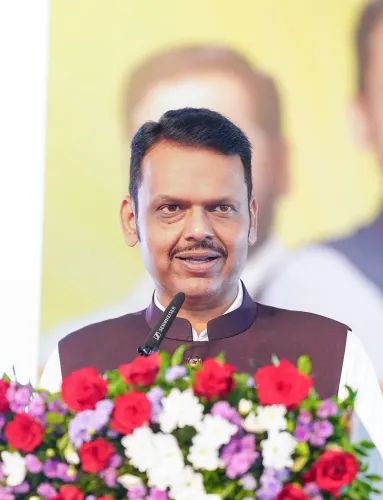
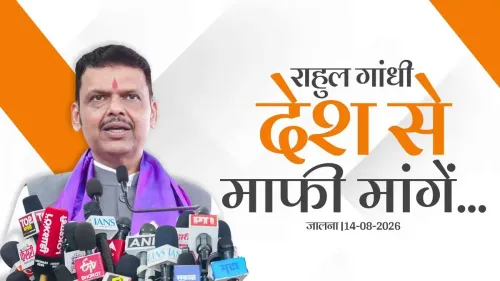
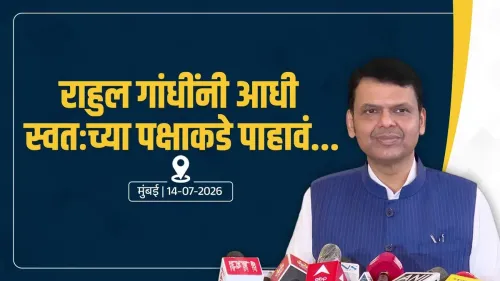
Maharashtra Chief Minister Devendra Fadnavis on Sunday, 27 September 2026, launched a sharp attack on Congress leader and Leader of Opposition Rahul Gandhi over what he called 'unwarranted and unfounded' allegations against the Election Commission of India's Special Intensive Revision (SIR) exercise. Speaking to the press in Nagpur, Fadnavis accused Gandhi of attempting to 'defame and discredit constitutional institutions' while outwardly waving a copy of the Constitution.
The Pointed Rebuke
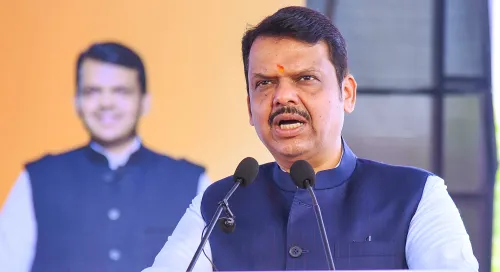
In a direct swipe at the Opposition's ongoing protests against the SIR process, Fadnavis delivered his sharpest line of the presser: 'No votes were stolen during SIR, but it is Rahul Gandhi's mind that has been stolen.' He escalated the remark further, requesting that Prime Minister Narendra Modi constitute a committee 'to find his mind and return it to him, so that he may speak in the national interest — speaking what is right and what is true.'
The Chief Minister argued that Gandhi's broader objective was to erode public trust in constitutional institutions — a strategy he described as 'well-planned.' 'He wants to create a system where people lose faith in these institutions, leading to anarchy in the country. Once the public begins to believe that the existing constitutional framework cannot deliver justice, these institutions will be steered towards a leftist ideology,' Fadnavis said.
West Bengal Data Cited as Counterpoint
Fadnavis sought to counter the Opposition's narrative with what he called 'hard data' from recent elections. Referring to the West Bengal assembly elections, he pointed out that the All India Trinamool Congress (TMC) won in at least 15 constituencies despite a significant drop in votes attributed to the SIR process. 'If anti-BJP votes were being deleted via SIR, how did the TMC manage to win in those areas?' he asked, arguing that the data undermined the claim that the exercise was selectively targeting Opposition voters.
How the SIR Process Works, Per Fadnavis
The Chief Minister defended the SIR mechanism as an open and participatory process. He explained that any eligible voter whose name has been omitted can file a formal objection, and equally, objections can be raised against names that should not appear on the electoral roll. 'Yet, you do nothing during this process, even though you are aware that it is underway,' he said, directed pointedly at the Congress and its allies.
Fadnavis also acknowledged that minor errors — affecting roughly five to ten per cent of cases — may occur, but maintained that the grievance redressal mechanism ensures no voter is ultimately disenfranchised. 'If the name of an eligible voter has been left out, you can file an objection,' he reiterated.
Political Context and What Comes Next
The Congress and several Opposition parties have been mounting public protests against the SIR exercise, alleging that it is being used to delete legitimate voter entries, particularly in constituencies where the Bharatiya Janata Party (BJP) faces stiff competition. The Fadnavis broadside is the ruling party's most pointed response yet at the national leadership level of the Opposition. This comes amid a broader political battle over the credibility of electoral processes ahead of upcoming state elections. Whether the Congress chooses to escalate its campaign or engage with the Election Commission's formal objection process will be closely watched in the coming days.
Point of View
However theatric, risks personalising a structural argument about electoral roll integrity that deserves more substantive engagement. The Opposition's failure to formally engage the ECI objection window — even while protesting loudly — is a genuine vulnerability Fadnavis is right to exploit. The deeper question the exchange leaves unanswered: what is the actual error rate in the SIR exercise, and is the five-to-ten per cent figure the CM cited independently verified?
NationPress
27 Sept 2026
Frequently Asked Questions
What is the SIR exercise that is at the centre of this controversy?
The Special Intensive Revision (SIR) is an Election Commission of India process to update electoral rolls by verifying, adding, or removing voter entries. Opposition parties have alleged it is being misused to delete legitimate voter registrations, particularly in constituencies sensitive to the ruling BJP — an allegation the government denies.
What did Devendra Fadnavis say about Rahul Gandhi and the SIR row?
Fadnavis said 'no votes were stolen during SIR, but it is Rahul Gandhi's mind that has been stolen,' accusing Gandhi of orchestrating a 'well-planned strategy' to defame constitutional institutions and steer them toward a 'leftist ideology.' He also requested PM Modi to form a committee to 'return' Gandhi's mind.
What West Bengal data did Fadnavis cite to counter the Opposition?
Fadnavis pointed out that the TMC won in at least 15 West Bengal constituencies despite a significant drop in votes linked to the SIR process. He argued that if the exercise was selectively deleting anti-BJP votes, the TMC — a non-BJP party — could not have prevailed in those seats.
Can voters challenge SIR-related deletions or omissions?
Yes. According to Fadnavis, the SIR process allows any eligible voter whose name has been omitted to file a formal objection, and objections can similarly be raised against entries that should not appear on the roll. The CM said this remedy remains available even after the initial exercise concludes.
Why does this political dispute matter?
The SIR controversy goes to the heart of public trust in India's electoral machinery. With several state elections on the horizon, any perception that voter rolls are being manipulated — regardless of whether it is substantiated — can shape turnout, voter behaviour, and the legitimacy of results. The BJP-Congress clash over this issue is likely to intensify in the coming weeks.