Fadnavis fires back at Rahul Gandhi over Maharashtra vote rigging claims
Synopsis
Maharashtra CM Devendra Fadnavis fired back at Rahul Gandhi's vote-rigging allegations, calling them deliberate falsehoods — but Gandhi's charge rests on a concrete number: 2.07 crore voters dropped from Maharashtra's draft rolls. The clash over electoral data is no longer just political noise; it is shaping up as a credibility test for the Election Commission ahead of future polls.
Key Takeaways
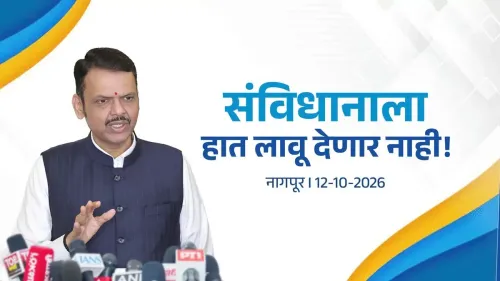
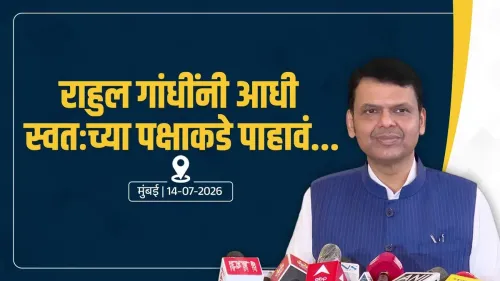
Maharashtra CM Devendra Fadnavis on 3 September accused Congress leader Rahul Gandhi of 'repeating lies aggressively' over alleged vote rigging in the 2024 Maharashtra Assembly elections .
Rahul Gandhi had alleged that 2.07 crore voters — nearly one in five registered voters — were excluded from Maharashtra's 2026 Special Intensive Revision (SIR) draft rolls.
Gandhi's X post highlighted a voter count swing from 9.70 crore (2024 Assembly) to 7.78 crore (2026 SIR draft), raising transparency questions.
Fadnavis alleged Congress organised around 180 organisations during the 'Bharat Jodo' initiative to build a 'faceless mechanism' for narrative-setting.
The CM cited a claim that 29 out of 40 points raised by Gandhi at the 'Chhatro Ki Gunj' event in Pune were factually incorrect.
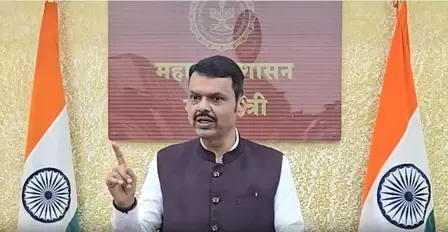
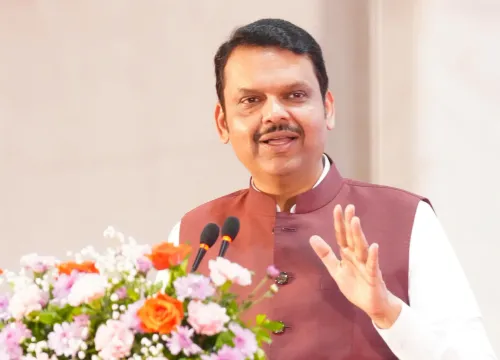
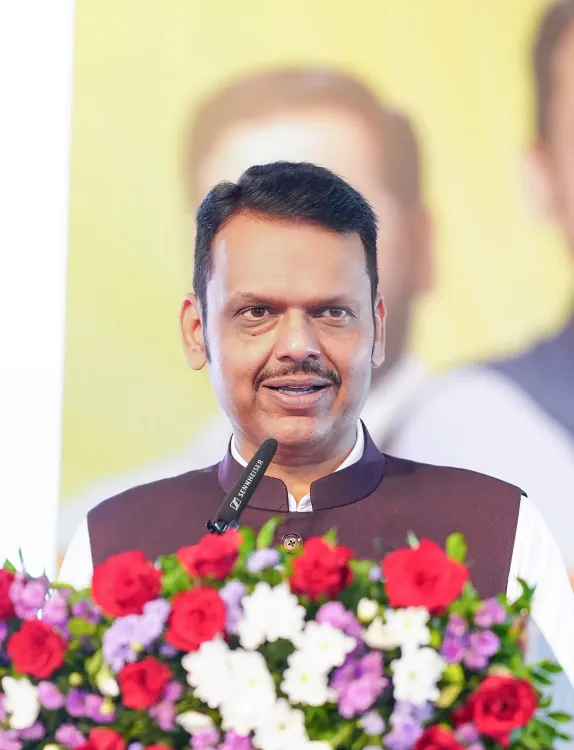
Maharashtra Chief Minister Devendra Fadnavis on Thursday, 3 September launched a sharp counter-offensive against Congress leader and Leader of Opposition Rahul Gandhi, accusing him of making factually incorrect statements about alleged vote rigging in the 2024 Maharashtra Assembly elections. Addressing an infrastructure conclave organised by a Marathi television channel in Mumbai, Fadnavis alleged that Gandhi's approach is to 'repeat lies aggressively.'
Fadnavis Challenges Gandhi on Facts
Responding to Gandhi's accusations — made through a detailed post on social media platform X and speeches including an interaction at the 'Chhatro Ki Gunj' event in Pune — Fadnavis insisted that public discourse must be grounded in data. 'If someone comes to Maharashtra and spreads falsehoods, I will certainly respond. Public discourse should be based on facts and figures. But repeating lies forcefully seems to be his policy,' he said.
Fadnavis further argued that today's younger generation actively fact-checks public assertions. He cited an instance in which a participant at the Pune event reportedly posted online that 29 out of 40 points raised by Gandhi were factually incorrect. 'If fake narratives are peddled, they will be countered directly with true narratives,' the CM added.
CM Alleges Coordinated Campaign Behind Protests
Dismissing suggestions that the state government had misjudged public anger over recent student protests, Fadnavis alleged a coordinated strategy behind the unrest. He referred to civil society coalitions — including one he described as Cockroach Janata Party (CJP) — and claimed their activities were part of a broader political design.
'Do not view CJP in isolation. Prior to the 2024 Lok Sabha elections, Congress executed an experiment by bringing together Left-leaning and extreme-Left ideologies to set a specific narrative,' Fadnavis alleged. He further claimed that Congress, citing its own low credibility, had organised around 180 organisations with 'zero baggage' during the 'Bharat Jodo' initiative to capture opposition space.
'This is not limited to just a few youths; initially, the response was minimal. Now, these 180 organisations have re-aligned to build a faceless mechanism and set a new narrative similar to 2024. We are aware of this strategy and will counter it appropriately,' Fadnavis alleged.
What Rahul Gandhi Had Alleged
The CM's remarks came in direct response to Gandhi's attack, delivered on Tuesday, in which the Congress leader accused the ruling Bharatiya Janata Party (BJP) and the Election Commission of India (ECI) of systematic voter list manipulation. Gandhi pointed to the latest Special Intensive Revision (SIR) draft data, highlighting that 2.07 crore voters — nearly one in every five registered voters in Maharashtra — had been excluded from the draft rolls.
In his X post, Gandhi laid out a stark breakdown of fluctuating voter numbers across successive revisions: 9.29 crore voters during the 2024 Lok Sabha elections, 9.70 crore during the 2024 Assembly elections, and 7.78 crore in the 2026 SIR draft. 'Which list was correct?' he asked, questioning the transparency and accuracy of official electoral data.
Gandhi alleged that the BJP and what he termed the 'Vote Theft Commission' were working to secure a BJP victory at any cost. 'For a government formed through vote theft, the public does not matter — which is why this BJP neither listens to the people nor respects their mandate,' he stated.
The Larger Political Context
The exchange marks a fresh escalation in the BJP-Congress war of words over the integrity of Maharashtra's electoral rolls, a dispute that has intensified since the SIR draft data entered the public domain. Maharashtra, a key battleground state with 288 assembly constituencies, has been at the centre of national political contestation since the November 2024 elections. The voter-list controversy adds a new dimension to an already charged political environment ahead of future civic and state-level polls.
With both sides hardening their positions, the dispute over electoral data accuracy is likely to draw further scrutiny from election watchdogs and civil society groups in the weeks ahead.
Point of View
But Gandhi's voter-list arithmetic is harder to dismiss — a swing of nearly 2 crore voters between the 2024 Assembly rolls and the 2026 SIR draft demands a transparent official explanation, not just counter-rhetoric. The BJP's move to frame the controversy as a Congress narrative operation shifts attention from the data to the messenger, a tactic that works in the short term but risks backfiring if the ECI does not address the discrepancies directly. Maharashtra's electoral credibility is now a live issue, and the 180-organisations allegation, while politically charged, is unverifiable without evidence — a detail mainstream coverage has largely glossed over.
NationPress
19 Oct 2026
Frequently Asked Questions
What did CM Fadnavis say about Rahul Gandhi's vote rigging allegations?
Fadnavis accused Gandhi of 'repeating lies aggressively,' saying public discourse must be based on facts and figures. Speaking at a Mumbai conclave on 3 September, he cited a claim that 29 of 40 points Gandhi raised at a Pune event were factually incorrect.
What are Rahul Gandhi's specific allegations about Maharashtra's voter list?
Gandhi alleged that 2.07 crore voters — nearly one in five registered voters in Maharashtra — were excluded from the 2026 Special Intensive Revision draft rolls. He also highlighted a sharp fluctuation in voter numbers: 9.29 crore in the 2024 Lok Sabha elections, 9.70 crore in the 2024 Assembly elections, and 7.78 crore in the 2026 SIR draft.
What is the Special Intensive Revision (SIR) that Gandhi referenced?
The Special Intensive Revision (SIR) is a periodic exercise conducted by the Election Commission of India to update and clean up electoral rolls. Gandhi used the 2026 SIR draft data to argue that a significant number of legitimate voters had been dropped from Maharashtra's rolls.
What did Fadnavis allege about the student protests and civil society groups?
Fadnavis alleged that recent student protests were part of a coordinated strategy involving around 180 organisations linked to Congress's opposition-building efforts. He claimed these groups were attempting to recreate a narrative similar to the one he says Congress engineered ahead of the 2024 elections.
Why is the Maharashtra voter list controversy politically significant?
Maharashtra is a key battleground state with 288 assembly constituencies, and any credible allegation of voter list manipulation carries major implications for electoral integrity. The dispute has drawn attention to the Election Commission's data consistency and is likely to intensify scrutiny ahead of future state and civic polls.