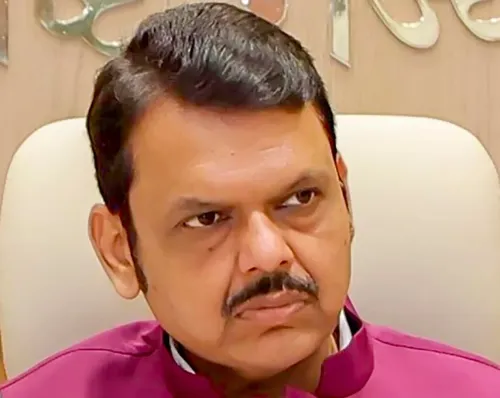
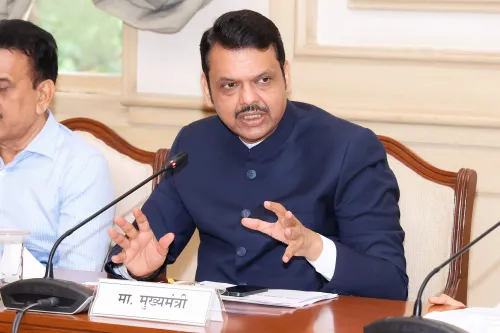
CM Fadnavis Takes On Congress Over Poll Body Attacks
Synopsis
Maharashtra CM Devendra Fadnavis has published a column accusing Congress of systematically attacking the Election Commission and refusing to accept democratic verdicts, calling the pattern anti-democratic and demanding it be exposed.
Key Takeaways
CM Devendra Fadnavis published a full-length Marathi article on 27 October 2026 targeting Congress's record of questioning electoral institutions.
He accused Congress of refusing to accept the people's mandate and using democracy's name to 'create anarchy.' Rahul Gandhi and Congress leaders have raised EVM reliability concerns after electoral losses dating back to at least 2019 .
The Election Commission of India — a constitutional body — has been repeatedly drawn into political disputes over poll integrity.
Fadnavis framed Congress's institutional criticism as anti-democratic, not a defence of democracy.
The pattern of post-poll institutional challenges has recurred across multiple election cycles in India since 2014 .
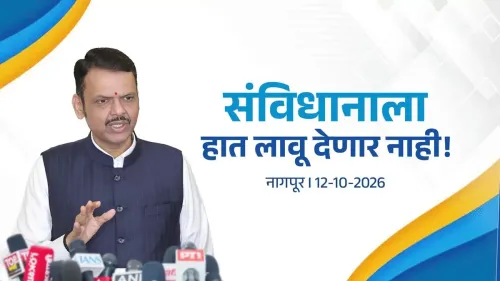
Every time the ballot count does not go their way, the same playbook opens: question the machines, target the umpire, and call the chaos 'defence of democracy.' Maharashtra Chief Minister Devendra Fadnavis has now taken that argument head-on, publishing a sharply worded article on Tuesday, 27 October 2026, calling out what he terms Congress's double-speak on electoral institutions.
Writing in Marathi, Fadnavis posed a pointed challenge: 'जनतेचा कौल मान्य करायचा नाही' — 'refuse to accept the people's verdict, raise questions over the electoral process, and then create anarchy in the name of democracy.' He argued that this pattern of behaviour from the Indian National Congress must be exposed, and demanded to know how long the politics of attacking constitutional bodies to erode their credibility can continue.
The EVM Debate and Congress's Recurring Argument
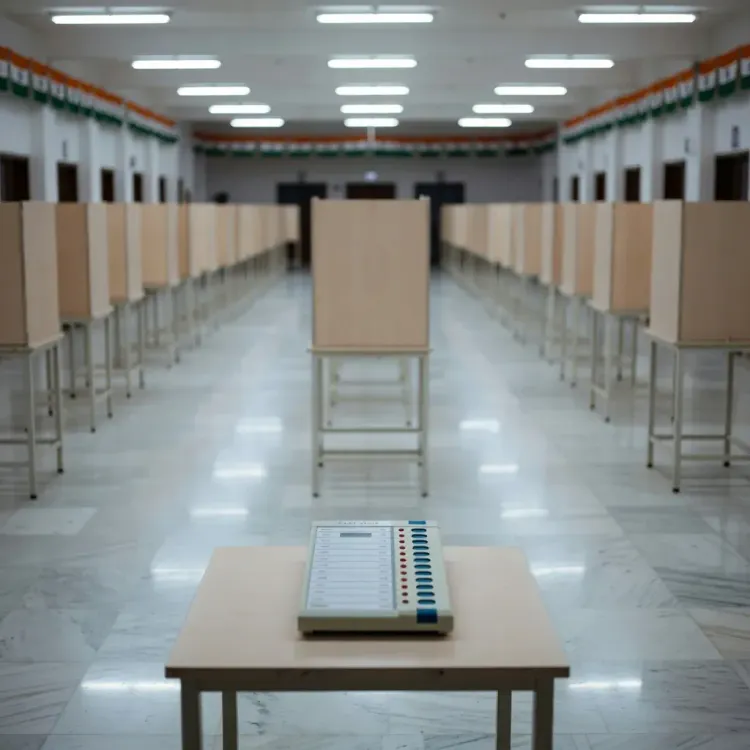
The charge Fadnavis levels is not new in Indian politics, but it lands with fresh force each time the cycle repeats. Since at least 2019, senior Congress leaders — including Rahul Gandhi — have periodically questioned the reliability of Electronic Voting Machines and called for expanded paper-trail verification after significant electoral setbacks at the national and state level.
The Election Commission of India, a constitutionally independent body, has consistently defended the integrity of EVMs and the conduct of polls. Fadnavis's piece essentially argues that sustained institutional scepticism, recycled after every loss, is not a democratic exercise but an anti-democratic one — using the language of accountability to undermine the very machinery that delivers accountability.
Fadnavis's Larger Political Argument
The BJP leader is doing something more strategic than a reactive post. By writing a full-length column and directing readers to it, he is shifting the frame: the story is no longer Congress's grievance, it is Congress's conduct. The question he poses — 'how long can this go on?' — is designed to put the opposition on the back foot and make institutional loyalty itself a political battleground ahead of future electoral cycles.
The broader pattern is well established across Indian politics since 2014: ruling parties frame post-poll challenges as sore-loser behaviour, while opposition parties frame their criticism as vigilance over institutions. Fadnavis's intervention plants Maharashtra firmly in that national conversation, invoking Mumbai and Maharashtra as the geographic anchors of a debate that has real constitutional stakes.
Whether Congress chooses to rebut the article directly or let it pass will itself be a signal. The column is out, the argument is on record — and the Election Commission's credibility is now, once again, the centrepiece of a political fight neither side appears ready to step back from.
Point of View
Not just a reactive jab. By framing Congress's EVM scepticism as anti-democratic behaviour, he is attempting to reframe institutional criticism as institutional sabotage, a distinction with real consequences for how voters perceive opposition legitimacy. The recurring post-poll challenge cycle has quietly become one of Indian politics' most consequential arguments: not just about machines, but about who gets to question the referee. Fadnavis is betting that voters, having seen this playbook across multiple cycles since 2014, are now ready to treat it as a liability for Congress rather than a principled stand.
NationPress
27 Oct 2026
Frequently Asked Questions
What did CM Devendra Fadnavis write about Congress and elections?
Fadnavis published a Marathi column on 27 October 2026 accusing Congress of refusing to accept democratic verdicts and repeatedly attacking the Election Commission's credibility after electoral losses, calling it anti-democratic behaviour that must be exposed.
Why does Congress question the Election Commission?
Senior Congress leaders, including Rahul Gandhi, have questioned EVM reliability and electoral processes after significant defeats at the national and state level, a pattern that has recurred since at least the 2019 Lok Sabha elections.
What is the EVM controversy in India?
Electronic Voting Machines have been periodically challenged by opposition parties who question their tamper-proof integrity; the Election Commission of India has consistently defended EVM reliability and the conduct of elections.
What is Devendra Fadnavis's political position?
Devendra Fadnavis is the Chief Minister of Maharashtra and a senior leader of the Bharatiya Janata Party (BJP).
What is the broader pattern of opposition challenging Indian elections?
Since 2014, opposition parties — particularly after major defeats — have raised concerns about EVM integrity and Election Commission functioning; ruling parties consistently frame these challenges as refusal to accept democratic outcomes.