CM Fadnavis Challenges Congress on 'Vote Theft' Claims
Synopsis
Maharashtra CM Devendra Fadnavis challenged Congress on October 11, 2026, questioning why the party invokes 'vote theft' after losses across multiple states spanning decades, while failing to produce sworn evidence before the Election Commission when asked.
Key Takeaways
CM Devendra Fadnavis posted a direct political challenge to Congress on October 11, 2026 .
He cited Congress's long absence from chief ministerial power across multiple states — from Tamil Nadu to Maharashtra — as evidence of a deeper electoral problem.
Fadnavis highlighted that the Election Commission of India asked Congress to back 'vote theft' claims with a sworn affidavit, and the party provided no concrete evidence.
He called on Congress to abandon 'the politics of allegations' and instead reflect honestly on its own political performance.
The post tagged @AmitShah , indicating coordinated BJP national messaging on the issue.
Hashtags #CongressExposed and #IndianDemocracy place the challenge within a broader BJP counter-narrative on electoral credibility.
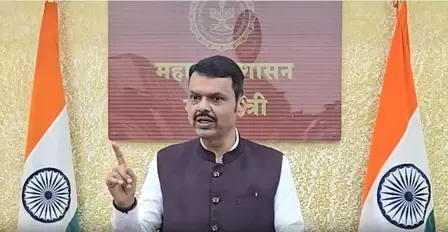
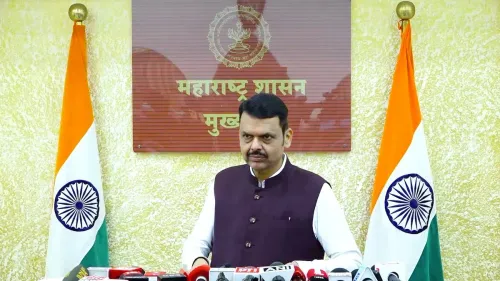
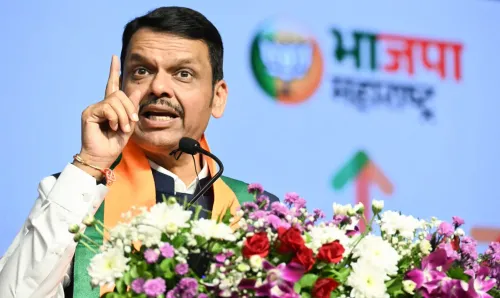
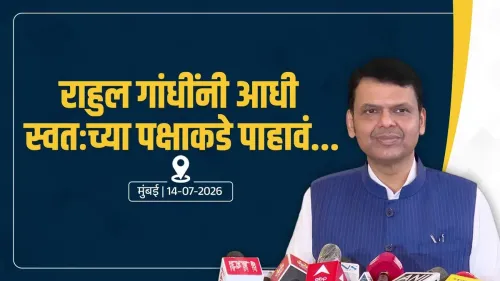
If Congress cannot win chief ministers across a dozen states for decades on end, is the electoral process really to blame — or is the party itself? Maharashtra Chief Minister Devendra Fadnavis sharpened that question into a pointed political challenge on Sunday, October 11, 2026, taking to X to demand that Congress stop reaching for 'vote theft' allegations every time voters hand it a defeat.
Writing in Hindi, Fadnavis framed his argument with a sweeping geographic example: 'Tamilnadu se Maharashtra tak' — 'from Tamil Nadu to Maharashtra' — Congress has gone long stretches without holding a chief ministership in multiple states. His core question was blunt: if the party keeps losing across such varied terrain over such long time spans, why does the finger always point at the election machinery rather than inward at the party itself?
The affidavit challenge Congress has not answered
Fadnavis did not stop at rhetoric. He highlighted a specific institutional moment: when the Election Commission of India asked Congress to back its 'vote theft' allegations with a sworn affidavit, the party produced no concrete evidence. In his telling, this is a pattern — press conferences bristling with accusations, followed by silence when a legal format demands specifics. The tag @AmitShah in the post signals the messaging is coordinated at the national BJP level, not just a state-level broadside.
A call for introspection over allegation politics
The CM's closing line carried the sharper edge: Congress should 'aaropon ki rajniti' — the politics of allegations — and instead engage in genuine self-examination about its electoral performance, respecting the public mandate. The hashtags #CongressExposed and #IndianDemocracy anchor the post squarely in an ongoing BJP counter-narrative that portrays opposition fraud-claims as anti-democratic deflection rather than legitimate grievance.
The argument is structurally familiar in Indian politics — incumbents defending electoral outcomes, opposition disputing them — but Fadnavis's framing of the affidavit-gap is the detail that gives the challenge its teeth. Until Congress produces verified evidence to a statutory body, he is effectively daring them to put the claims on record where they carry legal weight.
Point of View
Pivot to demanding institutional proof and reframe the opponent's grievance as anti-democratic grandstanding. The specific invocation of the Election Commission's affidavit request is tactically sharp — it shifts the burden of proof from political optics to legal accountability, a ground where unsubstantiated allegations are hardest to defend. The tagging of Amit Shah signals this is not a spontaneous state-level reaction but a coordinated national BJP communication strategy. For Congress, the underlying structural challenge — shrinking chief-ministerial footprint across India's states — remains the harder problem no counter-allegation fully deflects.
NationPress
11 Oct 2026
Frequently Asked Questions
What did Devendra Fadnavis say about Congress and vote theft allegations?
Fadnavis challenged Congress to explain its decades-long inability to win chief ministerial posts across multiple states, arguing the party should reflect on its own performance rather than blame 'vote theft' after every electoral defeat.
Why did Fadnavis mention the Election Commission affidavit?
He pointed out that when the Election Commission asked Congress to substantiate its 'vote theft' claims through a sworn affidavit, the party failed to produce concrete evidence, which he used to question the credibility of those allegations.
Which states did Fadnavis mention where Congress has not had a chief minister?
Fadnavis cited Tamil Nadu and Maharashtra as examples within a broader argument that Congress has gone long periods without holding chief ministerial power across several Indian states.
Why did Fadnavis tag Amit Shah in the post?
Tagging Union Home Minister Amit Shah indicates the message is part of a coordinated BJP national communication strategy, not merely a state-level response from Fadnavis.
What is the significance of #CongressExposed used by Fadnavis?
The hashtag places Fadnavis's post within a broader BJP counter-narrative that portrays Congress's fraud allegations as political deflection and positions the BJP as a defender of democratic electoral processes and institutions.