SC issues notice to Punjab on RTE EWS quota non-compliance in private schools
Synopsis
Some Punjab private schools reportedly admitted zero EWS children for nearly 15 years despite a statutory 25% quota — and the Supreme Court has now stepped in. With the Punjab and Haryana High Court's contempt proceedings already on record and 50,000 seats allegedly left unfilled, the case could set a national precedent on enforcing the RTE Act's most consequential provision.
Key Takeaways
The Supreme Court issued notice to the Punjab government on 15 June over alleged non-implementation of the RTE Act's 25% EWS quota in private schools.
A bench of CJI Surya Kant and Justice V.
Mohana directed the petitioner to compile school-level data on EWS admissions before the next hearing on 17 August .
The petitioner claims at least 50,000 students should have been admitted under the EWS quota; RTI data allegedly shows some schools admitted zero children in nearly 15 years .
The Punjab and Haryana High Court had previously described the state's approach as 'lackadaisical' and initiated contempt proceedings in 2025 , without securing compliance.
The petition seeks Union government intervention under Articles 256 and 355 , public dashboards, and interim relief for the 2026-27 admission cycle .
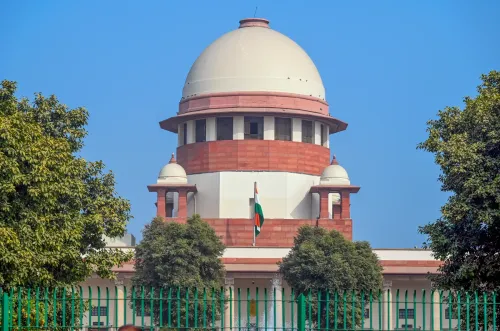
The Supreme Court on Monday, 15 June issued notice to the Punjab government on a Public Interest Litigation (PIL) alleging persistent non-implementation of the Right of Children to Free and Compulsory Education (RTE) Act, 2009, effectively denying free schooling to children from economically weaker sections (EWS) and disadvantaged groups across the state.
A bench comprising Chief Justice of India (CJI) Surya Kant and Justice V. Mohana passed the notice order while hearing a petition filed by K.S. Raju Legal Trust, represented by Dr Jagmohan Singh Raju. The matter has been listed for the next hearing on 17 August.
What the PIL Alleges
The petition contends that private unaided non-minority schools in Punjab have consistently failed to honour Section 12(1)(c) of the RTE Act, which mandates that at least 25 per cent of entry-level seats be reserved for EWS and disadvantaged children. The plea argues that this failure has rendered the constitutional guarantee of free education under Article 21A 'illusory in practice' since the law came into force in 2009.
Critically, the petitioner submitted that while at least 50,000 students ought to have been admitted under the EWS quota, data obtained through the Right to Information (RTI) Act revealed that some schools had not admitted even a single child under the scheme for nearly 15 years.
Court's Observations
During the hearing, the CJI noted that the government's counter affidavit did confirm admissions under the EWS category in private schools. However, the bench directed the petitioner to conduct a more comprehensive study. 'Conduct a study and find out how many schools have refused it. RTI has to be framed intelligently. See how many private schools are recognised, how many admissions have been made,' the court remarked while issuing notice.
The bench's direction signals that the court wants granular, school-level data before proceeding — a calibrated approach that places the evidentiary burden squarely on the petitioner ahead of the August 17 hearing.
Prior Judicial Interventions
This is not the first time the issue has reached the judiciary. The PIL notes that the Punjab and Haryana High Court issued directions in 2025 and initiated contempt proceedings, yet effective compliance was not secured. The High Court had reportedly described the Punjab government's approach as 'lackadaisical' and recorded prima facie findings of wilful disobedience of judicial orders — a damning characterisation that now forms part of the Supreme Court record.
Notably, the petition also invokes Sections 12(2) and 18 of the RTE Act — provisions governing reimbursement to schools and recognition conditions — arguing that failure to enforce these sections compounded the non-compliance. The plea further warns that the harm caused by denial of EWS admissions is irreversible, since the entitlement is confined to entry-level admissions and lapses once a child exceeds the prescribed age.
Reliefs Sought
The petitioner has sought Supreme Court intervention under Article 32, urging directions to the Union government to invoke its constitutional authority under Articles 256 and 355 to compel Punjab's compliance. Among the specific reliefs sought are: a transparent, time-bound monitoring mechanism with public dashboards; publication of available seats and admission schedules; a structured reimbursement framework for participating schools; and enforcement measures against non-compliant institutions.
The petition also seeks interim directions ensuring that no eligible child is denied admission during the ongoing 2026-27 admission cycle, and that supplementary admission rounds be considered where necessary. The Supreme Court's response on 17 August will be closely watched by education rights advocates and state governments across India, given that EWS quota compliance remains a national challenge under the RTE framework.
Point of View
But without a real-time monitoring mechanism, compliance remains optional in practice. The petitioner's RTI data — schools with zero EWS admissions for 15 years — is the most damning detail here, and the court's demand for a comprehensive study before August 17 suggests it wants hard numbers before issuing any coercive direction. Whether the bench ultimately invokes Articles 256 and 355 to direct the Centre to act against Punjab will be the defining question of this case.
NationPress
20 Sept 2026
Frequently Asked Questions
What is the Supreme Court case against Punjab on RTE EWS quota?
The Supreme Court issued notice to the Punjab government on 15 June after a PIL alleged that private schools in the state have failed to implement the mandatory 25% EWS quota under Section 12(1)(c) of the RTE Act, 2009, for nearly 15 years. The bench of CJI Surya Kant and Justice V. Mohana has listed the matter for further hearing on 17 August.
What does Section 12(1)(c) of the RTE Act require?
Section 12(1)(c) of the Right of Children to Free and Compulsory Education Act, 2009, mandates that all private unaided non-minority schools reserve at least 25 per cent of entry-level seats for children from economically weaker sections and disadvantaged groups. Schools are reimbursed by the government for these admissions.
How many children were allegedly denied EWS admission in Punjab?
The petitioner submitted that at least 50,000 students should have been admitted under the EWS quota in Punjab. RTI data cited in the PIL reportedly showed that some private schools had not admitted even a single child under the scheme in nearly 15 years.
Why is the harm from EWS quota denial described as irreversible?
The RTE Act's EWS entitlement is restricted to entry-level admissions. Once a child crosses the prescribed age for entry, the right to claim an EWS seat lapses permanently, making delayed or denied admission an irreversible loss of educational opportunity.
What reliefs has the petitioner sought from the Supreme Court?
The petitioner has sought directions to the Union government to invoke Articles 256 and 355 to enforce Punjab's compliance, creation of public dashboards for EWS seat availability, a structured reimbursement framework for schools, enforcement against non-compliant institutions, and interim relief to prevent eligible children from being excluded during the 2026-27 admission cycle.