EWS reservation in private medical colleges does not guarantee fee concession: Supreme Court
Synopsis
The Supreme Court has ruled that EWS reservation secures a seat — not a subsidy. With private medical college fees in Rajasthan running between ₹18.90 lakh and ₹25 lakh annually against an ₹8 lakh EWS income ceiling, the court's answer to affected students is: seek a scholarship. The ruling exposes a structural gap the 103rd Amendment left unaddressed.
Key Takeaways
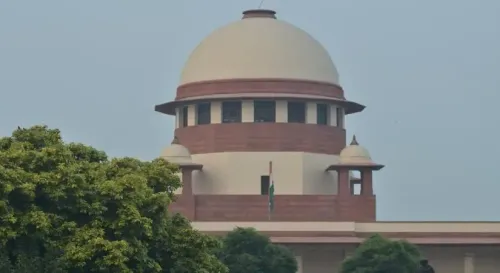
The Supreme Court on 24 June dismissed a plea seeking concessional fees for EWS candidates in private medical colleges.
The bench held that EWS reservation applies only at the admission stage and does not entitle students to reduced tuition fees.
Private medical colleges in Rajasthan charge annual fees between ₹18.90 lakh and ₹25 lakh , against an EWS income ceiling of ₹8 lakh per annum.
The court noted that self-financing private institutions cannot be compelled to charge fees at par with government colleges.
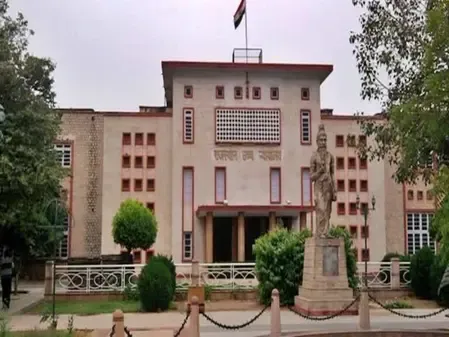
The Rajasthan High Court had earlier ruled in May 2025 that no statutory provision in Rajasthan entitles EWS students to fee relaxation in private colleges.
A National Medical Commission office memorandum cited by the petitioner was found to be merely recommendatory and not adopted by the state government.
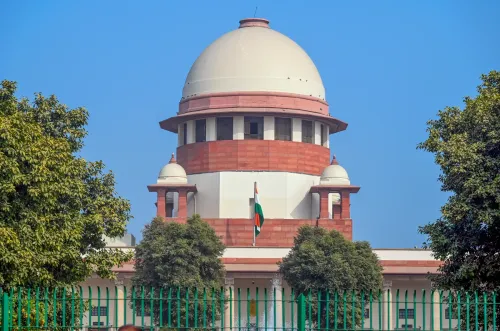
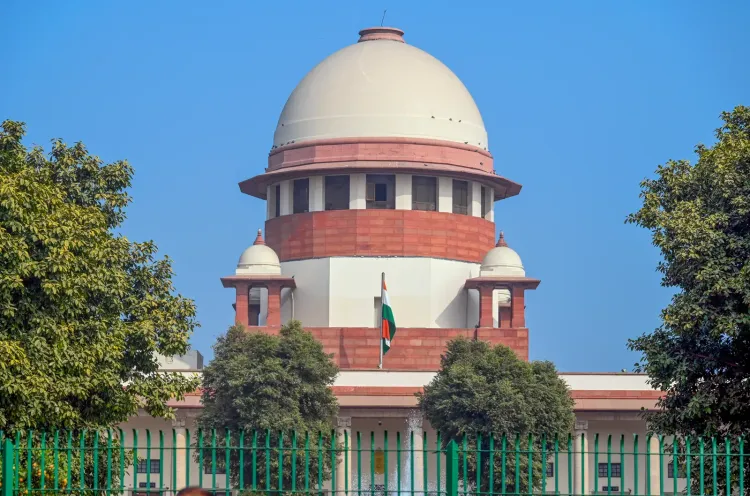
The Supreme Court on Wednesday, 24 June dismissed a plea challenging the application of Economic Weaker Sections (EWS) reservation in private medical colleges, ruling that EWS status at the time of admission does not automatically entitle candidates to concessional tuition fees. The bench declined to interfere with a Rajasthan High Court judgment that had rejected the challenge brought by a Rajasthan domicile candidate, Harshvardhan Singh.
What the Supreme Court Said
A bench comprising Justice B.V. Nagarathna and Justice Joymalya Bagchi drew a clear distinction between government and private educational institutions. The bench observed that self-financing private institutions cannot be compelled to charge fees at par with government medical colleges merely because seats are reserved for EWS candidates.
'These are self-financing institutes. For government ones, they get grants from the State. There is a vital difference,' the Justice Nagarathna-led bench stated during the hearing. The court further clarified that while capitation fees remain prohibited, private colleges are not barred from charging regular tuition fees fixed under the applicable regulatory framework.
When the petitioner contended that EWS candidates from families earning under ₹8 lakh annually could not realistically afford tuition fees of ₹18 lakh to ₹25 lakh per year, the bench pointed to existing financial assistance mechanisms. 'If you are unable to pay, get a scholarship,' the bench said.
Background: The Petitioner's Case
Harshvardhan Singh, an EWS candidate who appeared in NEET-UG 2025, had argued that private medical colleges in Rajasthan were charging annual tuition fees between ₹18.90 lakh and ₹25 lakh — far exceeding the ₹8 lakh annual income ceiling set for EWS eligibility. He contended that charging EWS candidates the same fees as general category students defeated the purpose of the 10 per cent reservation introduced through the Constitution (103rd Amendment) Act, 2019.
He had sought court directions for affordable fee structures for EWS students in private medical colleges. The special leave petition (SLP) arose from a Rajasthan High Court judgment delivered in May 2025.
What the Rajasthan High Court Had Ruled
A division bench of Justice Arun Monga and Justice Sandeep Shah of the Rajasthan High Court had held in May 2025 that EWS reservation operates only at the stage of admission and does not, in the absence of any statutory provision, create a right to concessional fees in private medical colleges.
The high court noted that the fee structure of private medical colleges in Rajasthan had been fixed by the State Fee Regulatory Committee in accordance with principles laid down by the Supreme Court in the Islamic Academy of Education v. State of Karnataka judgment, and that the petitioner had never challenged the underlying fee fixation order itself.
The high court also found that no statutory provision or binding policy in Rajasthan entitled EWS students to fee relaxation, and that a National Medical Commission office memorandum relied upon by the petitioner was merely recommendatory and had not been adopted by the state government. It further noted that all available EWS seats in the concerned college had already been filled during earlier rounds of counselling.
Broader Implications
The ruling underscores a structural tension within India's EWS reservation framework: the income ceiling that defines eligibility is set at ₹8 lakh per annum, yet private medical college fees routinely run to multiples of that figure. Critics argue this gap renders the reservation largely symbolic for students in the private sector.
This comes amid ongoing debate over whether reservation policies — designed primarily for access — should also address the cost of access, particularly in professional courses where private institutions dominate seat availability. The Supreme Court's position, as reiterated on Wednesday, is that these are two separate questions requiring separate legislative or policy action.
Point of View
The 10 per cent quota risks being a statistical footnote rather than a genuine equity instrument.
NationPress
22 Sept 2026
Frequently Asked Questions
Does EWS reservation entitle students to lower fees in private medical colleges?
No. The Supreme Court ruled on 24 June that EWS reservation operates only at the admission stage and does not create a right to concessional fees in private medical colleges. Students admitted under EWS quota in private colleges must pay the same regulated tuition fees as other categories.
What was the Supreme Court case about?
The case involved Harshvardhan Singh, a NEET-UG 2025 EWS candidate from Rajasthan, who challenged private medical college fees of ₹18.90 lakh to ₹25 lakh per year as incompatible with the ₹8 lakh annual income ceiling for EWS eligibility. The Supreme Court dismissed his special leave petition, upholding the Rajasthan High Court's earlier ruling.
Why can private medical colleges charge high fees despite EWS reservation?
Private medical colleges are self-financing institutions and are not funded by the state exchequer, unlike government colleges. The Supreme Court noted this distinction, holding that they cannot be compelled to charge government-college rates. Their fees are fixed by the State Fee Regulatory Committee under Supreme Court-approved principles, not by the EWS reservation framework.
What did the Rajasthan High Court rule on EWS fees?
In May 2025, a Rajasthan High Court division bench ruled that no statutory provision or binding policy in Rajasthan entitles EWS students to fee relaxation in private medical colleges. It also found that a National Medical Commission office memorandum cited by the petitioner was merely recommendatory and had not been adopted by the state.
What options do EWS students have if they cannot afford private medical college fees?
The Supreme Court suggested that students unable to pay should seek scholarships. However, no specific scholarship scheme was mandated by the court. EWS students may explore central and state government scholarship programmes, bank education loans, and financial aid offered by individual institutions.