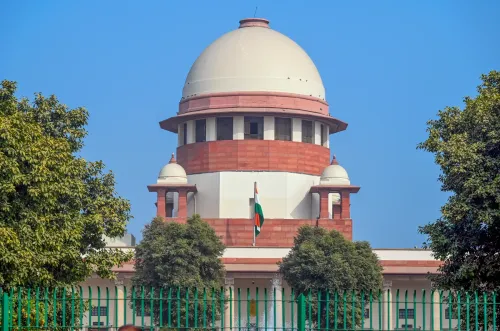
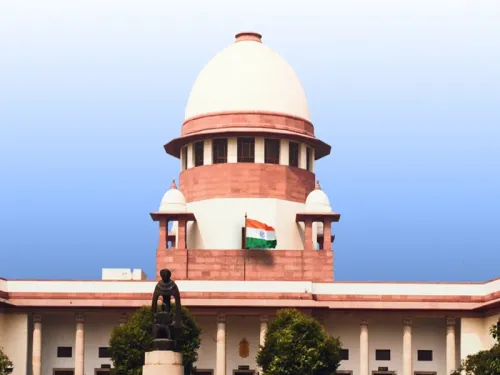
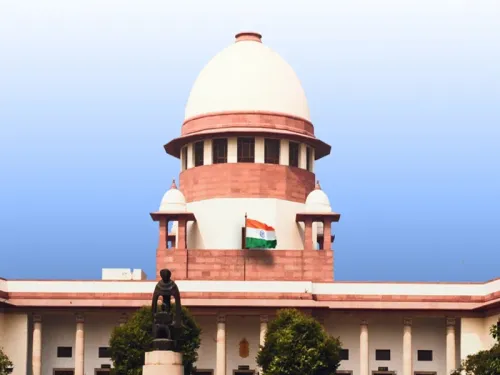
Supreme Court questions Waqf bodies' court fee exemption claim, next hearing August 7
Synopsis
The Supreme Court has openly questioned whether Waqf institutions have any statutory right to skip court fees before Waqf Tribunals — a challenge that could reshape how thousands of Waqf property suits are filed and heard across India. The Gujarat High Court had already ruled against the exemption; the apex court's scepticism signals that position may hold.
Key Takeaways
The Supreme Court on 1 June 2026 questioned the legal basis for exempting Waqf institutions from court fees before Waqf Tribunals.
The Bench of Justice P.S.
Narasimha and Justice Aravind Kumar said any exemption must be backed by a clear statutory provision.
The case stems from the Gujarat High Court's 17 December 2025 ruling upholding rejection of Waqf suits for non-payment of court fees.
The Gujarat Court Fees Act, 2004 was central to the dispute; the state government argued it applies to all judicial proceedings unless specifically exempted.
The next Supreme Court hearing is scheduled for 7 August 2026 .
The Supreme Court on Monday, 1 June 2026, raised pointed questions over the legal basis for exempting Waqf institutions from paying court fees in proceedings before Waqf Tribunals, observing that any such exemption must rest on a clear statutory provision. The remarks came during the hearing of a special leave petition challenging orders of the Gujarat High Court that had upheld the rejection of suits filed by Waqf bodies for non-payment of court fees.
What the Supreme Court Said
A Bench comprising Justice P.S. Narasimha and Justice Aravind Kumar expressed prima facie doubt over the Waqf institutions' contention that they are not liable to pay court fees. 'How can there be an exemption? What is the law which allows you to take an exemption from court fees?' the Bench asked during the oral hearing.
The petitioner, represented by advocate Ejaz Maqbool, sought additional time to place material on record and indicated that further petitions challenging the Gujarat High Court's December 2025 ruling would be filed. The apex court accepted the request and scheduled the next hearing for 7 August 2026.
Background: The Gujarat Dispute
The controversy originates from a batch of suits filed by Waqf institutions before the Gujarat State Waqf Tribunal under Section 83 of the Waqf Act, seeking recovery of possession of Waqf properties from tenants and alleged encroachers, along with mesne profits. The Tribunal found that the plaintiffs had failed to properly value the proceedings and pay the requisite court fees, and after granting opportunities to cure the defects, rejected the plaints under Order VII Rule 11 of the Code of Civil Procedure (CPC).
On 17 December 2025, the Gujarat High Court, in a common judgment delivered by Justice J.C. Doshi, dismissed a large batch of revision petitions filed by various Waqf institutions challenging the Tribunal's orders. A subsequent batch of petitions raising identical issues was dismissed on 20 January 2026, with the High Court applying the same reasoning.
The Competing Arguments
The Waqf institutions argued that proceedings before the Tribunal were merely 'applications' before a specialised body and not civil suits, that the Waqf Act was silent on court fees, and that imposing ad valorem court fees would defeat the beneficial legislative purpose of protecting Waqf properties. They also contended that the Tribunal lacked authority to reject proceedings under Order VII Rule 11 CPC.
The Gujarat state government opposed the plea, maintaining that the Gujarat Court Fees Act, 2004 applies to all judicial proceedings unless specifically exempted, and that disputes before Waqf Tribunals — involving claims for possession and mesne profits — are adversarial in nature and attract court fees like civil suits.
How the High Court Ruled
The Gujarat High Court held that no statutory exemption was available to Waqf institutions and that failure to pay the requisite court fees justified rejection of the plaint. It observed that merely labelling a proceeding an 'application' could not take it outside the scope of court-fee laws when it substantively sought adjudication of rights and recovery of possession. The court further ruled that the Waqf Tribunal, being deemed a civil court for specified purposes, could validly invoke Order VII Rule 11 CPC.
What Comes Next
With the Supreme Court reserving its scepticism on the exemption claim, the matter now turns on whether the petitioners can produce a statutory basis for their position when the case is taken up on 7 August 2026. The outcome could have significant implications for how Waqf institutions across India pursue property-related claims before Tribunals.
Point of View
The case surfaces a structural tension: Waqf Tribunals were designed to be accessible dispute-resolution forums, but if they are treated as civil courts for procedural purposes, the cost of access rises. That trade-off between accessibility and procedural rigour is what the Supreme Court will ultimately have to resolve on 7 August 2026.
NationPress
19 Oct 2026
Frequently Asked Questions
Why did the Supreme Court question the Waqf court fee exemption?
The Supreme Court questioned the exemption because the petitioning Waqf institutions could not point to a clear statutory provision that relieved them of the obligation to pay court fees before Waqf Tribunals. The Bench asked directly what law permitted such an exemption, indicating prima facie doubt over the claim.
What did the Gujarat High Court rule on Waqf court fees?
On 17 December 2025, the Gujarat High Court held that no statutory exemption from court fees was available to Waqf institutions and upheld the Waqf Tribunal's rejection of suits for non-payment. It ruled that the Tribunal, deemed a civil court for specified purposes, could invoke Order VII Rule 11 CPC to reject such proceedings.
What is the Waqf institutions' argument for exemption?
The Waqf institutions argued that their proceedings before the Tribunal were 'applications' to a specialised body and not civil suits, that the Waqf Act was silent on court fees, and that imposing ad valorem fees would undermine legislation designed to protect Waqf properties.
When is the next Supreme Court hearing on this matter?
The Supreme Court has posted the matter for further hearing on 7 August 2026, after granting the petitioner time to place additional material on record.
Who is affected by this ruling?
Waqf institutions across India that file property-related suits — including claims for recovery of possession and mesne profits — before Waqf Tribunals are directly affected. A final ruling against exemption would require them to pay court fees calculated on the value of the claim, potentially raising the cost of pursuing Waqf property disputes.