CM Rekha Gupta Hails Modi Govt's Middle-Class Reforms
Synopsis
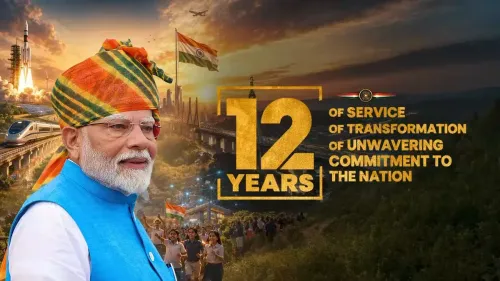
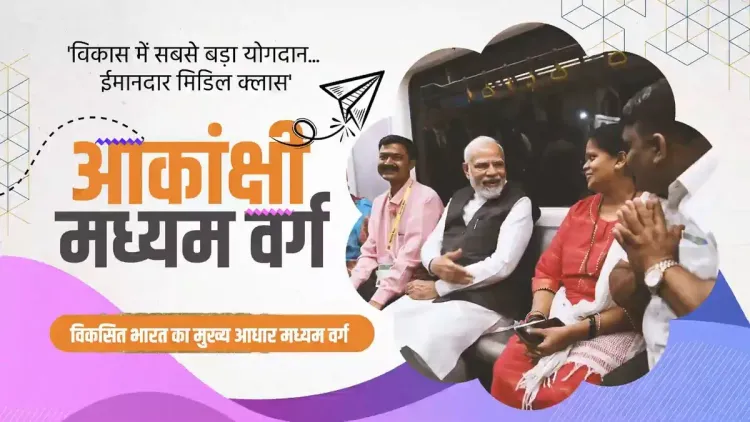
Delhi Chief Minister Rekha Gupta marked twelve years of BJP-led governance on June 15, 2026, crediting PM Modi with transforming India's middle class through tax relief, digital access, affordable housing, startup promotion, and modern infrastructure including Vande Bharat and UDAN.
Key Takeaways
Delhi CM Rekha Gupta posted on June 15, 2026 under #12YearsOfSakshamMiddleClass , praising PM Modi's governance record on middle-class welfare.
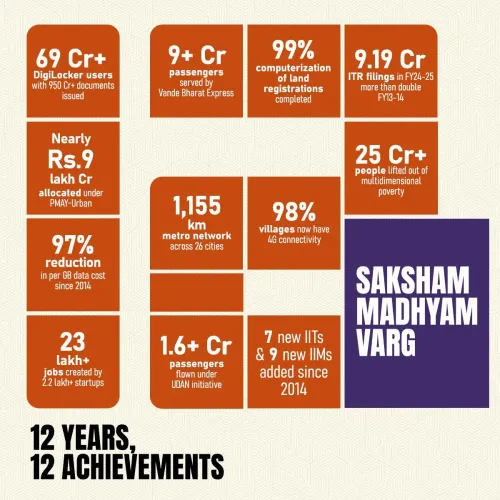
She cited falling internet data prices and Digital India as delivering government services directly into citizens' hands.
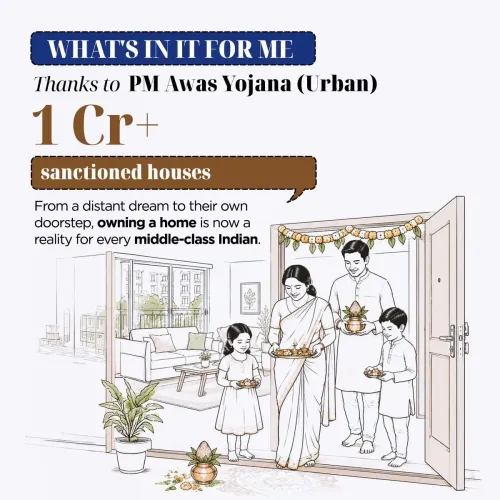
Pradhan Mantri Awas Yojana was credited with fulfilling homeownership aspirations and providing social security to middle-income families.
Vande Bharat Express , expanding urban metro networks, and the UDAN scheme were highlighted as having redefined travel for ordinary Indians.
New IITs and IIMs were cited as expanding world-class higher-education access for the next generation.
The post frames the middle class as the 'most empowered driver' of the Viksit Bharat vision targeting developed-economy status by 2047 .
Delhi Chief Minister Rekha Gupta on Monday, June 15, 2026, credited Prime Minister Narendra Modi's decade-long governance with delivering an 'unprecedented transformation' for India's middle class, citing tax relief, digital access, affordable housing, and modern infrastructure as the pillars of this shift. Posting on X under the hashtag #12YearsOfSakshamMiddleClass, she argued that the middle class has emerged as the 'most empowered driver of economic progress' in the country.
Context
In her post, Gupta wrote — 'वर्षों के आर्थिक दबावों और नीतिगत उपेक्षा को पीछे छोड़कर' ['leaving behind years of economic pressures and policy neglect'] — framing the current period as a decisive break from the past. She listed falling internet data prices, a more transparent tax system, a startup culture creating jobs for youth, and the fulfilment of homeownership dreams as concrete markers of change visible in citizens' daily lives.
The post also highlighted the expansion of new IITs and IIMs as opening 'world-class doors of education for the next generation,' linking higher-education access directly to the aspirations of middle-income families.
Policy Backdrop
The claims in Gupta's post align with a cluster of central government initiatives rolled out since 2014. The Digital India programme, launched in 2015, aimed to deliver government services electronically and widen broadband connectivity, including into rural areas. Pradhan Mantri Awas Yojana, also announced in 2015, targeted affordable housing for urban and rural households, addressing the aspiration for a pucca (permanent) home that Gupta specifically mentioned.
The Startup India initiative, launched in January 2016, was designed to promote innovation and job creation among young entrepreneurs — the 'startup culture' Gupta credits with turning youth into employment generators. On the tax front, income-tax slabs under the new regime were revised in the Union Budget 2023-24 to reduce the burden on middle-income earners, a measure that directly feeds the narrative of greater disposable income for this demographic.
The Goods and Services Tax (GST), rolled out in 2017, replaced multiple central and state levies with a unified system, a reform the government has consistently presented as increasing transparency and widening the formal taxpayer base.
Infrastructure and Connectivity
Gupta specifically named three flagship mobility projects: the Vande Bharat Express, the expanding urban metro network, and the UDAN regional connectivity scheme. She described these as having 'redefined the very meaning of travel' — shifting it from merely covering distance to saving time and enabling dignified journeys.
She also pointed to the reach of digital networks into rural areas as having 'bridged the gap between urban and rural life,' framing connectivity as a social equaliser. These infrastructure investments are part of the broader Viksit Bharat roadmap, which targets developed-economy status for India by 2047.
Stakeholders and What's Next
The primary beneficiaries identified in Gupta's framing are middle-class families, taxpayers, startup founders, and students. Her post positions this group not merely as recipients of policy but as the 'greatest energy source' for building a developed India — a rhetorical move that ties middle-class welfare directly to national ambition.
Attention will now turn to the next Union Budget presentation, where any further revision of personal income-tax slabs or fresh infrastructure allocations will be closely watched as a test of the government's continued commitment to this constituency. State-level updates on metro expansions and new IIT and IIM campuses will also serve as near-term benchmarks for the promises Gupta has amplified.
Point of View
Arriving on what the BJP is marking as twelve years of the Modi government's middle-class agenda — a constituency that has historically been a decisive vote bank for the party. By stitching together digital access, tax reform, housing, mobility, and education into a single narrative of upward mobility, she reinforces the 'Viksit Bharat' arc that the central government has made its long-term brand. The framing of the middle class as not just a beneficiary but as the 'leader' of economic progress is a rhetorical elevation designed to deepen identification between this demographic and BJP governance. It also signals that ahead of any upcoming electoral cycle, the party intends to keep middle-class welfare — particularly on taxes and infrastructure — at the centre of its economic pitch.
NationPress
13 Sept 2026
Frequently Asked Questions
What is the #12YearsOfSakshamMiddleClass hashtag about?
The hashtag marks twelve years of the BJP-led central government under PM Narendra Modi, celebrating policies said to have empowered India's middle class through tax relief, digital access, affordable housing, and modern infrastructure.
What did Delhi CM Rekha Gupta say about PM Modi and the middle class?
She said Modi's 'visionary leadership' had made life 'far easier, smoother, and more dignified' for ordinary families by providing major tax relief and strengthening infrastructure, making the middle class the most powerful driver of India's economic progress.
Which government schemes did Rekha Gupta mention in her post?
She referenced the Vande Bharat Express, the UDAN regional aviation scheme, expanding urban metro networks, Pradhan Mantri Awas Yojana for housing, Digital India, Startup India, and the expansion of new IITs and IIMs.
How has the Modi government changed income tax rules for the middle class?
Income-tax slabs under the new tax regime were revised in the Union Budget 2023-24 to reduce the burden on middle-income earners, alongside GST unification in 2017 which the government credits with increasing transparency and formalising the taxpayer base.
What is Viksit Bharat and how does it relate to the middle class?
Viksit Bharat is the central government's roadmap targeting developed-economy status for India by 2047. Gupta's post frames the empowered middle class — through better jobs, education, housing, and connectivity — as the primary energy source driving this long-term national goal.