Nadda contrasts Congress-era aid with Ayushman Bharat cover
Synopsis
Union Health Minister J. P. Nadda has contrasted what he called the inadequate, discretionary medical assistance of Congress-era state governments with PM Modi's Ayushman Bharat scheme, which provides up to ₹5 lakh annual cover per family. He said many patients died for lack of treatment under the earlier system.
Key Takeaways
Union Health Minister J.
Nadda posted on 8 June 2026 contrasting Congress-era health aid with Ayushman Bharat .
Nadda alleged that under Congress governments, patients seeking serious-illness treatment received 'very little money' even after petitioning the Chief Minister.
He claimed 'many people embraced death' due to lack of treatment under the earlier discretionary system.
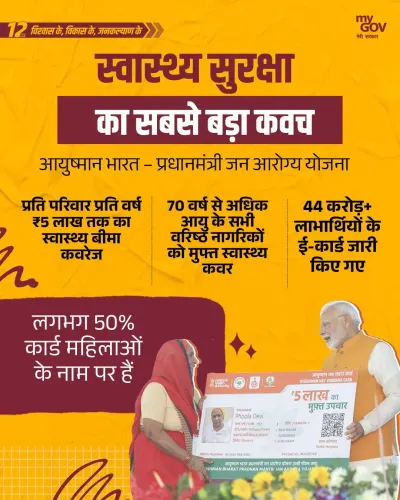
Ayushman Bharat PM-JAY , launched in September 2018 , provides up to ₹5 lakh annual hospitalisation cover per family.
The scheme replaced state-level discretionary medical-assistance funds with a portable, cashless national entitlement.
Nadda's remarks reflect a recurring BJP communication strategy of contrasting entitlement-based central schemes with pre-2014 patronage-driven models.
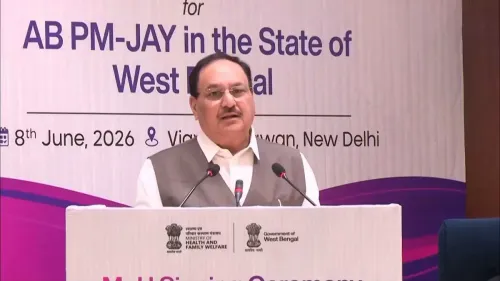
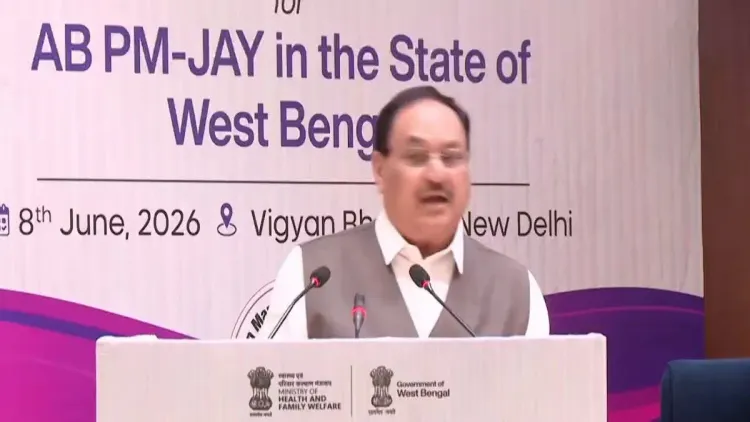
Union Health Minister and BJP national president J. P. Nadda on Monday, 8 June 2026 invoked personal political experience to argue that health assistance under previous Congress governments was discretionary and inadequate, crediting Prime Minister Narendra Modi's Ayushman Bharat scheme with replacing that system with guaranteed coverage for crores of Indians.
Context
In his post, Nadda recalled: 'कांग्रेस की सरकार के दौरान जब लोग हमारे पास गंभीर बीमारी के इलाज के लिए मदद मांगने आते थे' ('During the Congress government, when people came to us seeking help for treatment of serious illness'). He said that approaching the Chief Minister at the time yielded 'very little money,' and that 'many people embraced death in the absence of treatment.' The contrast he draws is between what he characterises as ad-hoc, gate-kept assistance and a structured national entitlement.
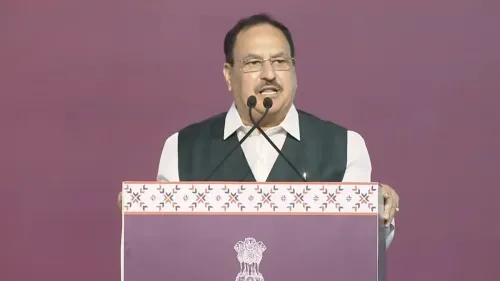
Nadda then credited Prime Minister Modi with providing 'great relief to crores of fellow citizens through Ayushman Bharat.' The post is accompanied by a video, which NationPress has reviewed independently.
Policy backdrop
Ayushman Bharat Pradhan Mantri Jan Arogya Yojana (PM-JAY) was launched in September 2018 as the world's largest publicly funded health insurance programme. It provides up to ₹5 lakh annual hospitalisation cover per family for secondary and tertiary care, replacing earlier state-level discretionary medical-assistance funds that required beneficiaries to petition local officials or elected representatives for help.
The scheme was designed to be portable across states and cashless at empanelled hospitals, removing the intermediary role that politicians and bureaucrats had previously played in accessing public health funds. Nadda's remarks directly reference that pre-scheme architecture, where families in medical distress had to approach their MLA or Chief Minister's relief fund — a process that critics long described as arbitrary and prone to delays.
Stakeholders and impact
The primary beneficiaries of Ayushman Bharat are low-income and economically vulnerable families who would otherwise face catastrophic out-of-pocket expenditure on hospitalisation. Seriously ill patients requiring surgeries, cancer treatment, or organ care are among those the scheme targets most directly.
Nadda's framing also has a political dimension: it positions the BJP as having institutionalised welfare delivery that was previously subject to the discretion of Congress-led state governments. This messaging pattern has been a consistent feature of BJP communications across health, housing, and sanitation policy since 2014, contrasting entitlement-based central schemes with what the party describes as patronage-driven predecessor programmes.
What's next
Parliamentary scrutiny of health budget allocations and the pace of Ayushman Bharat enrolment and claims settlement will remain key benchmarks against which such political claims are tested. Any state-level expansions of coverage limits or inclusion of additional disease categories under PM-JAY would further shape the scheme's political and policy legacy.
With Nadda holding both the Health Ministry and the BJP national presidency, his public communications on Ayushman Bharat are likely to intensify as the party continues to frame universal health coverage as a core governance achievement ahead of electoral cycles.
Point of View
Housing, and sanitation since 2014. By anchoring the contrast in personal anecdote rather than statistics, it humanises an otherwise policy-dense argument and makes it harder to rebut on purely technical grounds. The dual role Nadda holds — Health Minister and BJP national president — means such statements simultaneously serve as policy defence and electoral messaging. As Ayushman Bharat matures, the political stakes around its delivery record will only grow, making these narratives both more valuable and more scrutinised.
NationPress
23 Sept 2026
Frequently Asked Questions
What is Ayushman Bharat and who benefits from it?
Ayushman Bharat PM-JAY is India's national health insurance scheme launched in September 2018, providing up to ₹5 lakh annual hospitalisation cover per family to economically vulnerable households for secondary and tertiary care at empanelled hospitals.
What did JP Nadda say about Congress and health treatment?
Nadda said that during Congress governments, patients with serious illnesses who sought help received very little money even after approaching the Chief Minister, and that many died due to lack of treatment — a situation he contrasted with Ayushman Bharat's guaranteed coverage.
How does Ayushman Bharat differ from earlier state health assistance?
Earlier systems relied on discretionary Chief Minister's relief funds that required individual petitions and yielded variable, often small amounts. Ayushman Bharat replaced this with a portable, cashless national insurance entitlement of up to ₹5 lakh per family per year.
Who launched Ayushman Bharat?
Ayushman Bharat was launched by Prime Minister Narendra Modi's government in September 2018 as a flagship welfare initiative under the National Health Protection Mission.
Why is JP Nadda talking about health schemes?
As Union Health Minister and BJP national president, Nadda regularly communicates on health policy to highlight the government's welfare record. His post on 8 June 2026 was part of ongoing BJP messaging contrasting Modi-era entitlement schemes with pre-2014 governance.