Nadda Highlights 12 Years of Defence Growth Under Modi
Synopsis
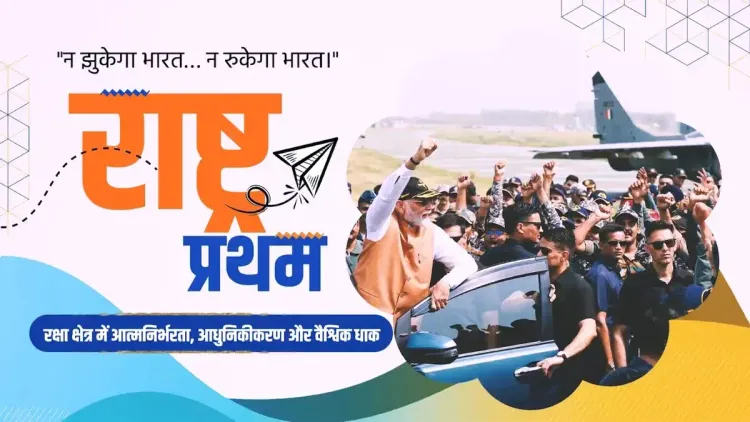
BJP national president and Union Health Minister J. P. Nadda has outlined India's defence transformation under PM Narendra Modi, citing a near-tripling of the defence budget to ₹8 lakh crore, defence production crossing ₹1.5 lakh crore, exports surpassing ₹38,000 crore, and over 6,800 km of BRO roads built in 12 years.
Key Takeaways
Union Health Minister J.
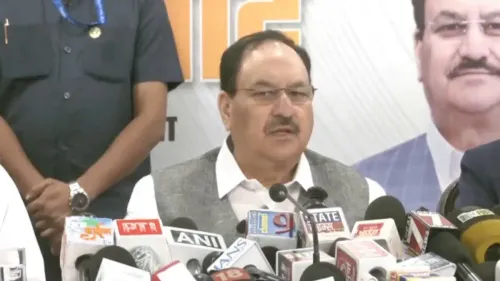
Nadda posted on June 17, 2026 under #12YearsOfSurakshitBharat , crediting PM Modi for India's defence transformation since 2014 .
The defence budget has 'nearly tripled' to around ₹8 lakh crore , according to Nadda's post.
Ammunition self-reliance has reportedly risen from 32% to nearly 90% , and defence production has crossed ₹1.5 lakh crore .
Defence exports have surpassed ₹38,000 crore , reflecting India's growing role as a defence manufacturer.
The Border Roads Organisation (BRO) has built more than 6,800 km of strategic roads to strengthen border connectivity.
The Surgical Strikes (2016) and Balakot Air Strike (2019) are cited as evidence of India's zero-tolerance stance on terrorism.
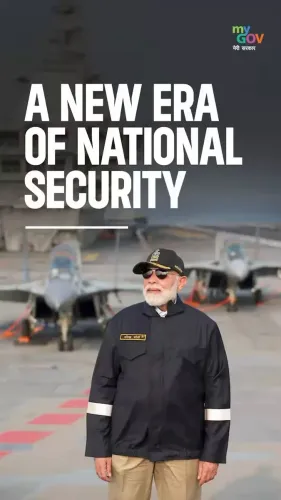
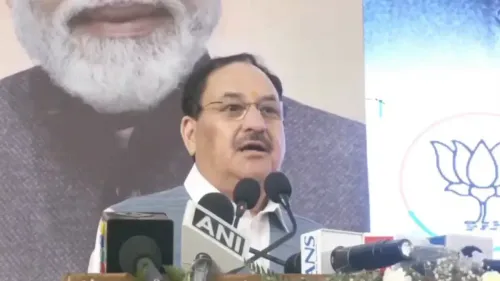
Union Health Minister and BJP national president J. P. Nadda on Wednesday, June 17, 2026, credited Prime Minister Narendra Modi's leadership for a sweeping transformation of India's defence sector over the past twelve years, citing near-tripling of the defence budget, a surge in indigenous production, and decisive counter-terrorism operations as markers of a stronger, more self-reliant nation.
Context
Nadda's post, shared under the hashtag #12YearsOfSurakshitBharat ('12 Years of a Secure India'), catalogues a series of defence milestones attributed to the Modi government since 2014. He states that the defence budget has 'nearly tripled to around ₹8 lakh crore' and that ammunition self-reliance has risen from 32% to 'nearly 90%'. Defence production, he says, has crossed ₹1.5 lakh crore, while defence exports have surpassed ₹38,000 crore.
Nadda also highlights that the Border Roads Organisation (BRO) has constructed more than 6,800 km of strategic roads to bolster border connectivity. He points to the Surgical Strikes of 2016 and the Balakot Air Strike of 2019 as demonstrations of India's 'zero-tolerance approach towards terrorism.'
Policy Backdrop
The claims sit within a decade-long policy shift toward Atmanirbhar Bharat ('self-reliant India') in defence. The Make in India initiative, launched in 2014, included a dedicated defence manufacturing component designed to reduce import dependence and encourage domestic private-sector participation. The Defence Procurement Procedure 2016 formalised priority categories for indigenous equipment, and the Defence Planning Committee, established in 2018, was tasked with aligning long-term capability development with strategic objectives.
The BRO, which reports to the Ministry of Defence, has been central to accelerating road construction in sensitive border regions, a programme that gained further urgency following the 2020 standoff in eastern Ladakh. Parallel efforts have expanded into cyber and maritime security domains, reflecting a broader doctrinal evolution beyond conventional land-based preparedness.
Stakeholders and Impact
The primary beneficiaries of the policy shift span the Indian armed forces, domestic defence manufacturers — including a growing private-sector ecosystem — and communities living along the country's northern and northeastern borders, who gain from improved road access and connectivity. The push for indigenisation has also opened opportunities under the iDEX (Innovations for Defence Excellence) framework and two dedicated defence industrial corridors in Uttar Pradesh and Tamil Nadu.
For the broader economy, the crossing of the ₹1.5 lakh crore defence production threshold and ₹38,000 crore in exports signals an industry maturing beyond domestic supply. Analysts note that sustained export growth depends on competitive pricing, after-sales support infrastructure, and continued government-to-government deal-making.
What's Next
The Union Budget presentation and any revisions to the Defence Procurement Manual will be closely watched as indicators of whether the capital outlay trajectory continues. Outcomes of ongoing negotiations around iDEX partnerships and the two defence corridors will also test whether the production and export gains cited by Nadda can be sustained and expanded in the years ahead.
Point of View
Weaving together budget figures, production milestones, and counter-terrorism operations into a single 'Surakshit Bharat' ('Secure India') narrative. The choice of a health minister to amplify a defence message underscores the BJP's whole-of-party effort to consolidate the government's national-security credentials ahead of electoral cycles. The figures on ammunition self-reliance and export growth, if borne out, would represent a structural shift in India's defence economy — but their full verification remains pending independent audit. The post also signals that the Balakot and Surgical Strike episodes remain central to the ruling party's political identity, deployed as proof points of resolve rather than as historical footnotes.
NationPress
23 Sept 2026
Frequently Asked Questions
What is India's current defence budget under PM Modi?
According to Union Minister J. P. Nadda's post on June 17, 2026, India's defence budget has nearly tripled to around ₹8 lakh crore under the Modi government over the past twelve years. These figures are government claims and have not been independently verified by NationPress.
How much has India earned from defence exports?
Nadda's post states that India's defence exports have crossed ₹38,000 crore, reflecting significant growth in the country's role as a defence manufacturer and exporter since 2014.
What are the Surgical Strikes and the Balakot Air Strike?
The Surgical Strikes were a 2016 cross-border military operation by Indian forces targeting terrorist launch pads along the Line of Control. The Balakot Air Strike was a 2019 Indian Air Force strike on a Jaish-e-Mohammed camp in Pakistan, carried out following the Pulwama attack.
What is the Border Roads Organisation (BRO) and what has it built?
The BRO is an Indian government agency under the Ministry of Defence responsible for constructing strategic roads in border areas. Nadda's post states it has built more than 6,800 km of strategic roads to strengthen border connectivity under the Modi government.
What is Atmanirbhar Bharat in defence?
Atmanirbhar Bharat, meaning 'self-reliant India,' is a policy framework launched under PM Modi that includes a push for domestic defence manufacturing. It encompasses the Make in India initiative, revised procurement procedures favouring indigenous equipment, and the establishment of two dedicated defence industrial corridors in Uttar Pradesh and Tamil Nadu.