Pralhad Joshi Hails India's Defence Transformation Under Modi
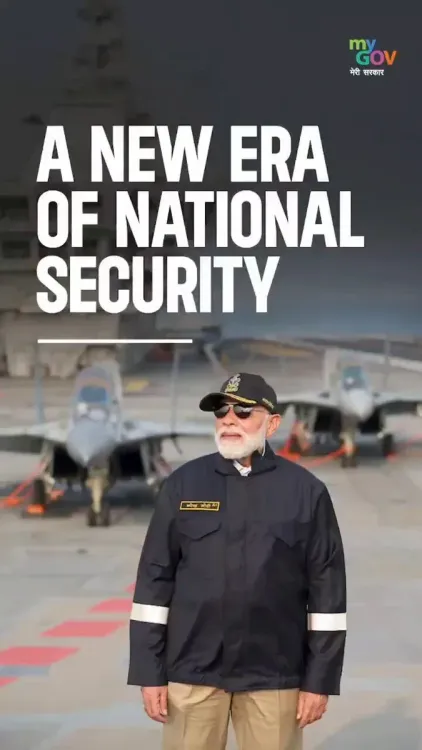
Synopsis
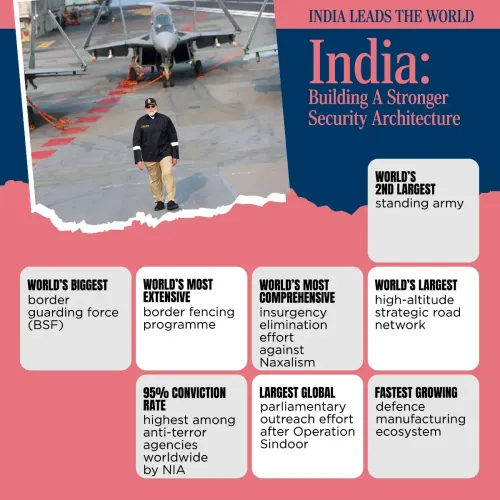
Union Minister Pralhad Joshi marks twelve years of the Modi government by highlighting a near-₹8 lakh crore defence budget, a 56-fold rise in exports, INS Vikrant, Mission Shakti, and the claimed elimination of Naxalism as proof of a transformed national security landscape.
Key Takeaways
Union Consumer Affairs Minister Pralhad Joshi posted on June 17, 2026 under #12YearsOfSurakshitBharat to mark twelve years of the Modi government.
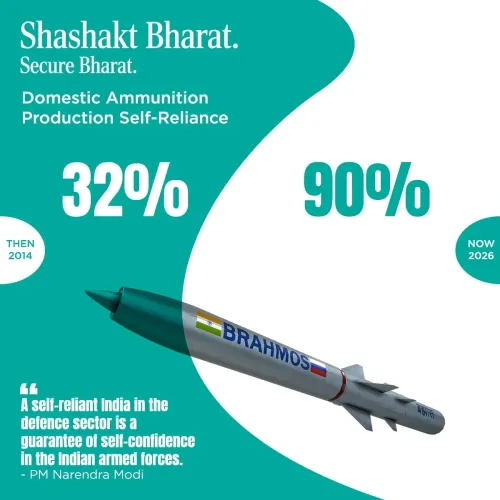
The post claims India's defence budget has grown to nearly ₹8 lakh crore and defence exports have risen 56-fold under PM Modi .
INS Vikrant , India's first indigenous aircraft carrier commissioned in September 2022 , is cited as a flagship symbol of naval self-reliance.
Mission Shakti , India's March 2019 anti-satellite missile test, is highlighted as a milestone in space-based defence capability.
Joshi asserts that over 97 per cent of indigenous naval warships are now domestically built, reflecting the impact of Make in India in defence.
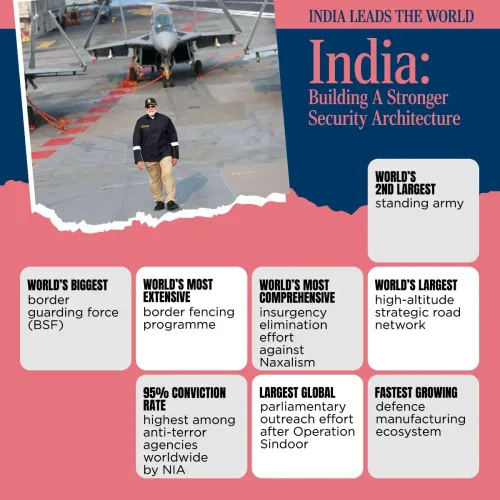
The post also attributes the 'elimination of Naxalism' and decisive counter-terrorism action to the same twelve-year policy period.
Union Consumer Affairs Minister Pralhad Joshi on Wednesday, June 17, 2026, highlighted what he called a historic transformation in India's defence capabilities under Prime Minister Narendra Modi, citing milestones ranging from a surge in the defence budget to landmark indigenous military platforms.
Context
Joshi's post, shared under the hashtag #12YearsOfSurakshitBharat (12 Years of a Secure India), marks twelve years of the Modi government's tenure and frames the period as a decisive era for national security. He pointed to a defence budget that has grown to nearly ₹8 lakh crore and a claimed 56-fold rise in defence exports as evidence of a structural shift in India's military posture. The post also invoked the commissioning of INS Vikrant, the conduct of Mission Shakti, and the fact that over 97 per cent of indigenous naval warships are now domestically built.
Joshi also linked these external capability gains to internal security, asserting that 'decisive action against terrorism and the successful elimination of Naxalism' has made 'New India stronger, safer and more self-reliant than ever before.'
Policy Backdrop
The milestones Joshi cited trace a policy arc that began with the launch of Make in India in September 2014, which included a dedicated defence manufacturing vertical aimed at reducing import dependence. The Defence Procurement Procedure 2016 further entrenched this direction by mandating higher indigenous content thresholds and promoting technology absorption by domestic firms.
INS Vikrant, India's first indigenously built aircraft carrier, was commissioned in September 2022 and is widely regarded as the most visible symbol of the Atmanirbhar Bharat push in defence. Mission Shakti, conducted in March 2019, demonstrated India's anti-satellite missile capability and signalled an expansion of the country's defence posture into space.
Together, these developments represent a consistent government narrative linking industrial self-reliance with strategic deterrence — a framing that has been central to the ruling party's communication on national security since 2014.
Stakeholders and Impact
The primary beneficiaries of this policy direction have been domestic defence manufacturers, both public-sector undertakings and a growing cohort of private firms that have entered the sector under liberalised foreign direct investment and licensing norms. The Indian Armed Forces have simultaneously been the end-users of an expanding pipeline of indigenously designed platforms, from warships and fighter aircraft to missiles and surveillance systems.
The claim regarding Naxalism is particularly significant for communities in the so-called 'Red Corridor' states — Chhattisgarh, Jharkhand, and parts of Odisha — where decades of Left-Wing Extremism have affected development and civilian security. Any substantive reduction in Naxal activity would have direct implications for infrastructure investment and governance in these regions.
What's Next
Parliamentary deliberations on the next defence budget cycle and the commissioning schedules for additional indigenous frigates and submarines will serve as near-term tests of whether the trajectory Joshi described continues at pace. The government's ability to sustain export growth and deepen the domestic defence industrial base will be closely watched by strategic analysts and industry stakeholders alike. As India's security environment evolves — with pressures on both its northern and western borders — the political premium on demonstrating credible, self-reliant defence capacity is only likely to grow.
Point of View
Budgetary growth, and internal security outcomes under a single political brand — twelve years of Modi governance. By linking INS Vikrant and Mission Shakti with the claimed end of Naxalism, the communication strategy deliberately collapses the distinction between conventional military modernisation and counterinsurgency, projecting an image of comprehensive security delivery. The 56-fold export figure and the near-₹8 lakh crore budget claim, if officially corroborated, would represent genuinely significant data points in India's defence transformation story. At its core, the post is a pre-election or anniversary-cycle narrative device that the BJP has used consistently since 2014 — tying Atmanirbhar Bharat's industrial logic to a visceral national security appeal.
NationPress
15 Sept 2026
Frequently Asked Questions
What is INS Vikrant and why is it significant for India?
INS Vikrant is India's first indigenously designed and built aircraft carrier, commissioned in September 2022 . It is the most prominent symbol of India's Atmanirbhar Bharat push in naval defence, demonstrating the country's ability to construct large, complex warships domestically rather than relying on foreign suppliers.
What was Mission Shakti?
Mission Shakti was India's anti-satellite missile test conducted in March 2019 , in which a low-earth-orbit satellite was successfully intercepted. The test placed India among a small group of nations — the United States, Russia, and China — with demonstrated space-based defence capabilities.
What does the 56-fold rise in India's defence exports mean?
The government's claim of a 56-fold rise in defence exports under PM Modi refers to the dramatic increase in the value of military hardware and equipment sold abroad since 2014 . India has set successive export targets as part of its defence manufacturing push, with items ranging from ammunition and helicopters to naval vessels being exported to partner nations.
What is the current status of Naxalism in India?
Left-Wing Extremism, commonly referred to as Naxalism, has seen a significant reduction in geographic spread and violent incidents over the past decade, particularly in states like Chhattisgarh and Jharkhand . The government has attributed this to sustained security operations and development initiatives, though the process of fully resolving the insurgency is ongoing.
What is the Make in India initiative in defence?
Make in India , launched in September 2014 , includes a dedicated defence manufacturing vertical that encourages domestic production of military platforms and equipment. It has been reinforced by successive procurement policies mandating higher indigenous content, and is the policy foundation behind milestones like INS Vikrant and rising defence exports.