Pralhad Joshi Highlights India's 1,000+ Defence Startups
Synopsis
Union Minister Pralhad Joshi marked 12 years of the BJP-led government by highlighting India's rise to over 1,000 defence startups, crediting policies such as iDEX, Make in India and Atmanirbhar Bharat for transforming private-sector participation in military technology development.
Key Takeaways
Union Minister Pralhad Joshi posted on 17 June 2026 under #12YearsOfSurakshitBharat highlighting defence startup growth.
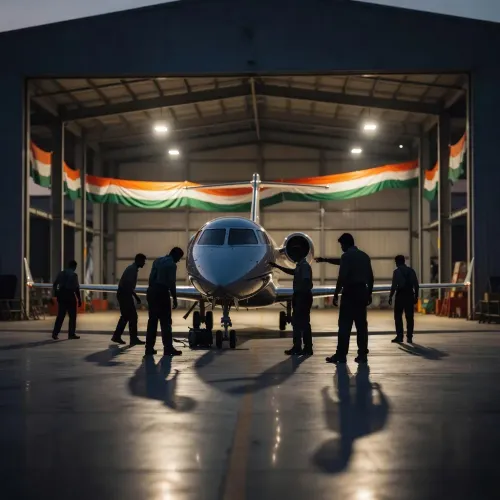
India now claims more than 1,000 defence startups developing technologies for the armed forces, compared to negligible private participation in 2013–14 .
Key enabling policies include iDEX (2018) , Make in India (2014) , the revised Defence Procurement Procedure (2016) and Atmanirbhar Bharat (2020) .
The FDI cap in defence was raised to 74 per cent under the automatic route in 2020 to attract private investment.
The next phase will focus on formalising long-term procurement orders for iDEX-backed startups and updating the Defence Production and Export Promotion Policy .
Union Consumer Affairs Minister Pralhad Joshi on Wednesday, 17 June 2026 highlighted the dramatic rise of private-sector participation in India's defence innovation ecosystem, noting that the country now hosts more than 1,000 defence startups developing cutting-edge technologies for the armed forces — up from negligible private participation in 2013–14.
Posting in Kannada under the hashtag #12YearsOfSurakshitBharat (12 Years of a Secure India), Joshi wrote: 'Defence innovation is now being led by Indian entrepreneurs. From just a handful of participants in 2013–14, India today has more than 1,000 defence startups developing state-of-the-art technologies for the armed forces.'
Context
The post is part of a broader ruling-party communication campaign marking twelve years of the BJP-led government at the Centre, which came to power in May 2014. The hashtag #12YearsOfSurakshitBharat has been used by party leaders to catalogue what they describe as security and defence achievements since that transition. Joshi, a senior BJP leader from Karnataka, is among several Union Ministers amplifying the campaign on social media.
The specific claim draws a contrast between the pre-2014 period — when defence R&D was almost exclusively the domain of state-run laboratories and public-sector undertakings — and the present, when private startups and MSMEs have been formally integrated into the military procurement pipeline.
Policy Backdrop
The expansion of private-sector defence participation rests on a series of policy interventions rolled out after 2014. The Make in India initiative opened dedicated defence production corridors and eased private-sector entry into an industry that had historically been ring-fenced for government entities. The Defence Procurement Procedure was revised in 2016 to give explicit preference to indigenously designed, developed and manufactured products.
In 2018, the Ministry of Defence launched iDEX — Innovations for Defence Excellence — a programme specifically designed to fund and mentor startups building military technologies. The Atmanirbhar Bharat (self-reliant India) campaign, announced in 2020, added further momentum by setting binding targets for indigenous defence procurement and publishing successive 'positive indigenisation lists' that barred imports of specified items, forcing domestic sourcing. The FDI cap in defence was also raised to 74 per cent under the automatic route in 2020 to attract private capital.
Stakeholders and Impact
The primary beneficiaries of this policy shift are defence startups and MSMEs that previously had no formal pathway into military procurement. Through iDEX challenges and related schemes, a number of these firms have moved from prototype to trial-order stage, supplying drones, communication systems, surveillance equipment and other dual-use technologies to the Indian Army, Navy and Air Force.
For the armed forces, the indigenisation push is intended to reduce dependence on imports — which historically accounted for a large share of capital procurement — and to shorten supply chains that could be vulnerable during geopolitical disruptions. Defence analysts have noted that the startup ecosystem also accelerates the adoption of emerging technologies such as AI-enabled surveillance, swarming drones and electronic warfare tools that established public-sector firms have been slower to develop.
What's Next
Attention will now turn to the next round of iDEX challenges and whether the government formalises long-term procurement orders for startups that have completed successful trials — a step that industry bodies have been lobbying for. The anticipated update to the Defence Production and Export Promotion Policy is also expected to set fresh export targets and provide greater certainty to private investors. Joshi's post signals that the government intends to keep the indigenisation narrative prominent in its political communication through the anniversary cycle.
Point of View
Using a milestone hashtag to frame defence indigenisation as a signature BJP governance achievement. The contrast drawn with 2013–14 is a recurring rhetorical device the ruling party uses to benchmark progress against the preceding UPA era. More substantively, the post reflects a genuine structural shift: the iDEX pipeline and positive indigenisation lists have created a new class of defence-tech entrepreneurs with a direct stake in continued policy continuity. The unanswered question — whether startup trials translate into sustained procurement contracts — will determine whether the ecosystem matures or plateaus.
NationPress
16 Sept 2026
Frequently Asked Questions
What is iDEX and how does it support defence startups in India?
iDEX, or Innovations for Defence Excellence, is a Ministry of Defence programme launched in 2018 that funds and mentors startups and MSMEs to develop military technologies. It issues specific technology challenges, provides grants, and connects successful firms with the armed forces for trials and potential orders.
How many defence startups does India have in 2026?
Union Minister Pralhad Joshi stated on 17 June 2026 that India now has more than 1,000 defence startups developing advanced technologies for the armed forces, though independent verification of this precise figure is ongoing.
What is the #12YearsOfSurakshitBharat campaign?
#12YearsOfSurakshitBharat (12 Years of a Secure India) is a BJP-led social media campaign in 2026 marking twelve years since the party came to power in May 2014, used by Union Ministers to highlight defence, security and governance achievements.
What policies opened India's defence sector to private companies?
Key policies include the Make in India initiative (2014), the revised Defence Procurement Procedure (2016), the iDEX programme (2018), Atmanirbhar Bharat (2020) and the raising of the FDI cap in defence to 74 per cent under the automatic route in 2020.
What is Atmanirbhar Bharat's role in defence manufacturing?
Atmanirbhar Bharat, announced in 2020, set binding targets for indigenous defence procurement and published positive indigenisation lists that barred imports of specified items, compelling the armed forces to source those products domestically and boosting private manufacturers.