Ramaswamy Pushes Three-Point Rule-of-Law Agenda for Ohio
Synopsis
Entrepreneur and former DOGE co-lead Vivek Ramaswamy posted a blunt three-point governance agenda for Ohio on 31 October 2026 — ending sanctuary cities, prosecuting Medicaid fraud, and restoring the rule of law — signalling a sharp focus on state-level enforcement politics.
Key Takeaways
Vivek Ramaswamy posted a three-plank governance agenda for Ohio on 31 October 2026 .
The three demands are: end sanctuary cities, prosecute Medicaid fraud, and restore the rule of law in Ohio.
Sanctuary-city tensions in the US escalated after Trump's 2017 executive orders threatening federal funding cuts to non-cooperating jurisdictions.
Ramaswamy's DOGE advisory mandate included tackling waste and fraud in federal programmes such as Medicaid .
The explicit 'in Ohio' framing distinguishes this as a state-level political agenda rather than a national commentary.
Attention now turns to the Ohio General Assembly and the state attorney general for any follow-through legislative or prosecutorial action.
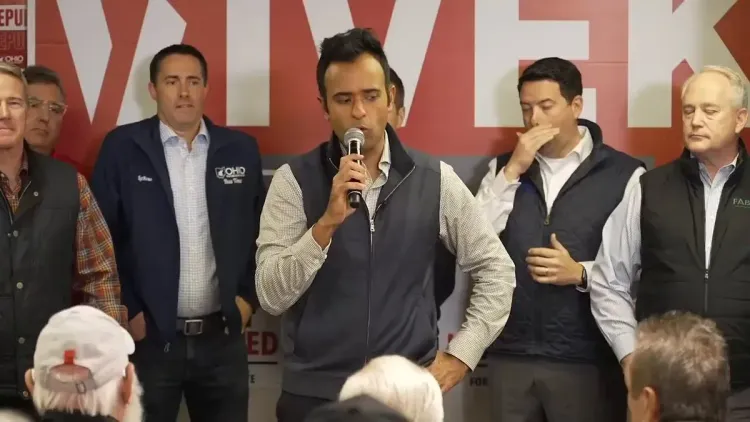
Three sharp demands — end sanctuary cities, prosecute Medicaid fraud, restore the rule of law — and entrepreneur Vivek Ramaswamy has made clear exactly where his political energy is now aimed: his home state of Ohio. The former co-lead of the US Department of Government Efficiency (DOGE) advisory effort posted the terse, agenda-style declaration on 31 October 2026, signalling a pivot from federal disruption work to state-level enforcement politics.
Three Lines, Three Battles
The post reads more like a governing agenda than a social-media opinion: 'End Sanctuary Cities. Prosecute Medicaid Fraud. Restore the Rule of Law in Ohio.' Each plank targets a distinct pressure point. Sanctuary-city policies — local ordinances that limit cooperation with federal immigration enforcement — have been a flashpoint since the Trump administration's 2017 executive orders threatened federal funding cuts to jurisdictions that adopted them. Ohio has several municipalities that have adopted varying degrees of such policies, and the tension between local discretion and federal mandate has never fully resolved.
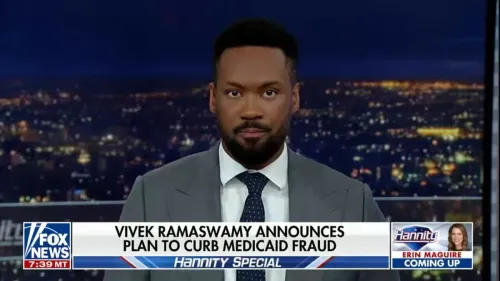
The Medicaid fraud pillar carries its own institutional weight. Medicaid, the federal-state health programme for low-income Americans, loses billions annually to fraudulent billing and provider schemes. Ramaswamy's DOGE mandate explicitly included rooting out waste and fraud in federal entitlement programmes — making this plank a direct extension of the work he championed in Washington, now reframed for an Ohio audience.
Ohio as the New Proving Ground
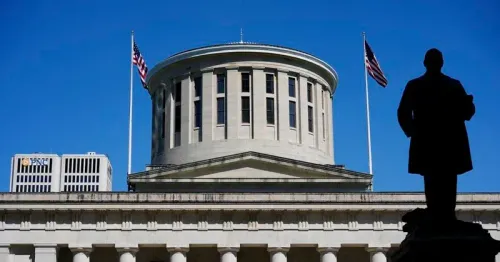
The geographic specificity matters. Ohio is Ramaswamy's birthplace and political base. By anchoring all three demands to the state, he is doing something distinct from national commentary: he is staking out a local enforcement agenda. That framing invites scrutiny of the Ohio General Assembly and the state attorney general's office — both of which would be the institutional engines for any actual legislative or prosecutorial action on these fronts.
Republican-led states have moved aggressively on both tracks since 2017. Multiple state legislatures have enacted laws restricting sanctuary policies, and attorneys general across the country have maintained active Medicaid fraud dockets, often in partnership with the federal Department of Justice. Ramaswamy's declaration aligns with that national pattern — but the 'in Ohio' tag suggests ambitions closer to home than a national platform alone would require.
What Comes Next in Columbus
The immediate question is whether this post foreshadows a formal political move — a gubernatorial run, a legislative push, or an organised advocacy campaign aimed at Columbus. Ramaswamy has not elaborated publicly on the mechanism, but the language is unmistakably programmatic. Observers will be watching for related bill introductions in the Ohio General Assembly and any public statements from the Ohio Attorney General's office that echo or respond to this framing.
For a figure who helped set a federal efficiency agenda, three clean lines targeting one state's governance is a pointed signal — and Ohio's political class is almost certainly paying attention.
Point of View
Populist planks that compress a broader governance philosophy into a state-specific mandate. By anchoring demands 'in Ohio,' he signals a possible downballot ambition or organised state-level campaign rather than mere national commentary. The immigration-Medicaid-rule-of-law triad has proven durable for Republican candidates since 2016, but the real test is whether Ramaswamy can translate DOGE-era federal energy into the slower, more transactional world of Ohio legislative and prosecutorial politics. If Columbus does not move, the declaration risks becoming a platform without a platform.
NationPress
1 Nov 2026
Frequently Asked Questions
What is Vivek Ramaswamy's Ohio agenda about?
Ramaswamy has called for three specific actions in Ohio: ending sanctuary-city policies that limit immigration enforcement cooperation, prosecuting Medicaid fraud, and restoring what he terms the rule of law in the state.
What are sanctuary cities and why are they controversial in the US?
Sanctuary cities are jurisdictions with local policies that restrict cooperation with federal immigration enforcement. They became a major flashpoint after the Trump administration's 2017 executive orders threatening to cut federal funding to such jurisdictions.
What is Ramaswamy's connection to DOGE?
Ramaswamy served as co-lead of the US Department of Government Efficiency (DOGE) advisory effort, which was announced in 2024 with a mandate that included reducing waste and fraud in federal programmes, including Medicaid.
Is Vivek Ramaswamy running for office in Ohio?
Ramaswamy has not officially announced a candidacy as of this post, but the state-specific policy agenda has intensified speculation about a potential run for governor or another Ohio office.
How significant is Medicaid fraud in the United States?
Medicaid fraud costs the federal-state programme billions of dollars annually through fraudulent billing and provider schemes. It has been a consistent enforcement priority for both the Department of Justice and state attorneys general across the country.