Ramaswamy Vows Day-1 Anti-Fraud Task Force as Governor

Synopsis
Vivek Ramaswamy has pledged to sign Day-1 executive orders creating a governor-reporting inter-agency task force to audit all state contracts and root out Medicaid, child care, visa, and CDL fraud — extending his DOGE-era anti-waste playbook to a state gubernatorial bid.
Key Takeaways
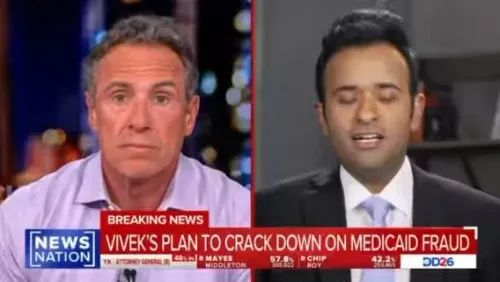
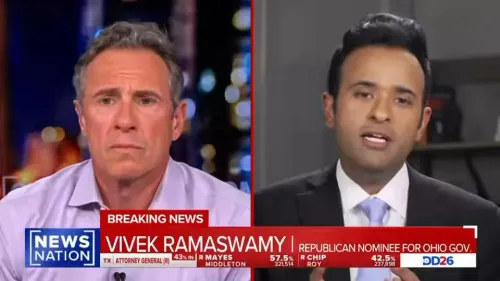
Vivek Ramaswamy announced on November 1, 2026 , that he will sign executive orders on Day 1 as governor to create an anti-fraud task force.
The task force would report directly to the governor and review all state contracts across agencies.
Target fraud categories include Medicaid, child care, visa, and CDL (commercial driver's licence) programmes.
Ramaswamy frames the initiative as 'the first step towards lasting affordability relief' for residents.
The pledge mirrors the efficiency-and-fraud mandate of the federal DOGE effort he co-led with Elon Musk from 2024 .
His closing line — 'We need a governor who's actually competent to do it' — signals a direct contrast-draw against rival candidates.
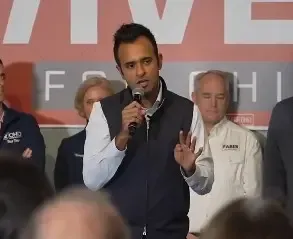
A candidate who once helped reshape Washington's conversation on government waste is now training that same lens on a state capital. Entrepreneur Vivek Ramaswamy announced on Sunday, November 1, 2026, that if elected governor, he will sign executive orders on his very first day in office to establish an inter-agency task force reporting directly to him — with a sweeping mandate to audit every state contract and eliminate fraud across Medicaid, child care, visa, and commercial driver's licence programmes.
What the Task Force Would Actually Do
Ramaswamy's pledge is deliberately broad. The proposed task force would sit above departmental silos, reporting straight to the governor's office — a structural choice designed to prevent the kind of bureaucratic insulation that, his argument goes, allows fraud to persist undetected for years. He frames the effort not as a one-time audit but as 'the first step towards lasting affordability relief,' linking contract waste directly to the cost pressures ordinary residents feel.
The four fraud categories he names — Medicaid, child care, visa, and CDL (commercial driver's licence) — are not random. Each represents a high-volume, government-administered benefit or credential system where false claims and identity abuse have been documented at the federal level. Medicaid alone accounts for hundreds of billions of dollars in annual federal-state spending, and improper payments in the programme have been a persistent audit finding for over a decade.
From DOGE to the Statehouse: A Familiar Playbook
The announcement carries unmistakable echoes of Ramaswamy's tenure as co-lead of the Department of Government Efficiency (DOGE) advisory effort, the federal initiative launched by President Donald Trump in 2024 and jointly steered by Ramaswamy and Elon Musk. That effort centred on identifying redundancy and fraud in federal contracting and entitlement spending. Ramaswamy is now explicitly porting that framework down to the state level — a political move that lets him run on a proven brand of fiscal aggression while differentiating himself from conventional gubernatorial candidates.
Republican candidates across multiple states have increasingly anchored affordability arguments in anti-fraud rhetoric, particularly around Medicaid, which is jointly funded by federal and state governments. A governor-level task force with executive-order authority would carry real teeth: the power to freeze contracts, refer cases for prosecution, and compel inter-agency data sharing without waiting for legislative approval.
The Competence Argument at the Centre of His Pitch
Ramaswamy closes his post with a pointed line: 'We need a governor who's actually competent to do it.' That sentence does more than policy work — it is a direct contrast draw against unnamed opponents, positioning the task force not merely as a good idea but as something only a particular kind of executive can execute. It is the language of a candidate betting that voters are less interested in ideology than in demonstrated operational credibility.
Whether the pledge lands will depend on specifics the post does not yet provide: which state, which contracts, and what legal framework would govern the task force's referral powers. But as an opening move in a gubernatorial race, it is a high-visibility commitment — one that is easy to understand, hard to oppose publicly, and very easy to hold a candidate accountable for on Day 2.
Point of View
He transforms a federal credential into a state-level differentiator. The structural choice of a task force reporting directly to the governor — bypassing departmental hierarchies — signals an executive-power-first governing philosophy that is becoming a signature of post-DOGE Republican candidates. The four fraud categories he names are politically safe targets, making opposition difficult, but the pledge will be tested hard against the absence of specifics: no state named, no budget, no legislative partner identified. If he wins, Day 2 will matter as much as Day 1.
NationPress
1 Nov 2026
Frequently Asked Questions
What is Vivek Ramaswamy's anti-fraud task force proposal?
Ramaswamy has pledged to sign executive orders on his first day as governor establishing an inter-agency task force that reports directly to the governor and reviews all state contracts to eliminate Medicaid, child care, visa, and CDL fraud.
Which state is Vivek Ramaswamy running for governor in?
Ramaswamy's post does not specify the state. The announcement outlines a gubernatorial policy pledge without naming the state in question.
How does this relate to Vivek Ramaswamy's DOGE work?
Ramaswamy co-led the federal Department of Government Efficiency advisory effort alongside Elon Musk after its launch by President Donald Trump in 2024. His state-level task force proposal directly mirrors that effort's focus on contract waste and entitlement fraud.
What is Medicaid fraud and why is it a political issue?
Medicaid fraud involves false claims, identity abuse, or billing irregularities in the joint federal-state health programme for low-income Americans. It has been a persistent audit finding and is frequently cited by Republican candidates as a driver of government waste and taxpayer costs.
What does 'CDL fraud' mean in Ramaswamy's announcement?
CDL stands for commercial driver's licence. CDL fraud typically involves falsified testing, identity substitution, or bribery to obtain licences for heavy vehicles — a federal and state enforcement concern tied to road safety and immigration enforcement.