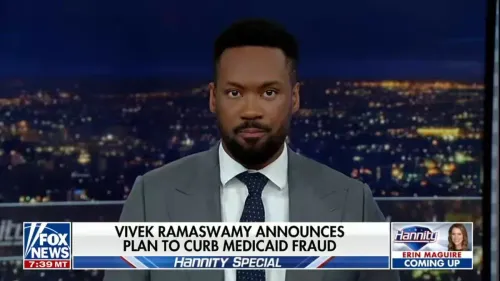
Ramaswamy Unveils Ohio Healthcare Cost Plan for 2027

Synopsis
Entrepreneur Vivek Ramaswamy has outlined a three-step plan to cut Ohio healthcare costs in 2027: prosecute Medicaid fraudsters aggressively, secure a federal savings-sharing deal, and return billions to law-abiding Ohioans. The proposal signals a likely gubernatorial run in Ohio.
Key Takeaways
Vivek Ramaswamy posted a three-point Ohio healthcare cost plan on June 10, 2026 .
The plan centres on aggressive prosecution of Medicaid fraud as the primary cost-reduction lever.
Ramaswamy proposes negotiating a deal with the US federal government to let Ohio keep a majority of fraud-recovery savings.
Recovered funds would be redistributed to 'law-abiding Ohioans', framing the plan as a taxpayer benefit.
The proposal aligns with his prior role as co-lead of the DOGE advisory effort focused on federal waste and fraud.
Implementation details, including the specific federal savings split, remain unverified campaign-level commitments.
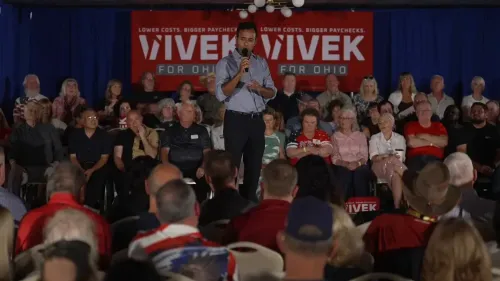
Entrepreneur and former DOGE co-lead Vivek Ramaswamy outlined a three-point plan on Wednesday, June 10, 2026, to reduce healthcare costs in Ohio if elected governor, anchoring the proposal on aggressive Medicaid fraud prosecution and a state-federal savings-sharing arrangement.
Context
Ramaswamy's post lays out a sequential strategy: prosecute Medicaid fraudsters aggressively, negotiate a deal with the federal government that allows Ohio to retain a majority of the resulting savings, and then return 'billions' to law-abiding Ohioans. The statement is framed as an immediate action plan for 2027, signalling a gubernatorial ambition in Ohio.
Medicaid is a joint federal-state health insurance program covering low-income Americans. The federal government funds roughly half of program costs, making it a shared fiscal responsibility and a frequent target of fraud enforcement efforts at both levels of government.
Policy Backdrop
Republican officials across the United States have long pursued Medicaid fraud prosecution as a cost-containment tool that avoids direct eligibility cuts. Ohio, a Midwestern state with a large Medicaid programme, has seen multiple fraud enforcement actions by state and federal authorities in recent years.
The concept of states retaining a share of fraud-recovery savings is not new. Prior administrations have explored similar arrangements through federal waivers and demonstration projects, though no standardised savings-split mechanism currently exists. Ramaswamy's prior role as co-lead of the Department of Government Efficiency (DOGE) advisory effort — created in late 2024 to identify waste, fraud, and abuse across federal programmes — gives him direct familiarity with such federal-state fiscal negotiations.
His broader public profile includes founding Strive Asset Management and running as a 2024 Republican presidential candidate before pivoting to state-level politics.
Stakeholders and Impact
Ohio taxpayers and Medicaid providers are the primary stakeholders. For taxpayers, a successful fraud-recovery and savings-retention deal could translate into direct fiscal relief, though the specific federal savings split Ramaswamy envisions has not been formally proposed or verified.
For Medicaid providers, an intensified prosecution environment would raise compliance demands. Legitimate providers operating in good faith could face increased scrutiny as enforcement agencies scale up investigations, a common side-effect of aggressive fraud crackdowns.
On the federal side, any savings-sharing arrangement would require negotiation with the US federal government, which controls waiver authority and funding formulas. Without a formal waiver request or legislative package, the proposal remains a campaign-level commitment.
What's Next
Attention will turn to the Ohio gubernatorial election cycle and whether Ramaswamy files formal candidacy paperwork. Any credible implementation pathway would require a federal waiver request or congressional legislation enabling states to retain a defined share of Medicaid fraud recoveries.
If the proposal advances into a policy document or legislative draft, it could set a template for other Republican-led states seeking to reduce healthcare entitlement costs through enforcement rather than benefit cuts — a politically less contentious route that has gained traction within the party's fiscal wing.
Point of View
Thereby avoiding the political toxicity of benefit cuts. By tying the plan to a federal savings-retention deal, he is effectively previewing a gubernatorial platform that leverages his DOGE experience as a credential. The proposal's viability hinges entirely on federal cooperation — a variable he cannot control from the statehouse — which means it functions as a directional signal rather than an actionable blueprint at this stage. If he does run and win in Ohio, the savings-sharing model could become a replicable template for other Republican governors navigating Medicaid costs without alienating low-income constituents.
NationPress
14 Sept 2026
Frequently Asked Questions
What is Vivek Ramaswamy's Ohio healthcare plan?
Ramaswamy has proposed a three-step plan: aggressively prosecute Medicaid fraud, negotiate a deal with the federal government for Ohio to retain a majority of the savings, and return billions of dollars to law-abiding Ohioans.
Is Vivek Ramaswamy running for Ohio governor?
Ramaswamy has not formally announced a gubernatorial candidacy as of June 2026, but his post framing a '2027' action plan for Ohio strongly signals a planned run in the upcoming Ohio gubernatorial election cycle.
What is Medicaid fraud and why does it matter in Ohio?
Medicaid fraud involves false billing, kickbacks, or other schemes that drain the joint federal-state health insurance programme. Ohio has a large Medicaid programme and has been subject to multiple fraud enforcement actions, making it a significant fiscal concern for the state.
Can Ohio keep Medicaid fraud savings under federal law?
Currently there is no standardised mechanism for states to retain a majority of Medicaid fraud recoveries. Any such arrangement would require a federal waiver or new legislation, which Ramaswamy's plan implicitly acknowledges by proposing to 'strike a deal with the feds.'
What is DOGE and what was Ramaswamy's role?
The Department of Government Efficiency (DOGE) was an advisory body created in late 2024 to identify waste, fraud, and abuse across federal programmes. Ramaswamy served as its co-lead before exiting, giving him direct experience with federal healthcare spending oversight.