Nadda Hails Zero-Tolerance Terror Policy, Operation Sindoor
Synopsis
Union Health Minister and BJP chief J. P. Nadda invoked Operation Sindoor and record BrahMos export orders to argue that PM Modi's government has set a new benchmark in counter-terrorism and defence manufacturing over 12 years in power.
Key Takeaways
BJP national president and Union Minister J.
Nadda posted on June 12, 2026 under the #12YearsOfSeva campaign marking 12 years of the Modi government.
Nadda stated India now responds to terrorism with 'decisive action' and does not accept 'any form of nuclear threat or blackmail.' 'Operation Sindoor' was cited as a clear demonstration of India's new security doctrine and military capability.
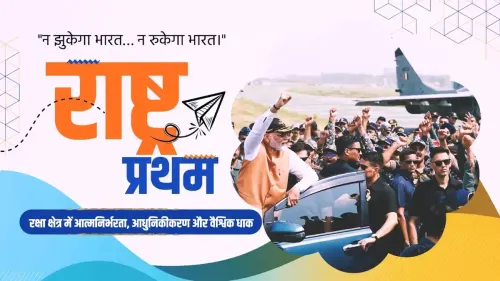
BrahMos missile exports worth 'thousands of crore rupees' were highlighted as evidence of India's rising defence manufacturing and global prestige.
India's shift from strategic restraint to overt retaliation has precedents in the 2016 surgical strikes and the 2019 Balakot airstrikes .
Defence export policy reforms since 2018 under Make in India have supported the BrahMos deal pipeline, including a landmark agreement with the Philippines .
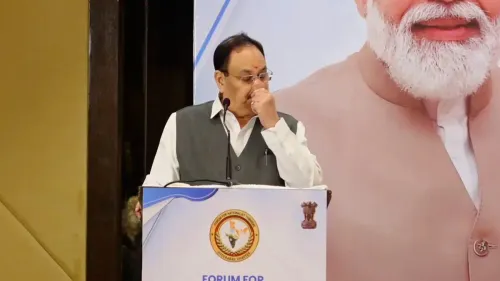
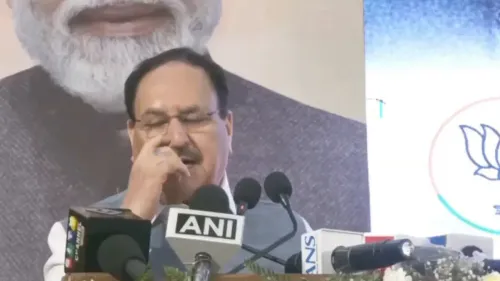
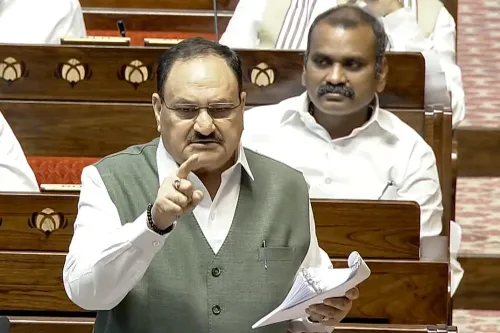
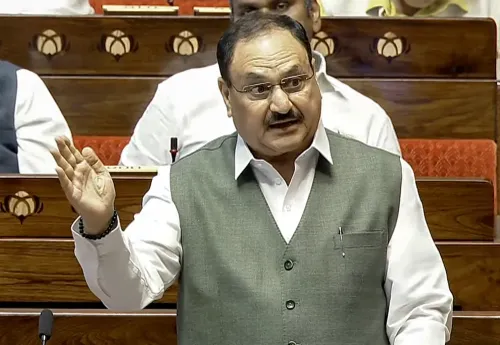
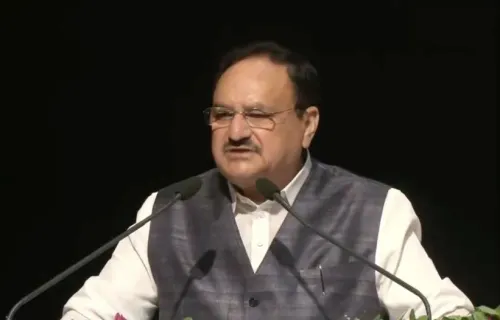
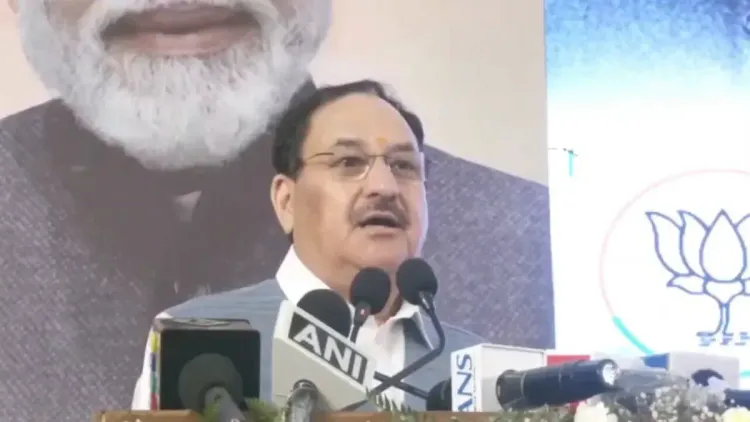
Union Health Minister and BJP national president J. P. Nadda on Friday, June 12, 2026, credited Prime Minister Narendra Modi's leadership for establishing a new national security benchmark, pointing to 'Operation Sindoor' and surging global demand for BrahMos missiles as proof of India's transformed defence posture.
Context
Posting under the hashtag #12YearsOfSeva (12 Years of Service), Nadda wrote that under Modi's leadership, India has adopted a zero-tolerance policy against terrorism and 'set a new standard.' He stated that terrorism is now met with 'decisive action' and that 'no form of nuclear threat or blackmail is accepted.'
The post is part of a broader BJP campaign marking 12 years of the Modi government, which took office in May 2014. Senior party leaders across portfolios have been highlighting what they describe as transformative shifts in governance, security, and economic policy over this period.
Policy Backdrop
India's shift from strategic restraint to overt, calibrated retaliation has been documented across several incidents. Following the Uri attack of September 2016, Indian forces conducted surgical strikes across the Line of Control. In February 2019, airstrikes were carried out at Balakot in response to the Pulwama attack that killed over 40 Central Reserve Police Force personnel.
Nadda's post references 'Operation Sindoor' as the latest demonstration of this doctrine, describing it as having 'clearly displayed India's new security policy and military capability.' The operation's name and the specific figures cited for export orders fall within the post-2023 period and are reported here as stated by the minister.
On the defence exports front, India revised its export promotion policy from 2018 onward, encouraging private sector participation under the Make in India framework. BrahMos Aerospace, the Indo-Russian joint venture behind the supersonic cruise missile, secured a landmark export agreement with the Philippines in the early 2020s — a milestone that opened the door to further international sales.
Stakeholders and Impact
Nadda highlighted that 'growing global demand for BrahMos missiles and export orders worth thousands of crore rupees are proof of India's defence strength and rising international prestige.' For India's defence industrial base — spanning public sector undertakings and an expanding private sector — such orders translate into production scale, employment, and technology transfer opportunities.
For regional partners and potential buyers in Southeast Asia, the Middle East, and beyond, India's demonstrated willingness to deploy advanced systems and its ability to supply them commercially has elevated its standing as a credible defence partner. The remarks also carry a pointed message on nuclear deterrence, signalling that coercive nuclear rhetoric will not constrain India's response calculus.
What's Next
Parliamentary scrutiny of defence export figures and any new bilateral missile or technology transfer agreements is anticipated in the 2026-27 budget session. The #12YearsOfSeva campaign is expected to continue through the coming weeks, with the BJP using the anniversary to consolidate its national security and economic governance narrative ahead of state assembly cycles. How opposition parties respond to the Operation Sindoor framing and the export claims will shape the next phase of political debate on India's security doctrine.
Point of View
The party attempts to present hard power and economic nationalism as a unified achievement. The explicit reference to nuclear blackmail is notable: it signals to domestic audiences that the government's resolve is unconditional, a message that plays well in a polarised security environment. Whether the specific export figures withstand independent scrutiny will determine how durable this narrative proves in parliamentary and public debate.
NationPress
26 Oct 2026
Frequently Asked Questions
What is Operation Sindoor India?
Operation Sindoor is a military operation referenced by senior Indian government officials, including BJP chief J. P. Nadda, as a demonstration of India's zero-tolerance counter-terrorism doctrine under PM Modi. Specific operational details fall within the post-2023 period.
What is India's zero-tolerance terrorism policy?
India's zero-tolerance terrorism policy, as articulated by the Modi government, means responding to cross-border terrorist attacks with direct military action rather than diplomatic restraint — a posture demonstrated in the 2016 surgical strikes and the 2019 Balakot airstrikes.
What are BrahMos missile exports?
BrahMos is a supersonic cruise missile developed by the Indo-Russian joint venture BrahMos Aerospace. India has been exporting the system internationally, with the Philippines being a documented early buyer, and the government has cited growing global demand as a marker of India's defence manufacturing success.
What is the BJP #12YearsOfSeva campaign?
#12YearsOfSeva, or 12 Years of Service, is a BJP campaign marking the 12th anniversary of the Narendra Modi government, which came to power in May 2014. Senior leaders are using the occasion to highlight achievements across security, economy, and governance.
Has India rejected nuclear threats from Pakistan?
Indian officials, including Nadda in this post, have publicly stated that nuclear threats or blackmail will not deter India's military response to terrorism — a position consistent with India's declared nuclear doctrine of credible minimum deterrence and no-first-use.