Rajnath Singh hails 12 years of Northeast India's rise under Modi
Synopsis
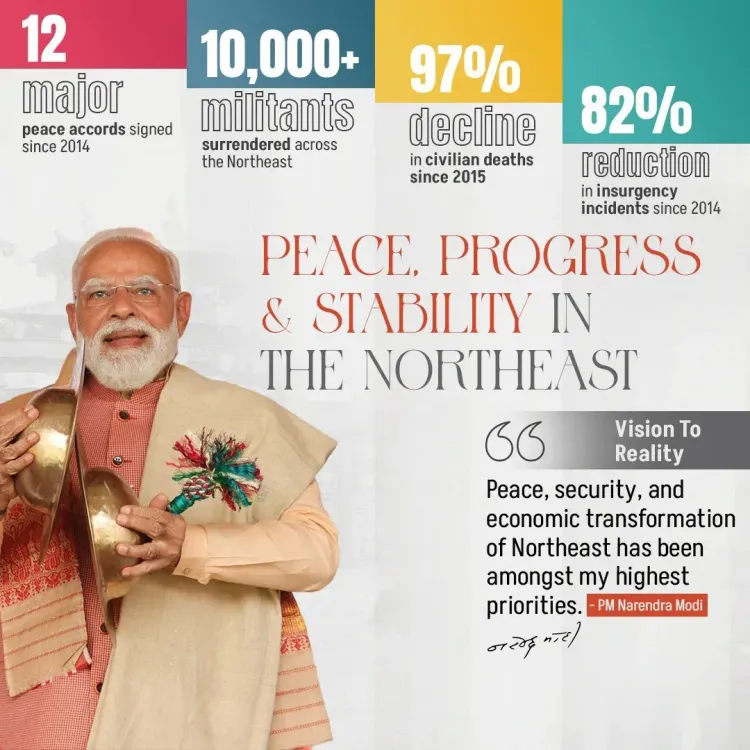
Union Defence Minister Rajnath Singh on June 20, 2026, marked 12 years of the Modi government by calling Northeast India's transformation a story of inclusion and national integration, crediting sustained investments in connectivity, infrastructure and the Act East Policy for repositioning the region as India's gateway to Southeast Asia.
Key Takeaways
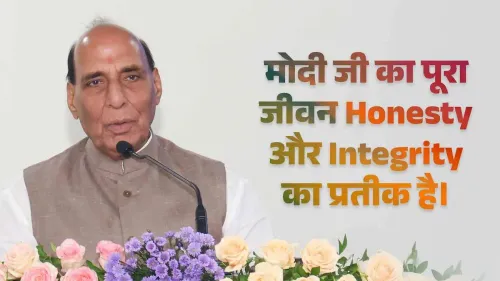
Union Defence Minister Rajnath Singh posted on June 20, 2026 under #12YearsOfRisingNorthEast , hailing the region's transformation under PM Narendra Modi .
Singh described the Northeast as 'a vital bridge to Southeast Asia,' linking its rise to India's Act East Policy launched in 2014 .
The Ministry of Development of North Eastern Region (DoNER) received expanded mandates and higher budgetary outlays after 2014, funding landmark projects including the Bogibeel Bridge .
The government's strategy shifted from a security-centric approach to a dual security-and-development model, with Singh himself having overseen the early phase as Home Minister from 2014 to 2019 .
The Northeast's progress is framed as integral to the Viksit Bharat 2047 vision of a fully developed India.
Next Union Budget allocations for DoNER and new infrastructure milestones for 2026-27 will be closely watched as a measure of sustained commitment.
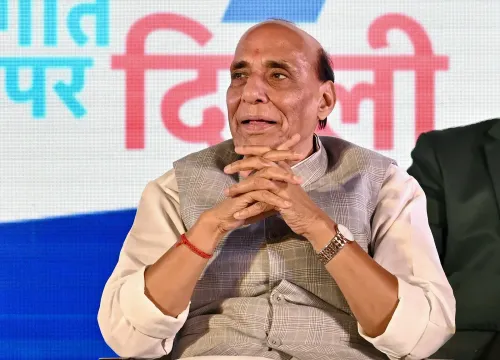
Union Defence Minister Rajnath Singh on Saturday, June 20, 2026, credited Prime Minister Narendra Modi's 12-year tenure with a 'remarkable transformation' of Northeast India, calling the region's rise a story of inclusion, aspiration and national integration linked to the Viksit Bharat vision.
Context
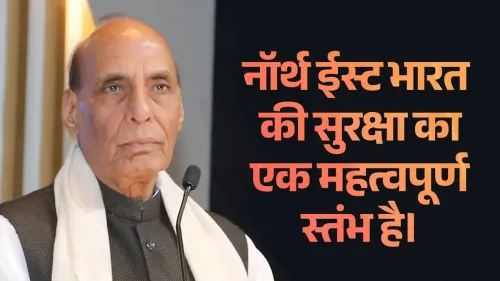
Posting under the hashtag #12YearsOfRisingNorthEast, Singh wrote that the Northeast, 'once perceived as distant, today stands at the heart of India's growth story and serves as a vital bridge to Southeast Asia.' The post marks a coordinated BJP reflection on governance milestones since May 2014, when the Modi government first took office.
Singh, one of the ruling party's most senior figures and a former Union Home Minister who oversaw Northeast security policy, framed the regional transformation as evidence of 'visionary leadership and people-centric development' — language that ties the region's progress directly to the party's national narrative ahead of continued electoral cycles.
Policy Backdrop
The central government's engagement with the Northeast accelerated after 2014 through the Act East Policy, which formally repositioned the eight-state region as India's strategic gateway to ASEAN nations rather than a remote periphery. The policy combined infrastructure investment with diplomatic outreach to Southeast Asia, seeking to leverage the Northeast's geography for trade and connectivity.
The Ministry of Development of North Eastern Region (DoNER), established in 2001, received expanded budgetary outlays and a broader mandate after 2014. Landmark projects such as the Bogibeel Bridge — India's longest rail-road bridge, spanning the Brahmaputra in Assam — along with highway expansions and new rail links were completed or significantly accelerated in the years that followed. These projects directly addressed the region's long-standing connectivity deficit, which had historically constrained economic activity and deepened its sense of isolation from mainland India.
The government's approach marked a deliberate shift from an earlier security-centric paradigm — one that dominated Northeast policy for decades amid insurgencies — toward a dual strategy that paired counterinsurgency with economic integration. Singh, as Home Minister from 2014 to 2019, was a central architect of that security-to-development pivot.
Stakeholders and Impact
The primary beneficiaries of the policy shift are the residents of the Northeast's eight states — Arunachal Pradesh, Assam, Manipur, Meghalaya, Mizoram, Nagaland, Sikkim and Tripura — including border communities that had long remained outside mainstream economic circuits. Improved road and rail connectivity has reduced travel times, lowered logistics costs and opened new markets for local agricultural and horticultural produce.
The region's strategic positioning also has implications for India's broader Indo-Pacific orientation. As India deepens trade and infrastructure ties with Myanmar, Bangladesh, Thailand and beyond, the Northeast functions as both a land bridge and a demonstration of India's capacity to develop its frontier zones. This dual role — domestic inclusion and international connectivity — underpins Singh's description of the Northeast as 'vital' to the national growth story.
What's Next
Attention will now turn to the next Union Budget allocations for the DoNER ministry and any new rail or highway project milestones announced for 2026-27. The government's ability to sustain momentum — particularly in states such as Manipur, which has faced prolonged civil unrest — will be a key test of whether the development narrative translates into durable ground-level change.
As India advances its Viksit Bharat 2047 roadmap, the Northeast's trajectory will remain a bellwether for how effectively the country can close its internal regional asymmetries while simultaneously projecting economic influence into Southeast Asia.
Point of View
The party is explicitly linking regional development to a civilisational ambition rather than routine administration. For Singh personally, the messaging reinforces his own legacy as the Home Minister who helped engineer the security-to-development pivot in the Northeast. The post also signals that the Northeast — long a swing region with complex ethnic and political dynamics — remains a priority theatre for the ruling party's outreach.
NationPress
19 Sept 2026
Frequently Asked Questions
What has changed in Northeast India in the last 12 years under PM Modi?
Since 2014, Northeast India has seen major investments in road and rail connectivity, including the Bogibeel Bridge, expansion of national highways, new rail links, and a strategic repositioning under the Act East Policy that treats the region as India's gateway to Southeast Asia.
What is the Act East Policy and how does it affect Northeast India?
The Act East Policy, unveiled in 2014, repositions Northeast India as a strategic land bridge between India and ASEAN nations, encouraging infrastructure investment and cross-border trade to integrate the region into broader Indo-Pacific economic networks.
Why did Rajnath Singh post about Northeast India's development?
Singh posted on June 20, 2026 under the hashtag #12YearsOfRisingNorthEast to mark 12 years of the Modi government, highlighting governance milestones and framing the region's transformation as central to the Viksit Bharat 2047 vision.
What is Viksit Bharat and what role does the Northeast play in it?
Viksit Bharat is the government's vision for a fully developed India by 2047. The Northeast is positioned as an essential part of this vision, both as a region where internal inequalities must be bridged and as a corridor for expanding India's economic ties with Southeast Asia.
Which states make up Northeast India?
Northeast India comprises eight states: Arunachal Pradesh, Assam, Manipur, Meghalaya, Mizoram, Nagaland, Sikkim and Tripura.