Rajnath Singh: India's decade of growth, digital empowerment
Synopsis
Union Defence Minister Rajnath Singh has credited India's decade-long integrated development model — combining economic growth, digital empowerment, good governance, and social justice — for the country's sustained economic expansion despite global headwinds. The senior BJP leader made the remarks in a post on X on 4 July 2026.
Key Takeaways
Rajnath Singh on 4 July 2026 posted on X highlighting India's development model over the past decade.
He argued that economic progress, digital empowerment, good governance, and social justice have advanced in parallel under the current government.
Singh credited this integrated approach for India's continued economic growth despite global challenges .
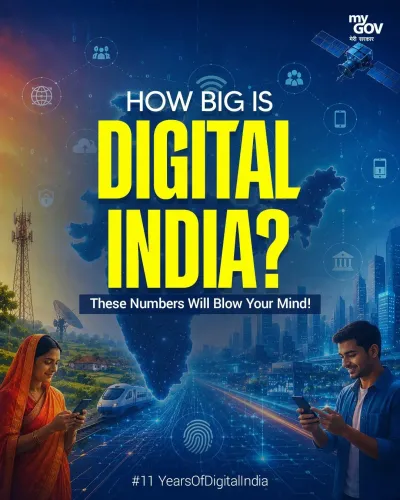
Key policy pillars of this model include the Digital India programme (2015) , the Insolvency and Bankruptcy Code (2016) , and GST (2017) .
Welfare schemes such as PM-KISAN and Ayushman Bharat have been central to the social justice component of the model.
The framing positions India as a resilient economy that combines market-oriented reforms with state-led inclusion measures .
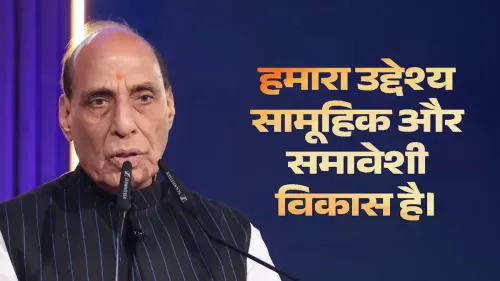
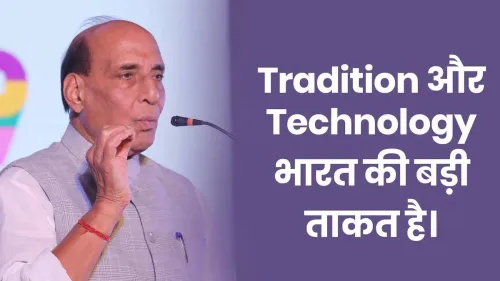
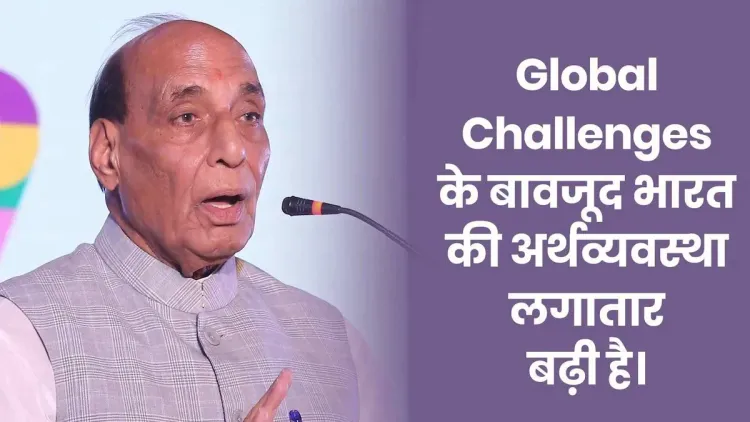
Union Defence Minister Rajnath Singh on Saturday, 4 July 2026, highlighted India's development trajectory over the past decade, asserting that the country has presented a model where economic progress, digital empowerment, good governance, and social justice have advanced in parallel. Posting on X, the senior BJP leader credited this integrated approach for India's sustained economic growth despite global challenges.
In his post, Singh wrote: 'पिछले एक दशक में भारत ने विकास का ऐसा मॉडल प्रस्तुत किया है, जिसमें आर्थिक प्रगति के साथ डिजिटल सशक्तिकरण, सुशासन और सामाजिक न्याय समानांतर रूप से आगे बढ़े हैं।' ('In the last decade, India has presented a development model in which digital empowerment, good governance, and social justice have advanced alongside economic progress.') He added that this is precisely why India's economy has continued to grow despite global challenges.
Context
Singh's remarks situate India's economic resilience within a broader governance philosophy that the BJP-led Union government has championed since 2014. The argument is that growth has not been driven by market forces alone, but by a simultaneous push on digital public infrastructure, administrative reform, and targeted social welfare. This framing has been a recurring theme in senior government communication, particularly as India consolidated its position as one of the world's fastest-growing major economies.
The post comes amid continuing global economic uncertainty, with major economies navigating inflationary pressures, supply-chain disruptions, and geopolitical tensions. Singh's statement implicitly positions India as a stable and resilient outlier in this environment.
Policy Backdrop
The development model Singh references draws on several landmark policy interventions. The Digital India programme, launched in 2015, expanded broadband connectivity, mobile governance, and citizen-facing digital services across the country. Structural economic reforms followed, including the Insolvency and Bankruptcy Code in 2016 and the rollout of the Goods and Services Tax (GST) in 2017, both aimed at formalising the economy and improving ease of doing business.
On the social justice front, schemes such as PM-KISAN — providing direct income support to farmers — and Ayushman Bharat, the flagship health insurance programme, were introduced to ensure that economic gains reached lower-income households. Together, these initiatives form the policy architecture that Singh describes as India's distinctive development model.
Stakeholders and Impact
The primary beneficiaries of the model Singh describes are Indian citizens broadly, with particular emphasis on rural populations, small farmers, and those accessing public health and digital services for the first time. The private sector has also been a key stakeholder, benefiting from a more formalised economy, improved insolvency resolution mechanisms, and a unified national tax structure under GST.
For the government, the political salience of this narrative is significant. Linking economic growth figures to visible welfare outcomes — direct benefit transfers, digital access, healthcare coverage — allows the administration to argue that macro-level GDP expansion has translated into micro-level improvements in citizens' lives. This integrated framing distinguishes the current government's communication from earlier growth-centric messaging.
What's Next
Statements of this nature from senior cabinet ministers typically precede or accompany major policy documents such as the Economic Survey or the Union Budget, where growth data is presented alongside welfare and digital metrics. India's development experience has also become a point of engagement at multilateral forums, where the government has sought to position the country as a model for the Global South. Future budget presentations and international summits are likely to see this narrative elaborated further, with quantitative benchmarks attached to the parallel-progress framework Singh has outlined.
Point of View
Administrative reform, and social welfare rather than relying on economic liberalisation alone. By invoking 'global challenges' as a foil, Singh reinforces the government's preferred narrative of India as a stable, resilient economy in a turbulent world — a message with both domestic electoral resonance and international diplomatic utility. The timing and framing suggest this is part of a sustained effort to codify the post-2014 policy era as a coherent, exportable development model. Whether independent economic assessments validate the full breadth of this claim remains a matter of ongoing analytical scrutiny.
NationPress
3 Oct 2026
Frequently Asked Questions
What did Rajnath Singh say about India's development model?
Rajnath Singh said that over the past decade, India has presented a development model where economic progress, digital empowerment, good governance, and social justice have advanced simultaneously, and that this is why India's economy has continued to grow despite global challenges.
What is the Digital India programme?
The Digital India programme was launched in 2015 to expand digital infrastructure, broadband connectivity, and citizen-facing government services across India. It is one of the key pillars of the development model Rajnath Singh referenced.
What economic reforms has India carried out since 2014?
Major reforms since 2014 include the Insolvency and Bankruptcy Code (2016) , which streamlined debt resolution, and the Goods and Services Tax (GST, 2017) , which unified India's indirect tax structure. Welfare schemes like PM-KISAN and Ayushman Bharat were also introduced.
Why is Rajnath Singh talking about India's economy?
As a senior cabinet minister and Union Defence Minister , Rajnath Singh regularly comments on broad governance and national development themes. His post reflects the BJP government's ongoing effort to present India's post-2014 policy record as a coherent and successful development model.
How has India's economy performed despite global challenges?
India has maintained its position as one of the world's fastest-growing major economies despite external shocks including the COVID-19 pandemic and global inflationary pressures. Government statements attribute this resilience to the integrated approach of economic reform, digital expansion, and social welfare.